

The following is a sponsored post. All opinions are 100% my own.
According to estimates, the average American uses hundreds of gallons of fuel each year. For many households that adds up to well over a thousand gallons annually, which translates into a significant monthly expense.
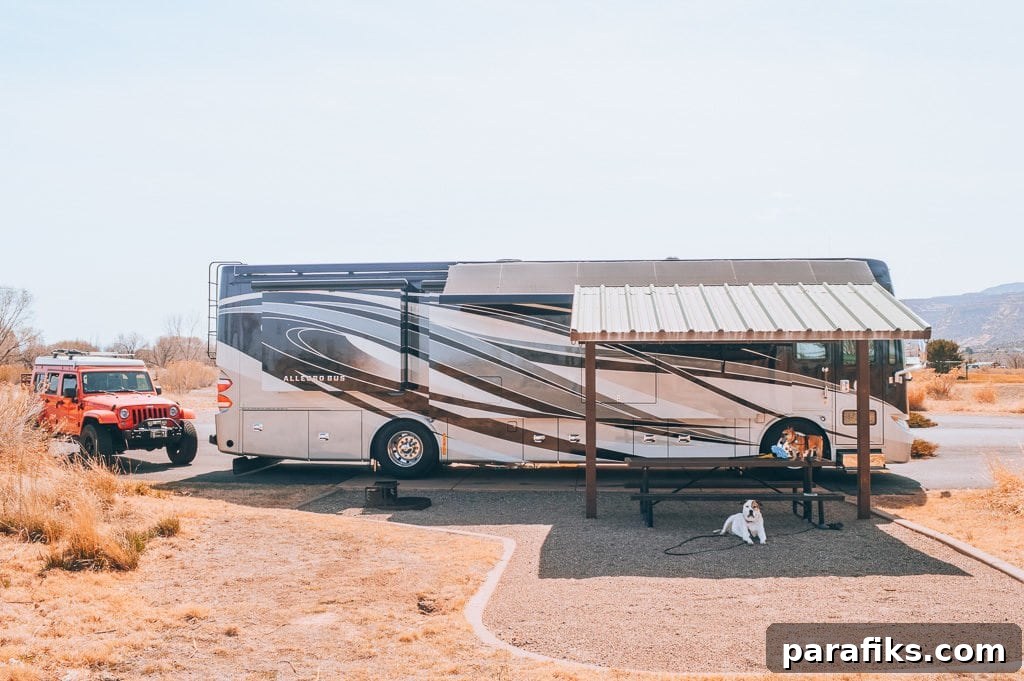
If you live on the road or drive frequently, fuel can easily become one of your largest and most consistent costs. As full-time RVers, we see this firsthand: our motorhome gets roughly 6–7 miles per gallon and our towed Jeep averages about 13–15 mpg. Some months we spend as little as $100 on fuel; other months, long cross-country trips can push that number past $1,000.
On a recent trip through Arizona, Utah, Colorado, Kansas and Missouri, we drove about 3,000 miles and spent roughly $1,500 on fuel. That kind of expense makes you pay attention to every possible way to save at the pump.
Below are practical, easy-to-adopt strategies we’ve used to reduce fuel spending. Each one can help lower costs slightly, and combined they can make a real difference over the course of a year.
Combine your errands.
Grouping errands together is one of the simplest ways to cut fuel use. If you only need one item, consider adding it to a list and waiting until you have several tasks in the same area before heading out. This reduces unnecessary short trips that add up over time.
I keep a running shopping list on my phone so I can check it while I’m out. That way I avoid driving back and forth for single items. Beyond saving gas, combining errands saves time and reduces wear on your vehicle.
Not everyone will want to wait, but if you can defer non-urgent purchases, it’s an easy and effective way to lower fuel costs and free up time for other priorities.

Join a fuel rewards program.
Rewards programs offered by major fuel brands can deliver immediate savings each time you fill up. Even small per-gallon discounts add up fast when you fill regularly. Depending on promotions and membership levels, discounts can range from a few cents to several dozen cents per gallon.
The biggest advantage of these programs is the simplicity: you often save at the pump without accumulating points or waiting to redeem rewards later. If you fuel frequently, signing up for a program that applies discounts instantly can be an easy, no-cost way to reduce monthly fuel bills.
Look for details about introductory offers, ongoing per-gallon savings, and whether savings apply at the pump or inside the store. Even modest discounts can be worthwhile when applied consistently.
Ride your bike more often.
For short errands, commuting by bike is an excellent alternative to driving. It eliminates fuel costs entirely for those trips, provides healthy exercise, and reduces your environmental footprint. During pleasant weather, biking can be faster than driving when you factor in parking and traffic.
To make biking practical, carry a sturdy lock and use bags or racks for groceries and other items. Helmets and basic safety gear are important. If you can replace just a few short trips per week with bike rides, the fuel savings over a year will be noticeable.
Drive a fuel-efficient vehicle.
Vehicle fuel economy has the largest single impact on long-term fuel costs. If you’re in the market for a new vehicle, prioritize fuel efficiency. The difference between a vehicle that averages 10 mpg and one that gets 25 mpg becomes enormous over thousands of miles.
Because our RV and Jeep are relatively thirsty, we try to limit trips and tow the Jeep instead of driving both vehicles separately. When it’s practical, choosing a more economical car, hybrid, or smaller engine can cut annual fuel spending by hundreds or even thousands of dollars.
Even small efficiency gains add up: better driving habits, proper tire inflation, regular maintenance, and removing unnecessary weight can improve mileage until you can upgrade to a more efficient vehicle.
What are you doing to save on fuel? Have you signed up for a fuel rewards program yet?