

Have you ever considered what happens when you share your personal information online?
These days it’s effortless to hand over your name, email, phone number, and other details without a second thought. But oversharing can lead to serious problems like identity theft, stolen credit card information, and scams.
These dangers aren’t only financial—losing control of your personal data can cause long-lasting stress, disrupt your life, and undermine your privacy. Every year, millions fall victim to scams, and attackers keep refining their tactics. From convincing fake emails to sophisticated identity theft schemes, even careful users can be caught off guard.
I encounter scams frequently, and some look so convincing that they can make you doubt what’s real. For example, last week I was expecting a message from my insurance agent when I received an email that looked and sounded almost identical to theirs. The subject line matched a recent conversation, and for a moment I nearly acted on it because I wasn’t fully focused.
Another person I know lost a home deposit in a phishing scam after receiving a message that appeared to come from their mortgage lender. The sender name and message looked legitimate, and they ended up losing $25,000. Stories like this show how costly and emotionally draining these attacks can be.
Thankfully, there are practical tools and strategies you can use to protect your information. Below, we’ll examine the real risks of sharing personal data and outline steps you can take to reduce your exposure.
The Real Dangers of Sharing Personal Information
Understanding the main threats is the first step to protecting yourself. Here are the most common risks you should watch for.
1. Identity theft
Identity theft occurs when someone takes your personal information and impersonates you. With enough details—your name, Social Security number, or date of birth—criminals can open credit accounts, take loans, or commit crimes under your name. Resolving identity theft can cost you time and money, and repairing your credit and reputation often takes months or years.
Millions of people contend with identity theft annually. Many victims spend significant sums and countless hours disputing charges, correcting credit reports, and dealing with lenders and agencies.
2. Stolen credit card information
Credit card data can be stolen through breaches, skimming devices, fake websites, or intercepted transactions. Once a criminal has your card details, they can make unauthorized purchases. Although banks frequently reimburse customers for fraud, resolving the issue can take weeks and create stress—new cards, canceled subscriptions, and hours spent on the phone are common hassles.
Credit card fraud costs individuals and businesses billions each year. Beyond financial loss, the inconvenience and time needed to restore normalcy can be considerable.
3. Phishing scams
Phishing uses deceptive emails, texts, or messages that mimic trusted organizations to trick you into revealing passwords, account numbers, or other sensitive data. These scams are increasingly realistic—sometimes matching recent conversations or official formatting—making them hard to spot. Clicking a malicious link once can expose logins and personal files to attackers.
Real-life accounts show that even a small lapse in attention can produce major losses, so vigilance is essential.
4. Phone number scams
Even a phone number alone can be dangerous in the wrong hands. Scammers exploit phone numbers in several ways:
- Account takeover: Many services use phone numbers for account recovery. Through tactics like SIM swapping—convincing a carrier to transfer your number to a scammer’s SIM—criminals can gain access to email, banking, and social accounts.
- Phishing and smishing: Fraudsters call or text pretending to be legitimate companies, coaxing you to reveal passwords, verification codes, or payment details.
These attacks often appear authentic, so limiting where you share your phone number and using privacy tools can reduce risk.
Costs Beyond Money
Financial losses are only part of the problem. Here are other consequences of compromised personal information:
1. Stress and anxiety
Discovering that someone stole your identity or drained an account is deeply stressful. Victims often face months of calls, forms, and uncertainty while they work to restore their finances and credit.
2. Loss of trust
Once you experience fraud, it’s natural to become wary of emails, websites, and apps—this can make everyday tasks like banking, shopping, or signing up for services more difficult.
3. Ongoing risk
Even after resolving a specific incident, your data can remain in circulation. Stolen information may be bought and sold repeatedly, meaning you must stay vigilant and continue monitoring accounts and credit reports.
How to Protect Yourself
Protecting your data doesn’t have to be complicated. Adopting a few smart habits and tools can significantly reduce your risk. The following tips are practical and effective.
1. Adopt smart online habits
– Use strong, unique passwords for each account. Longer and more complex passwords are harder to crack, and a password manager can help you manage them.
– Enable two-factor authentication (2FA) wherever possible. This provides an extra verification step, such as a code sent to your phone, making it harder for attackers to get in even if they have your password.
– Think before you share personal details, especially on social media or in public forums.
– Avoid clicking links in suspicious emails or messages. When in doubt, type the known website address directly into your browser.
– Verify financial or wire transfer instructions by calling a trusted contact directly. Don’t rely on phone numbers or details included within an email—use the number you already have for that person or company.
– Use identity monitoring alerts that notify you if your information appears online, including family members’ data.
2. Use privacy and security tools
Privacy tools can reduce the amount of real information you expose. For example:
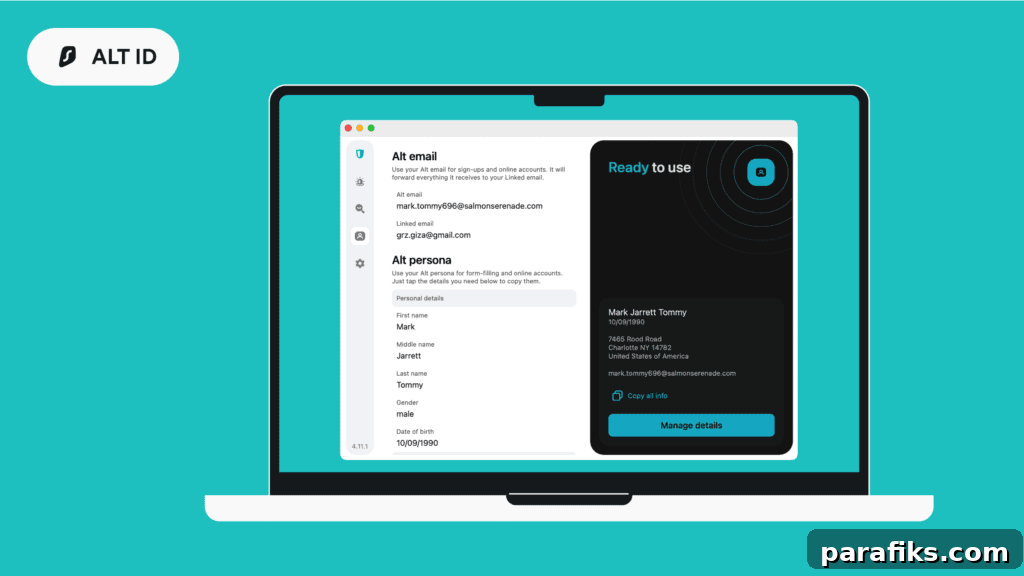
– Alternative ID: A tool that provides a disposable identity—fake name, email, and other non-sensitive details—so you can sign up for sites and newsletters without revealing your real information. This reduces spam and the risk that your real data will be exposed in a breach.
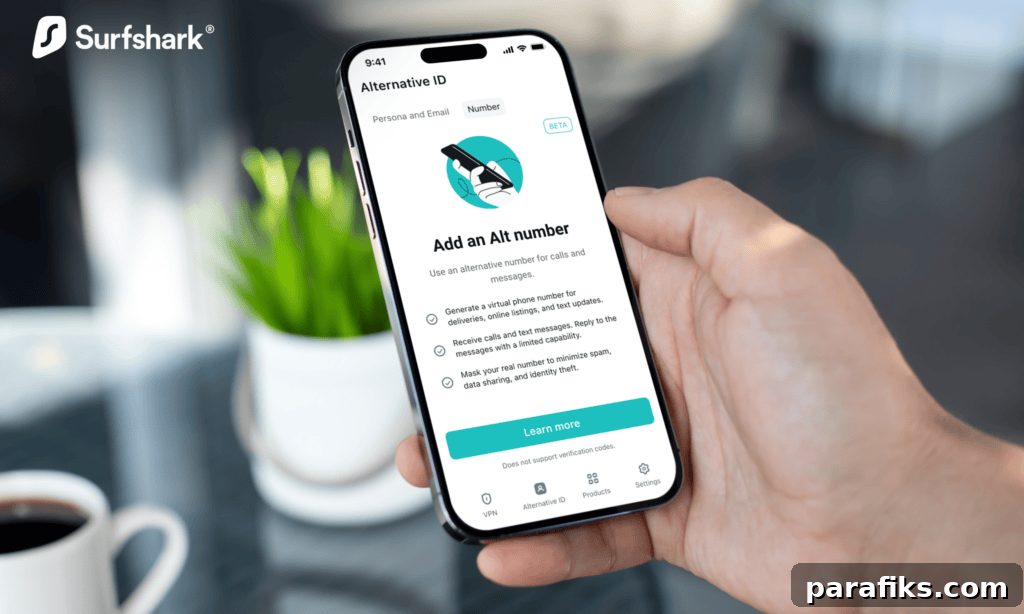
– Alternative Number: A virtual phone number you can share instead of your real one. It receives calls and texts but keeps your primary number private, reducing spam and lowering the chance of SIM swap attacks and SMS phishing.
Other privacy tools include VPNs to encrypt your internet connection, ad and tracker blockers, and data breach monitoring. These combined measures make it much harder for attackers to access your accounts or harvest your information.
Many privacy services are designed to be user-friendly, so you don’t need advanced technical skills to benefit from them.
Why Privacy Saves Money
Protecting your personal information has direct financial benefits:
1. Avoid costly recovery
Identity theft and fraud recovery can be expensive—legal fees, credit monitoring, and out-of-pocket expenses add up. Preventing fraud avoids these costs in the first place.
2. Prevent hidden fees
Compromised accounts can lead to missed payments, frozen funds, late fees, or penalty interest. Keeping accounts secure helps you avoid these downstream costs.
3. Long-term savings
Taking preventive steps saves time and stress and preserves your credit score, which can affect loan rates and insurance premiums in the future.
Immediate Steps You Can Take Right Now
Your personal information is valuable—protecting it is one of the best investments in your financial and emotional well-being. Start with a few simple steps:
- Enable two-factor authentication on important accounts.
- Use a password manager to create and store unique passwords.
- Limit where you share your phone number and personal details.
- Verify suspicious requests by calling a trusted contact number you already have.
- Consider privacy tools that provide disposable identities or virtual numbers to reduce exposure.
I still remember the anxiety of receiving a convincing fake email from someone claiming to be my bank—that experience pushed me to take stronger precautions. By taking control of how and where you share your data, you protect not only your privacy but also your financial future.
Stay vigilant, adopt privacy-minded habits, and use the tools available to reduce your risk. The peace of mind that comes with knowing your information is secure is well worth the effort.
What steps are you taking to protect your personal information online? Let me know in the comments!