

Hello! Are you considering a major relocation? Here’s how Jill and her family moved to Norway—one of the most expensive countries in the world—without relying on jobs at the outset or tapping into their retirement savings. Enjoy!
Many people rightly say that moving to a lower-cost area is one of the smartest financial decisions you can make. With lower living costs, your savings stretch much further.
But what if the place you want to move to is not cheaper—in fact, it ranks among the priciest countries? What if you plan to move on a student visa, giving up two steady incomes with no guaranteed income in the new country, and you have three hungry kids?
That’s exactly what we did in 2019. We left a Midwestern US city with a modest cost of living and moved our family of five to Stavanger, Norway.
It took years of planning, many unknowns, and several delays. Nearly three years after our first move, we’re confident we made the right choice for our family.
A normal family, a normal life
Before our adventure began, we lived a pretty typical Midwestern life. I taught in public school and my partner worked as a consumer advocate for state government. We lived within an hour of both of our families and relied on that support with young kids.
As the children grew, we wanted them to experience more of the world. Both of us had lived abroad earlier in life and found those experiences transformational. We wanted our kids to have similar opportunities.
Making that a priority required years of planning, deep commitment, and sacrifices, but when we ask ourselves if it was worth it, the answer is a resounding yes.
In the beginning: setting ourselves up for success
Even though I’m a planner, our prior choices—long before we considered moving abroad—put us in a strong position financially. When we married in 2009, I brought into the marriage real estate holdings and a mortgage-free home; my partner had a mortgage on a home he was renovating and student loans. Neither of us had credit card debt or car loans.
Early on we lived in two different cities during our first year of marriage because of my teaching schedule. Soon after, I became pregnant and took a year off from teaching. For that period we lived primarily on my partner’s income and conserved cash to build a cushion. When I returned to work in 2011, we used home equity to aggressively pay off the student loans the same year.
From then on our financial plan focused on steady, responsible choices: buying used cars and paying cash, contributing monthly to retirement, and directing extra funds toward mortgage payoff.
Action step: Build a solid foundation before chasing big dreams. Pay down debt, create savings, and get your finances in order. It’s not glamorous, but it enables future opportunities.
We have a nutty idea
By 2015 I no longer needed to rely on both incomes; I wanted more time with the kids and to grow a language business I’d started, so I left teaching. We weren’t actively planning an international move yet, but we were on stable financial footing. Rental income was funding our business and helping us pay debt quickly, and we carried no credit card or car payments.
In 2016 we started seriously exploring living abroad. Norway kept coming up as the best fit: my husband has Norwegian ancestry, our values aligned with Norway’s strong family and gender-equality culture, and the outdoors lifestyle appealed to us. The downside was Norway’s tight immigration rules. After research, we decided my husband applying for a master’s degree offered the most viable path: higher education is essentially free there and many graduate programs are taught in English.
But a student visa limits work (around 20 hours per week) and language barriers made steady employment uncertain for both of us.
Action step: Focus on what matters. Keep distractions from derailing your main objective.
A trial run
Before committing fully, we took a family trip to Norway in summer 2017 to see if we liked it. The visit confirmed everything—the people, the child-friendly culture, the abundant outdoor life, and the connection with distant relatives. Norway felt like the right place for us.
Action step: Take a small step to test big changes. Try the lifestyle or work you envision in a low-risk way before fully committing.
The first big disappointment
To make the plan real we needed 1) university acceptance and 2) sufficient funds. I was invited back to teaching in 2017, which helped with savings because I dedicated my entire paycheck to a separate account labeled “Norway money.” My partner applied to several Norwegian programs but was not accepted that round. Though disappointing, the setback strengthened our resolve.
Action step: Expect setbacks and treat them as opportunities to adjust and persist rather than to quit.
Getting real: We put some specific numbers on it
That rejection turned out to be helpful. We could have moved earlier, but likely would have needed to tap into rental equity. After crunching numbers, I decided we needed about $120,000 in savings to cover expenses for two years without income. In the first year we’d only saved around $40,000, so we pressed on.
I created a conservative monthly budget to include higher estimates for rent, food, transportation, phones, clothing, utilities, incidentals, and travel within Europe. I also considered currency risk and used an exchange rate of 8 NOK to the dollar to provide a buffer.
Action step: Do detailed research and plan conservatively. Join expat groups, read reliable sources, and model realistic budgets.
The final year: ramping up the savings
In fall 2018 the real estate market allowed me to sell some rental properties. We used proceeds to pay off remaining rentals and our mortgage, becoming debt-free. The cash flow saved from no longer servicing mortgages increased our monthly income, which we funneled into our Norway fund.
We also used a 457(b) retirement plan to save pre-tax dollars that could be withdrawn after leaving the job, allowing us to accelerate savings without touching retirement accounts. That strategy let us save roughly 30% faster than saving post-tax.
Action step: Use available tax-advantaged vehicles and time the sale of assets to build the cushion you need.
Go time: things get real
We applied to nearly ten graduate programs between us. In March I was accepted to the University of Tromsø, and in April my husband was accepted to a program in Stavanger. Once we knew the city, planning became concrete. We minimized possessions, prepared the house for sale, informed family, and began the long list of practical tasks for an international move.
One colleague observed that our move resembled a form of Financial Independence: Temporary Retirement (FITR). We had planned and saved enough to step away from full-time work for two years without touching retirement savings.
Action step: Recognize progress. Acknowledge milestones to maintain momentum and perspective.

Final decisions and moving expenses
When my husband’s acceptance to Stavanger arrived, we found a three-bedroom apartment for 14,000 NOK per month (about $1,650 with a rate near 8.5 NOK to the dollar). Visa appointments, packing, and paperwork followed.
Moving costs were larger than expected. We sold cars and furniture but ended up donating many items and selling one car for less than market value because we needed it until the last day. Net income from sales totaled about $5,000, while moving and selling costs approached $22,000. Major costs included painting and prep for sale, a shipping container, plane tickets, and incidentals. Despite these expenses, the house sale covered realtor fees and left a profit.
How the budget worked out
We were pleasantly surprised to spend far less than our conservative $120,000 target. A favorable exchange rate—never dropping below 8.5 NOK per dollar during our first months and briefly rising above 10—meant our dollars went further than planned. We also avoided Oslo-level rents.
Actual typical monthly expenses averaged about $3,500, significantly under our estimate. Key categories included rent (roughly $1,560–$1,625), food (around $1,200), minimal transportation costs thanks to biking and walking, modest phone and clothing expenses, internet, electricity, and incidentals. Travel within Europe ended up at $0 due to the pandemic canceling plans.
Action step: Always plan for worst-case scenarios and build a cushion when estimating costs. Unexpected expenses will arise; prepare for them.
Income comes early
Although we had planned for up to two years without earnings, both of us found work sooner than expected. I was hired in October 2019 at an international school on a part-time schedule that fit our transition period. My salary narrowed our monthly shortfall to roughly $1,500. My husband secured an internship that led to a paid part-time role in January 2021, and later full-time employment. By then, most expenses were covered by income rather than savings.
A happy ending—and a global catastrophe
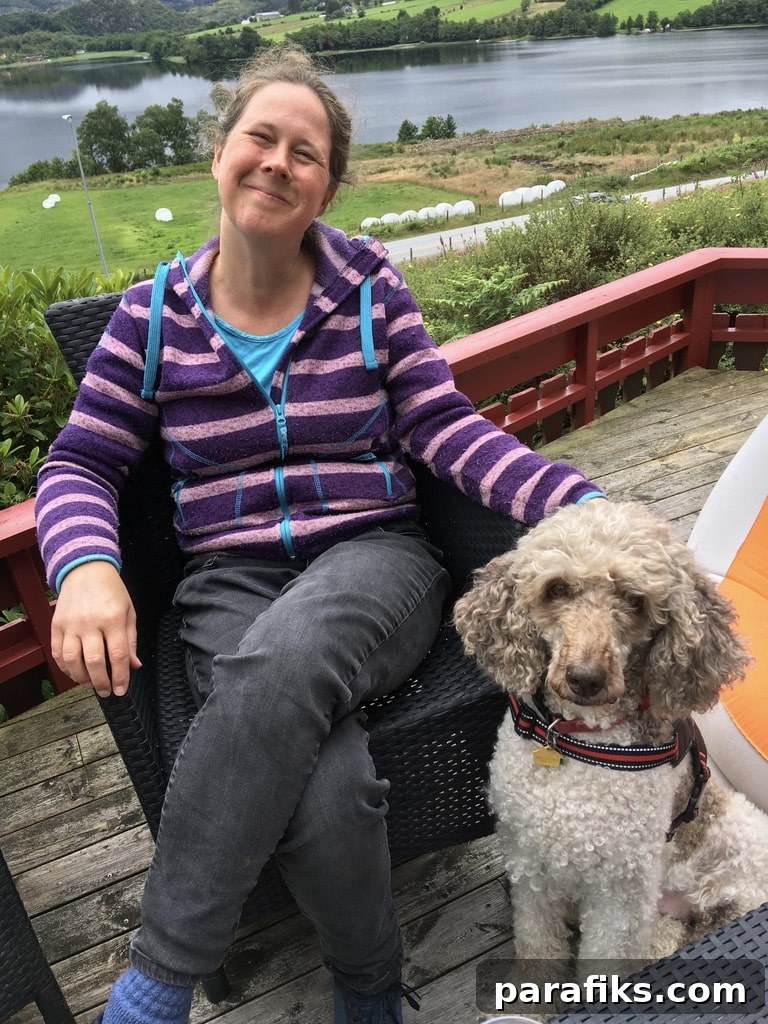
We’ve now lived in Norway for over two and a half years. Eight months after our move, the global pandemic disrupted travel and prolonged our time away from family, which was difficult. Despite those hardships, we’re grateful we made the move.
We’re both working and engaged: my husband has a full-time role at the energy startup that grew from his internship, and I teach four days a week at an IB school where I enjoy professional freedom. I’ve also launched a money-and-dream mentoring service for teachers.
In June we used proceeds from selling our U.S. house to purchase a home in Norway. We carry a mortgage now, but plan to repay it early and continue toward our next period of intentional, temporary retirement.
Author Bio: Jill Wiley is a money and dream mentor for teachers and a teacher with 21 years of classroom experience. She helps teachers reclaim joy and dignity by taking control of their finances, whether they’re managing monthly bills or pursuing financial independence. In 2019 she and her partner moved to Norway with their three children, and she currently teaches French and English part-time.
Are you interested in moving abroad?