
Are you wondering how to make a resume? Below you’ll find a clear example, practical tips for writing a cover letter, and concise answers to common questions about creating an effective resume.
A strong resume matters. Employers often request one, and it’s a key way to distinguish yourself from other applicants.
Many positions attract hundreds or thousands of applicants, so a resume that captures attention and communicates value quickly is essential.
I interviewed resume expert Katie Pelton for guidance on how to make a resume. Some of you may remember her from an earlier interview in 2013, when she discussed running a resume business. As the founder of Resumes By Katie, Katie has helped people across the country improve their resumes, cover letters, LinkedIn profiles, and interview skills.
She’s passionate about helping people recognize and clearly present their accomplishments. When she isn’t helping job seekers, she enjoys pizza with her fiancé and rescue dog in Minneapolis.
This article is not sponsored; it’s intended to help readers improve their resumes and increase their chances of landing desired jobs.
Readers submitted questions about how to make a resume. Major topics include:
- How long should a resume be?
- What are the step-by-step actions to create an effective resume?
- How can I make my resume stand out?
- Is a cover letter necessary, and how do I write one?
- How should someone make a resume with no job experience?
- How should employment gaps be handled?
- What should not be included on a resume, and what are the worst resume mistakes?
- Do resume expectations differ by region?
- How should volunteer work be listed?
The answers follow. Use them to sharpen your resume and improve your chances in the hiring process.
Here’s how to make a resume
1. Background: Why trust this advice?
I graduated college in 2010 at the height of the Great Recession and learned to navigate a highly competitive job market. Throughout career transitions—driven by economic shifts, relocation, and growth—my resume, cover letters, and LinkedIn profile helped secure interviews and job offers.
With a degree in print journalism, I value concise, precise writing and asking the right questions. My early marketing experience taught me how to tailor content for specific audiences and make information stand out. I began helping students with resumes for internships and turned that into a business in 2012. Since then I’ve supported hundreds of professionals across industries and career levels.
I read widely on career development and resume writing, and I’m a member of Career Directors International to stay current on best practices and promote fair hiring.
2. How long should a resume be?
Given shorter attention spans and heavier workloads for HR and hiring managers, aim for one page unless you’re applying for executive roles. For senior-level or executive applications, two pages is typically acceptable.
3. Steps to make a good resume
Preparation starts well before you apply. Keep a running document or folder of accomplishments, measurable results, feedback, and copies of performance reviews. It’s hard to recall specifics years later, so track your achievements as you go.
If you haven’t been keeping records, take time now to gather accomplishments and approximate metrics from past roles. Better to collect more detail and edit it down for each application than to rely on faulty memory.
The more quantitative your results, the stronger your resume. Examples: units sold, quota achievement rates, number of new accounts generated, percentage improvements, or time saved due to process changes.
When preparing a resume:
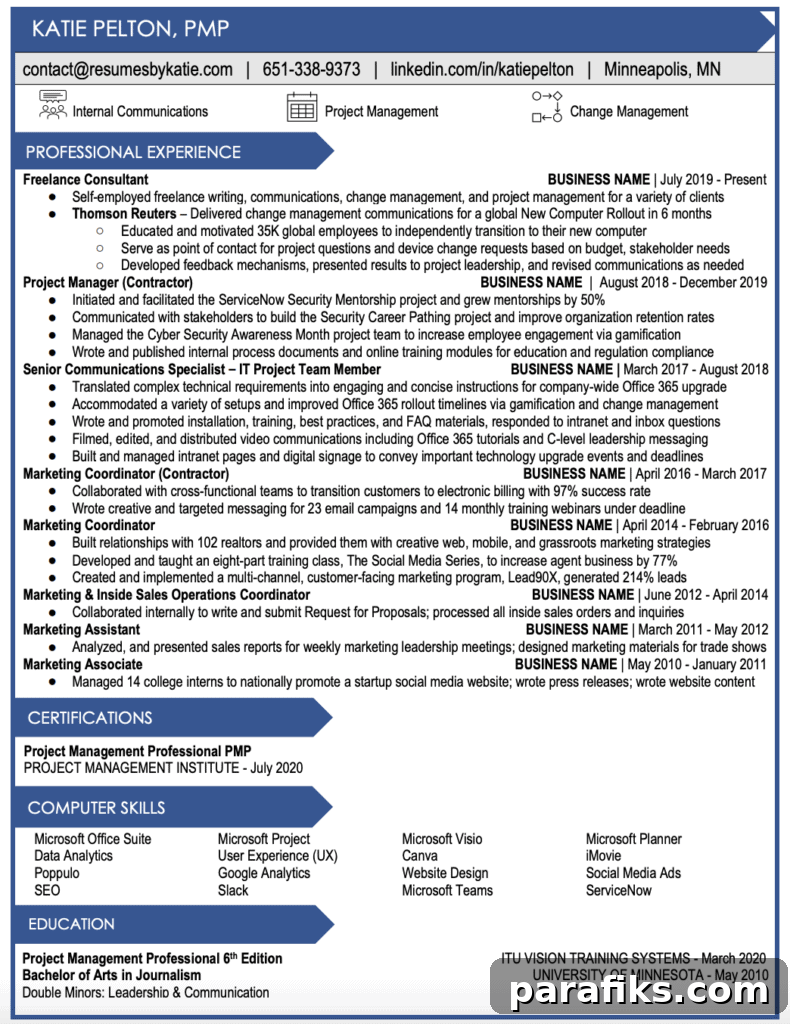
- Place your name and contact information at the top. Use a readable font size—around 16pt for your name is common—but avoid overly large text that eats valuable space. You don’t need a full mailing address; include phone number, email, city and state, and your LinkedIn profile or portfolio URL if applicable.
- Use reverse-chronological order for work history unless another format better highlights relevant skills. For each role include job title, employer, dates (month and year), and location. If you have gaps or unrelated employment, emphasize relevant skills and accomplishments near the top.
- List accomplishments in bullet points under each role. Begin bullets with strong action verbs, avoid repeating the same verbs, and keep each bullet to one or two lines. Prioritize detail and space for your most recent and relevant roles.
- Tailor your resume to the job description. Incorporate keywords from the posting—skill names, tools, and technologies—truthfully and naturally in how you describe achievements.
- Proofread thoroughly. Eliminate spelling and punctuation errors and maintain consistent formatting. Ask a trusted person to review your resume; a fresh pair of eyes catches mistakes you might miss.
- Save and submit your resume as a PDF to preserve formatting. Name the file clearly, such as FirstLast Resume or FirstLast Marketing Resume if you use versions targeted at different industries.
4. How do you make your resume stand out?
Balance a clean, visually appealing layout with clear, relevant accomplishments. A cluttered resume may prevent you from getting an interview, even if your experience is strong.
In creative fields, visual resumes that use subtle color and design elements can work well. For most roles, keep color minimal and professional—deep blue is a conservative, eye-catching choice.
Beyond design, the real advantage comes from getting your resume directly into hiring managers’ hands. Use LinkedIn or networking to identify the hiring manager and email them directly. Sending a targeted email with your resume attached demonstrates initiative and increases the chance your application is seen.
5. Is a cover letter necessary and how to write one?
Opinions vary: some companies don’t read cover letters, while others value them as evidence of extra effort. When in doubt, include one—but make it targeted. A generic cover letter does more harm than good.
Do your research. Address the hiring manager by name when possible, explain why you are excited about the company, and describe how your skills and experience will solve a specific problem or contribute to the organization. If you find the hiring manager’s email, your message can serve as the cover letter with your resume attached.
Write in a conversational tone that shows personality and explains what you’ll bring to the role—not just a repetition of resume bullets.
6. How to make a resume with no job experience
Early-career candidates can emphasize education, extracurricular activities, internships, volunteer work, certifications, and transferable skills. Everyone starts somewhere—highlight relevant projects, leadership roles, and measurable accomplishments from any experience.
7. Employment gaps: how to handle them
Employment gaps are common and often come with valid reasons. They don’t automatically diminish your value as a candidate. Gaps can show personal growth, caregiving responsibilities, education, or skill-building. If asked in an interview, be honest, explain what you did during the gap (training, caregiving, volunteering, etc.), and emphasize your readiness and enthusiasm to return to work.
8. What not to put on a resume and common mistakes
Avoid listing irrelevant experience, especially items from high school or early part-time jobs unless they are your most relevant or highest credentials. If you’re well into your career, omit GPA and most college extracurriculars unless you earned notable awards or scholarships.
Use your resume space wisely—don’t waste it on trivial personal details like pet names or hobbies that don’t relate to the job. Share meaningful volunteer or community involvement that demonstrates relevant skills, but avoid “fun facts” that aren’t professionally relevant.
9. Do expectations differ by region?
Resume expectations tend to vary more by company size and industry than by geography. Key points:
- Some employers use ATS (Applicant Tracking Systems) that filter on keywords. Because you can’t know for sure, incorporate keywords from the job description naturally into your resume.
- The company’s size matters: at a small business highlight resourcefulness and a capacity to wear many hats; at a large corporation emphasize collaboration, teamwork, and relevant scale or international experience.
- Hiring preferences are subjective and can include individual biases. Focus on clear formatting, relevant skills, and tailored content.
- If a job requires relocation, clarify whether you’re local or willing to move. A city and state on your resume provides helpful context without including a full mailing address.
10. How to list volunteer work
Volunteer work can be listed in a separate section or included under professional experience if it’s substantial and relevant. Long-term volunteer roles that demonstrate significant responsibility, skills, and commitment deserve prominent placement. Translate volunteer duties into the same results-focused language you use for paid roles so they aren’t overlooked.
11. Additional practical resume tips
- Avoid the vague verb “help.” Choose specific verbs that clarify your role and impact—helping can mean very different things depending on context.
- When possible, identify the hiring manager’s email to send your application directly. Targeted outreach improves visibility.
- If you want to check ATS compatibility, there are free resume scanners that analyze keyword and formatting issues; such tools can provide helpful feedback before you submit.
Here is a resume example:
Do you have any other questions on how to make a resume?