
Do you want to learn how to earn money with a direct mail side hustle?
Have you ever thought about helping local businesses advertise without launching a full marketing agency or spending a lot of money up front?
This article features an interview with Rachel and Dalton, who run a local direct mail card business. They tried several side hustles, eventually left their jobs, and built a business focused on community direct mail cards for local businesses.
So far, they’ve generated over $100,000 in revenue from these cards and have mailed more than 40 campaigns.
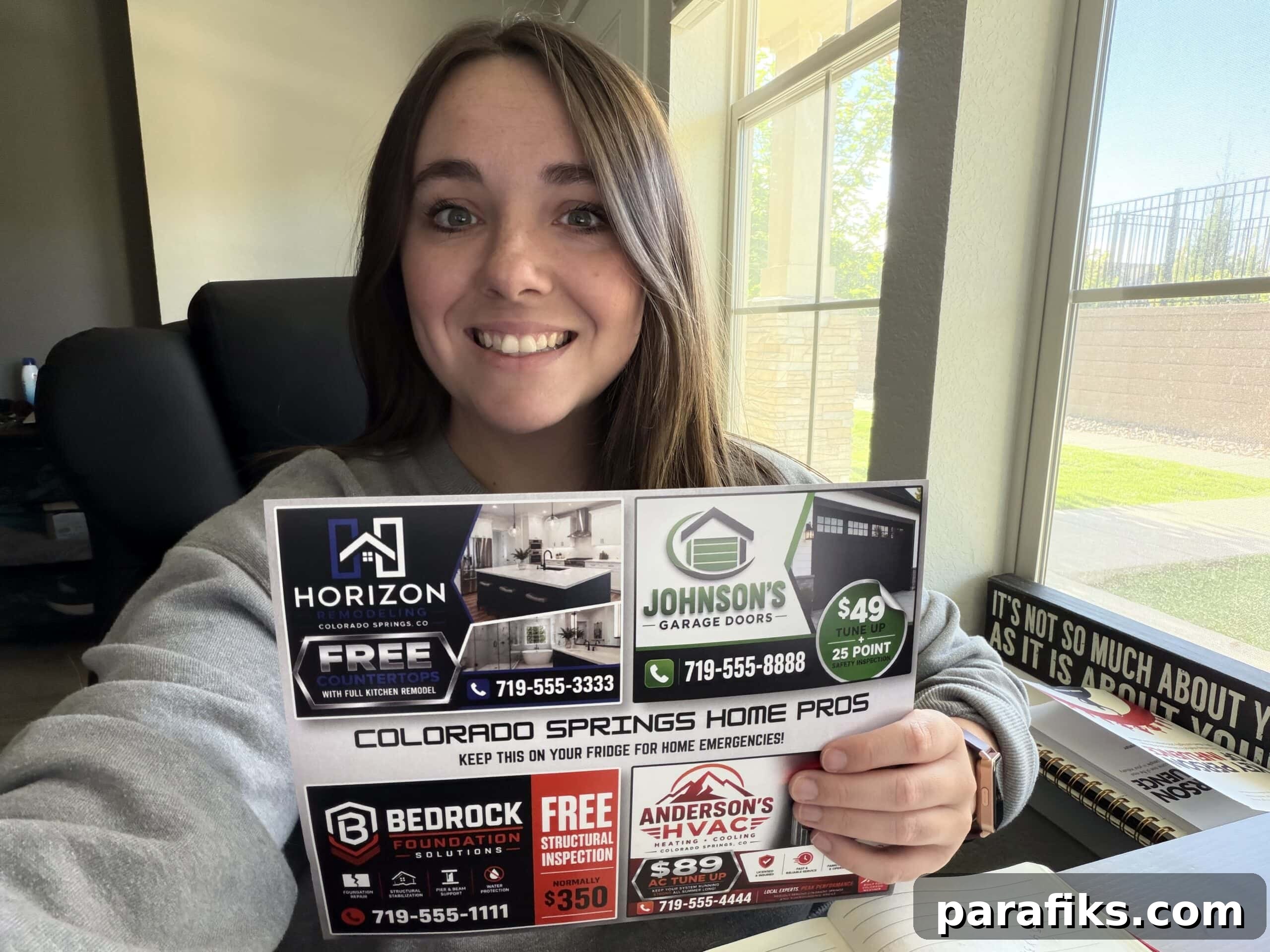
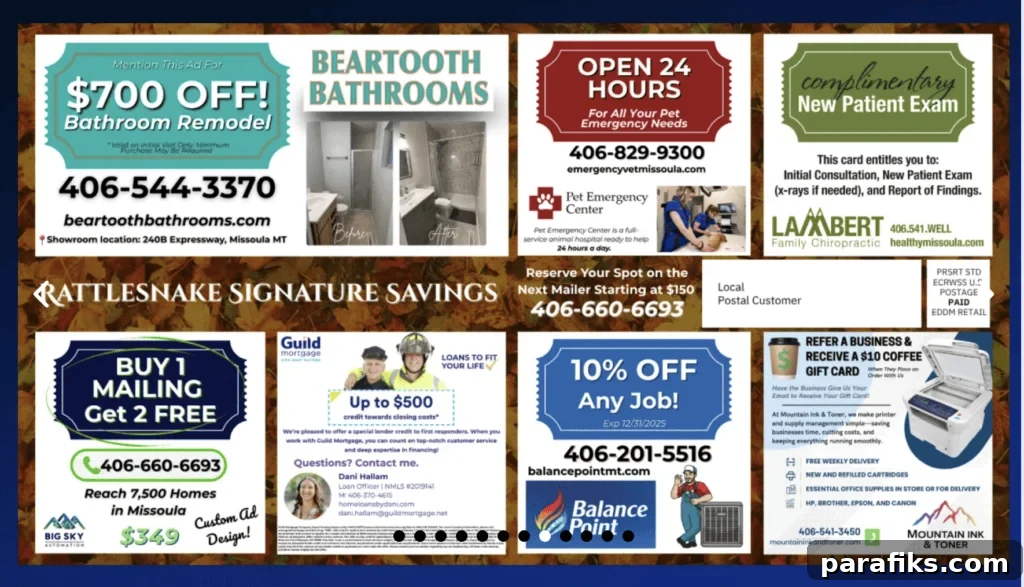
A community direct mail card is an oversized postcard that showcases multiple local businesses. Each business pays for an ad space, the card is mailed to thousands of homes in a targeted neighborhood, and the organizer covers printing and postage, keeping the remaining revenue as profit.
Rachel and Dalton report that a single card can yield roughly $1,100 to $3,500 in profit depending on pricing and costs.
In this interview you’ll learn:
- How a community direct mail card works
- Typical earnings and profit margins
- Startup costs and how to begin with almost no money
- How to find local advertisers
- How to choose neighborhoods and use USPS Every Door Direct Mail (EDDM)
- Whether design or printing experience is necessary
- How long the process takes and what a typical timeline looks like
How To Make $1,000+ With a Direct Mail Side Hustle
This interview is for anyone who wants a straightforward, low-overhead way to make money by organizing shared direct mail campaigns for local businesses.
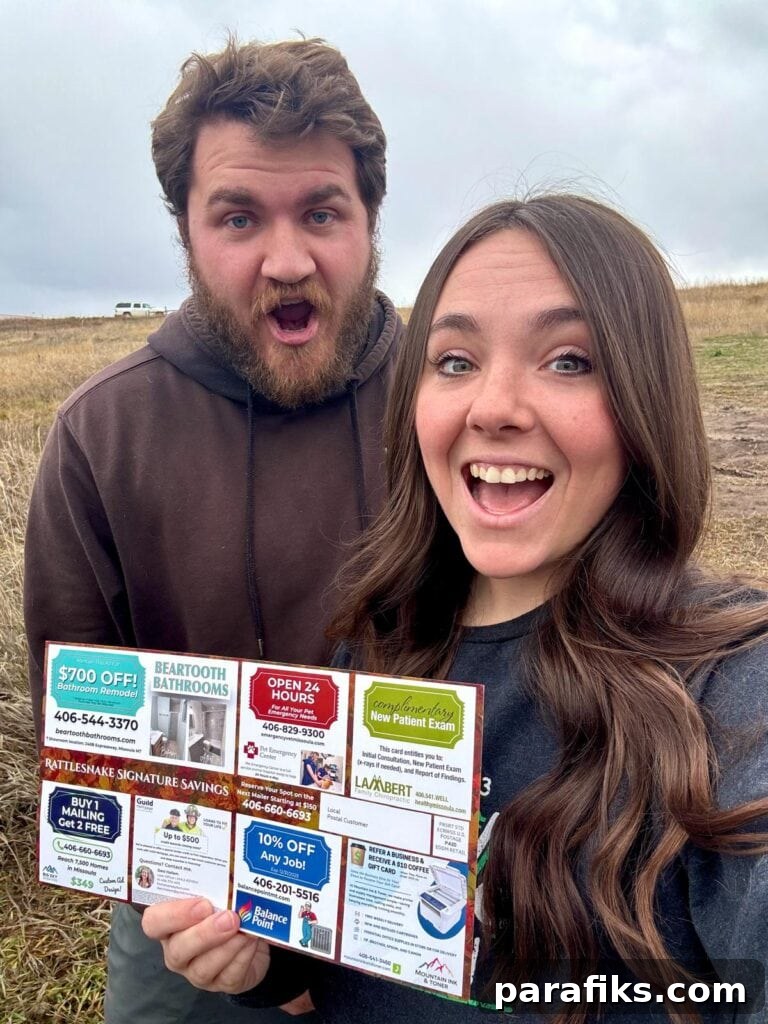
1. Tell us your story — who are you, and how did you start with a direct mail side hustle? What do you enjoy about running this business?
I’m Rachel and my husband is Dalton. We met at work and quickly realized we both wanted to run our own business. Our first side hustle together was buying a pallet of returned speakers and reselling them on Facebook Marketplace; a small win that showed us we liked hustling and building things together.
Over several years we tried multiple side hustles. We saved for five years and eventually left our jobs with about three years of living expenses saved. We agreed to try full-time entrepreneurship for three years and then reassess if it didn’t work.
We began as a digital marketing agency offering websites and local listing setups, but quickly realized local businesses were overloaded with pitch emails. They had often been burned by overpromises. What they hadn’t seen recently was an affordable, effective direct mail option. That led us to create a community card: a single oversized postcard shared by many businesses so each pays only a fraction of the mailing cost.
What I appreciate most about this business is the freedom it provides: flexible hours, remote work, and the confidence of running something that pays the bills. Plus, working together as a couple has been a real benefit for us.
2. What is a community direct mail card and how does the business operate?
A community card is a large postcard—commonly 6.5 by 12 inches—that features multiple local businesses. Instead of a single business mailing to thousands of households, we place up to 16 businesses on one postcard and mail it to a targeted group of homes in a neighborhood. Each industry is limited to one advertiser to preserve exclusivity.
The business model is simple: choose a neighborhood, sell ad spots, collect payment up front, design the card, and send the final file to a printer that handles EDDM fulfillment. The printer takes care of printing, bundling, and delivering to the post office. After covering printing and postage costs, the remaining funds are your profit.
This format works because it reduces cost for businesses while delivering real, visible local exposure to homeowners who are likely to hire them.
3. How do you make money with a direct mail card? What are typical prices and profits?
Their standard card includes 16 ad spaces—8 on the front, 8 on the back—each sold to a different business and restricted to one per industry. Pricing varies by market: they charge between $150 and $300 per business per mailing. Higher-income neighborhoods and larger cities support higher prices.
Example math: at $150 per spot (16 spots) you collect $2,400. After printing and postage for roughly 2,500 homes, profit can be about $1,128. At $300 per spot, gross is $4,800 with profit around $3,528. Numbers vary by printer and route, but a single card usually nets between $1,100 and $3,500.
An important advantage: many advertisers renew. After the first card, you begin with returning customers and faster sales, which turns the effort into a repeatable business.
4. How much have you earned and what can a beginner expect?
They’ve made over $100,000 in revenue and mailed more than 40 campaigns. Beginners can reasonably expect around $1,000 in profit on the first card, since initial outreach and list-building take time. By the third card, most operators see significantly faster sales as advertisers return and word spreads.
With consistency, you can often run a card every 4–6 weeks. Rachel and Dalton started running two cards per month after their second month and reached consistent monthly income that covered expenses.
5. How much does it cost to get started?
This is a very low-cost side hustle. You can essentially start with $0 out of pocket because you don’t pay for printing until advertisers have paid you. The only tool you need initially is a simple design platform—Canva’s free tier is sufficient. AI copy and design tools can speed things up, too.
Collect payment from advertisers before sending the design to the printer; their money covers printing and postage, leaving you with the profit. If needed, sign up for any paid tools only after you’ve sold your first spot—your first advertiser will have funded those tools.
6. How do you find local businesses and which types respond best?
Rachel and Dalton use Facebook Messenger and email to reach businesses. They search for local providers by category, gather contact details, and send a short, friendly message: “We’re putting together a postcard featuring local businesses that goes to 2,500 homes in [neighborhood]. We only allow one business per industry. Would you be interested?”
Follow-up by phone closes many deals. The easiest businesses to sell are those that understand advertising and sell higher-ticket services—HVAC, plumbing, roofing, landscaping, real estate, dental, med spas—because one client from a mailing often covers the ad cost many times over. Businesses already spending on ads are also quick to say yes.
7. Why choose a community card over Facebook, Google, or a business’s own mailer?
A business mailing 2,500 postcards alone can cost north of $2,000. On a shared card, they pay a few hundred and reach the same homes. Digital ads work but are crowded and expensive; direct mail stands out because households receive less physical mail now, so an oversized, colorful card gets attention, stays on counters or fridges, and generates longer-lasting impressions.
Plus, being featured alongside other local businesses creates a community feel that resonates with recipients and feels more trusted than a faceless online ad.
8. How do you choose routes and how does USPS Every Door Direct Mail (EDDM) work?
Choose neighborhoods local business owners immediately recognize—places with middle to upper-middle household incomes (roughly $70,000–$120,000) where homeowners buy services. Avoid assuming the wealthiest areas always perform best; many high-income households ignore promotional mail.
EDDM lets you mail to every address on selected carrier routes without needing names or mailing lists, and postage is lower because the USPS doesn’t have to sort by individual addresses. The USPS EDDM mapping tool shows route boundaries, number of homes, and demographic estimates so you can pick routes that match your target audience. Most printers that offer full EDDM fulfillment handle all postal requirements—sizes, bundling, postage markings, and paperwork—so you only need to choose routes and provide a print-ready file.
9. Do you need graphic design or printing experience? How do you prepare the card and find a printer?
No design experience is required. Canva simplifies ad creation, and many businesses provide logos or previous flyers you can adapt. AI tools can generate copy or mockups quickly. The workflow is: collect advertiser info, design each ad, assemble all ads into the card template, and export the file.
Search for printers labeled “full fulfillment EDDM” or “EDDM full service.” These vendors print, bundle, complete required paperwork, and deliver to the post office. Before selling spots, get a quote for your chosen card size and route count so you know your exact cost—and thus the price you need to charge per spot.
10. How long does it take to complete a community card, and what does a typical week look like?
Expect 4–6 weeks from first outreach to mail delivery when starting out—most of that time is selling ad spaces. With traction, filling a card can take one to two weeks. Early on, Rachel and Dalton committed to daily outreach: roughly 5 Facebook messages and 10 emails each day. Consistency matters more than volume—sustained daily outreach generates the conversations that turn into sales.
A typical week while filling a card: send outreach each morning, reply to interested businesses, take payment, collect logos and offers, design ads in Canva, and once all spots are paid and approved, send the file and route selection to the printer. Cards usually arrive in mailboxes two to three weeks after the printer receives the job.
11. Does this work better in a small town or a large city?
Both work, with different advantages. Small towns respond well to the community focus and wide reach—a single mailing can touch a large portion of the town, and reputation spreads quickly. Larger cities offer higher volume of businesses and neighborhoods, letting you run multiple cards in different areas and charge more per spot. In cities, competition for digital channels makes a low-cost direct mail option especially appealing to advertisers.
12. Steps to start this side hustle this month
If you’re ready to begin, follow these steps:
- Choose your neighborhood: use the USPS EDDM mapping tool to pick carrier routes totaling around 2,500 homes with target household incomes in the $70k–$120k range.
- Get a printer quote: find a full-fulfillment EDDM printer and get pricing for a 6.5 by 12 inch postcard to your chosen routes.
- Set your price: divide your cost by 16 spots and add the profit you want—typically $150–$300 per spot.
- Create a Canva template: design a card layout with 16 ad spaces (8 front, 8 back).
- Build a prospect list: compile 100 local businesses across key industries—HVAC, plumbing, roofing, landscaping, realtors, dentists, auto repair, etc.
- Start outreach: send a simple message to 10–15 businesses daily and follow up by phone to close sales.
- Collect payment up front: a spot is reserved only after payment—then request logos, offers, and contact details.
- Design the ads: create each ad in Canva and send proofs for approval.
- Send to print: once all 16 spots are sold and approved, deliver the design and route list to the printer for fulfillment.
- Follow up: after the mailing lands, ask advertisers if they want to renew and begin outreach for the next neighborhood.
Do those ten steps consistently for 30 days and you’ll have your first card in the mail. The process is straightforward and repeatable.
13. About the Community Card Playbook and membership
Rachel and Dalton created a membership that teaches their full process—from finding advertisers and choosing routes to designing, pricing, and sending cards. The membership includes templates, scripts, printer recommendations, video walkthroughs, and live calls where they answer questions and review members’ real cards.
Who it’s for: anyone wanting extra income, aspiring entrepreneurs who want a low-risk way to try business ownership, people interested in starting a marketing agency, or local business owners who want to reach thousands of homes at low cost by running their own card and filling the remaining spots with other advertisers.
The membership’s main goal is simple: help you get your first card mailed. Once you complete one mailing, the system becomes repeatable and scalable.
Would a community card like this work where you live?
Recommended reading:
- 19 Best Side Hustles for Couples To Make Extra Money Together
- How I Made $6,161 in Just 4 Months With a New Etsy Printables Shop
- 31 Best Stay At Home Jobs
- 22 Ways To Make Money Online Without Paying Anything
- How I Got Paid $39,177 Directly From Facebook in One Month Just To Post Content