
Today I want to introduce you to my friend Kayla Sloan. Kayla is a full-time blogger, virtual assistant (VA), and project manager who earns more than $10,000 per month working from home.
Kayla began her career as a credit analyst, earning about $2,000 per month. She struggled to make ends meet while paying off debt, so she started a side hustle as a virtual assistant.
In the interview below, Kayla explains how she grew her business from a part-time side gig into a full-time career that now generates five figures each month. She discusses how virtual assistance can be an excellent side income or a full-time profession, why it’s considered one of the best online jobs, the most in-demand VA services, and typical virtual office assistant pay.
As a virtual assistant, your tasks can include administrative duties, data entry, basic bookkeeping, calendar management, copywriting, graphic design, blog post management, social media management, email response for clients, Facebook group moderation, travel planning, customer service, phone support, and more.
The exact work you do depends on the type of VA you choose to be—there are many specialties. That flexibility lets you decide which tasks you enjoy and where to focus your skills. You also get to be your own boss.
Read the interview for full details, and consider Kayla’s course, $10K VA, if you want a structured program to learn how to become a successful virtual assistant.
Related content:
- Best Ways To Find Virtual Assistant Jobs
- 75+ Ways To Make Extra Money
- 12 Work From Home Jobs That Can Earn You $1,000+ Each Month
- The Important Reasons You Need Multiple Streams of Income
- 43 Extreme Things People Have Done To Make Money
- 15 Home Business Ideas & The Free Courses You Need To Get Started
- How To Find Online Bookkeeping Jobs
Please give us a background on yourself and how you started as a virtual assistant.
In December 2013 I started my blog as a hobby—a place to share my thoughts and document my progress out of debt.
At that time I had no idea what a virtual assistant was or that it was possible to earn a living online from home.
I read many personal finance blogs for inspiration. Making Sense of Cents was one of the first blogs I followed, and Michelle’s income reports inspired me. They made me realize I could earn money from home as a writer, which was my initial goal, but I still didn’t know what a VA did.
A few weeks later I landed my first freelance writing job simply by asking some blogger friends if they knew of opportunities—one of them became my first client.
After a few weeks of writing, I noticed my posts hadn’t been published. Trying to be helpful, I asked if I needed to change anything. My client explained she was overwhelmed and asked if I could help her catch up as a virtual assistant. I needed money to pay down debt, so I accepted.
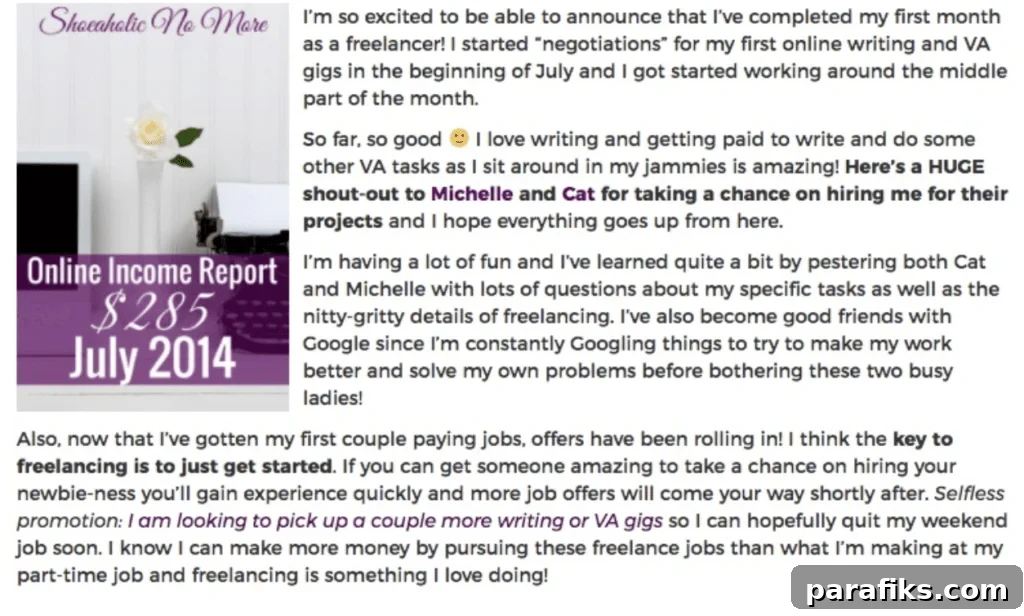
That first month I earned $285, and I was thrilled. That small start launched my business.
Can you explain what exactly a virtual assistant is, who they work for, what they do, etc.?
A freelance virtual assistant supports entrepreneurs and business owners by completing administrative and behind-the-scenes tasks that keep the business running smoothly.
Think of it like an administrative assistant for a traditional office, except you work remotely and set your own schedule. That flexibility makes it easy to start as a side hustle and choose your hours rather than working a strict 9–5.
As a freelance VA you can take on as many or as few clients as you like, which is often preferable to working for an agency that takes a cut of your earnings and may impose fixed hours or minimums.
VA tasks vary widely depending on your skills and interests—there are well over 100 different services you can offer.
How much can a beginner VA expect to make?
When I began, I charged $15 per hour. In my area that was roughly double what I’d make in a minimum-wage retail job.
As I learned new skills and tools and took on more complex tasks, I was able to raise my rates. Today $15 per hour is on the low end for starting VAs; if you already have some relevant skills, you should charge more from the start.
Because you control your workload, your earning potential is unlimited. Raising your rates with each new client lets you earn more while working fewer hours over time.
I’ve had students in my course move from earning a few hundred dollars on the side to becoming primary earners for their families.
What do you like about being a virtual assistant?
There are many advantages to being a freelance virtual assistant.
First, you can often earn far more working for yourself than in many traditional roles. Most months I earn five to six times what I made at my previous day job, which accelerated my debt payoff and savings.
You set your own hours and can work from anywhere with internet access. As long as deadlines are met, most clients don’t mind where or when you do the work, and you don’t have to request formal time off for vacations or appointments.
VAs also get paid to learn: taking training courses and mastering new tools helps you offer higher-value services and command higher rates. It’s a productive cycle.
Choosing who you work with is another major perk. I enjoy working with business owners whose missions inspire me and helping them make an impact—work that feels meaningful and fulfilling.
How can a person find their first virtual assistant job?
I found my first client by asking friends if they knew anyone hiring. Since then, referrals have driven most of my client growth—so I rarely have to pitch for new work and can be selective about my clients.
While many beginners turn to job boards, I don’t recommend them unless you have no other options. Job boards are highly competitive and often race to the bottom on pay.
My recommendation for new VAs is to start with your existing network—friends, family, business owners, and bloggers. Finding a first client within your network reduces competition, increases your chances of fair pay, and often makes onboarding simpler when the client already knows and trusts you.
What if you’re not sure being a virtual assistant is a good fit?
The good news is it’s inexpensive and easy to get started. You need a computer and a reliable internet connection; beyond that you can bootstrap your business. I began without spending extra money because I already had the essentials at home.
Try it. If startup costs are only a couple hundred dollars, you can typically recoup that in a month or two after landing your first client.
What steps does a person need to take to make money as a virtual assistant?
You can start by marketing your services on social media and with a basic website or blog.
No formal education is required, but taking a course or hiring a coach who has real VA experience can speed your growth and help you avoid common mistakes.
Starting with free resources—blogs, tutorials, and practice projects—can also help you build confidence before investing in paid training.
What do you love about being able to make money as a virtual assistant? What has it helped you accomplish?
Being a VA allowed me to design a career I enjoy instead of staying stuck in an unfulfilling 9–5. I can work from home in comfortable clothes, from coffee shops, or while traveling—wherever there’s internet. I control my hours and don’t waste time waiting for the workday to end.
I now earn about five times what I made at my day job and enjoy a much better work-life balance.
My work as a VA has also opened doors I never expected—I’ve been quoted in national publications and magazines, opportunities I didn’t imagine when I started.
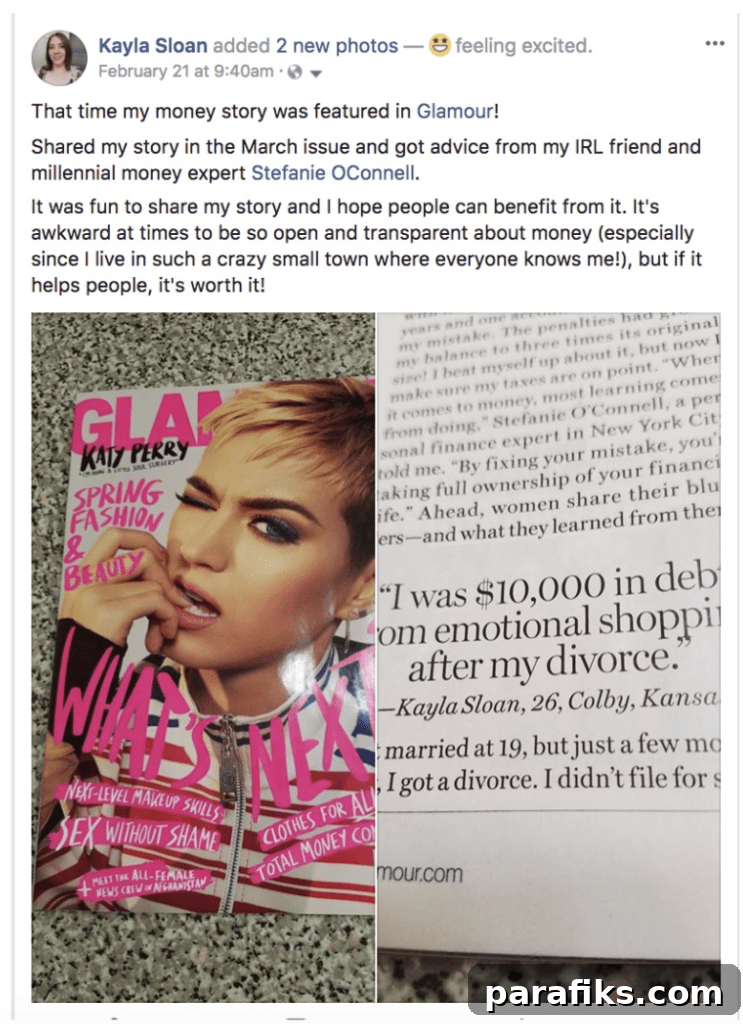
I never thought I’d be doing these things, but they’ve been remarkable milestones in my career.
Are there any other tips for someone who wants to become a virtual assistant?
Having a handful of core skills will help you stand out and become a highly successful VA. They may seem simple, but many VAs lack them—mastering these will make a difference.
Key skills and traits for a successful VA include:
- Reliability – Always meet deadlines. Many VAs fail to do this.
- Good communication – Ask questions and prioritize clear, frequent updates. Over-communicating is better than under-communicating.
- Integrity – Protect client information and never misuse access to their business or data.
- Time management – Juggle multiple clients and deadlines while prioritizing effectively.
- Problem solving and resourcefulness – Offer solutions when you bring up questions; clients hire VAs to save time.
- Ability to add value – Look for ways to save clients time or money and to help them grow revenue.
- Follow-through – Persistently follow up to ensure tasks are fully completed.
Being a virtual assistant is not a get-rich-quick scheme. It requires effort, but it’s a realistic way to build a sustainable income and a flexible career.
What can a person learn from your course? Can you tell us about some people who have successfully taken your course?
Taking a structured course or working with an experienced coach shortens your learning curve and helps you avoid common pitfalls. I wish I’d had that guidance early on—my growth would have been faster and less error-prone.
It took me a year to reach $2,000 per month and another 14 months to hit $10,000 per month. My course shares everything I learned in nearly four years as a virtual assistant so you can progress more quickly.
Here’s what past coaching and course students have said:
- “Working with Kayla was one of the best decisions I could have made for my business. My first month as a solopreneur I made $283. Now I make double what my husband and I used to make in a month! I’m actually on track to earn $10,000/month by the end of the year.” – Kim Studdard
- “Kayla’s coaching gave me something extra that an e-course or article couldn’t. The coaching calls gave me confidence and insight into leveling up my freelancing work.” – Colin Ashby
- “I met Kayla at a conference and found it helpful to talk through my ideas with her. Highly recommend.” – Emily Burke
- “After four years at the same rate, Kayla’s ‘Raise Your Rates’ lesson and template were the push I needed. I was granted a 20% raise today!” – Laura P.
Are you interested in working as a virtual assistant?