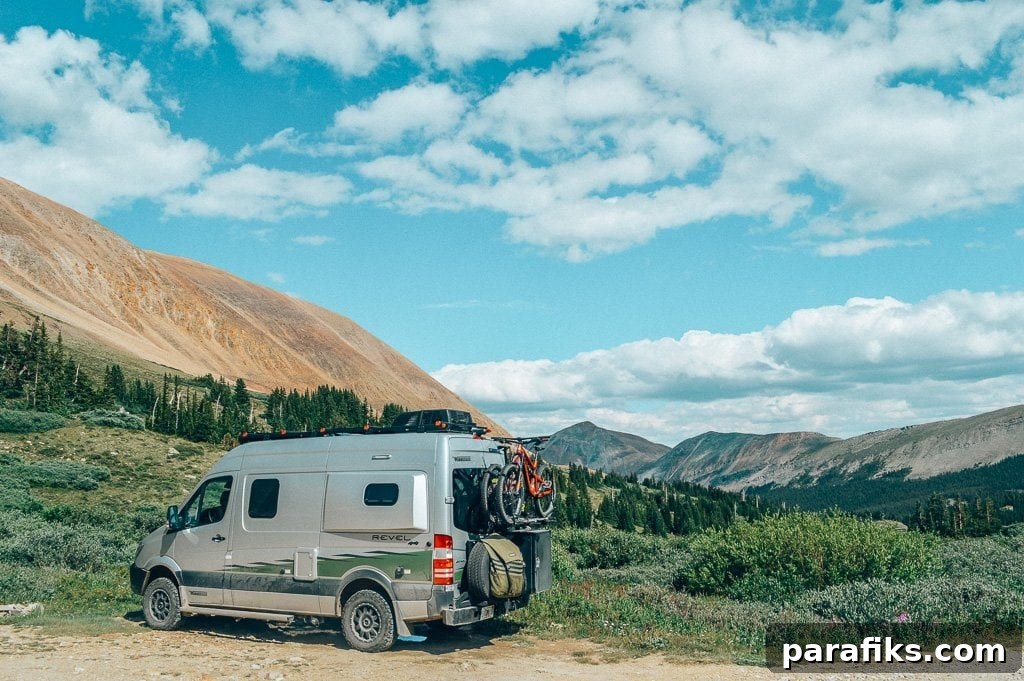
We started living in our RV last year and have received many questions since then. One of the most common is how much RVing costs and whether cheap RV living is realistic.
That question doesn’t have a single answer—RVing can be extremely inexpensive or quite costly, depending on choices and lifestyle.
There isn’t a one-size-fits-all RV budget, but there are common expenses most RVers face. We’re not claiming to be experts, and your costs may differ from ours. Many new RVers spend more early on because they drive around frequently and are still learning the ropes. Everyone travels their own way, and that affects costs.
We love RV life and don’t know when we’ll return to a more conventional routine. It took my husband a long time to convince me to try an RV, but now I’m sure it was the right decision for us.
Typical RV expenses include:
- Your RV
- Fuel
- Campgrounds and RV parks
- Insurance
- Food
- Entertainment
- Cell phone and internet
- Miscellaneous
Below I expand on those common RV expenses. You can travel very cheaply and make cheap RV living possible, or you can spend far more—everyone’s approach differs.
So, is cheap RV living possible?
Your RV
Expenses tied to the RV itself include the purchase price, sales tax (which can be high in some states), license and registration fees, property tax, and maintenance.
RV prices vary widely: you can find used units for under $10,000 or brand-new luxury models that cost well over $1,000,000.
Many RVs are financed, and RV loans differ from car loans. Loans of 15–20 years are common, so be cautious: long-term financing can make monthly payments seem affordable while increasing total cost.
Fuel
Fuel prices fluctuate; sometimes gas is cheap, other times expensive. Many RVs average around 6–10 miles per gallon, so fuel costs can add up depending on how much you drive.
To save on gas, slow down. Traveling at a more relaxed pace noticeably reduces fuel consumption and overall costs.
Our typical monthly expense: $200. By traveling more slowly, our average gas cost stays low despite living on the road.
Campgrounds and RV parks
Nightly stays vary a lot. There are many free camping options across the United States, while premium RV resorts can charge $150 or more per night.
To find free camp stays, consider resources such as AllStays, FreeCampsites, and BLM (Bureau of Land Management) public lands. Free camping ranges from simple Walmart parking (useful when you need a quick rest stop) to expansive BLM areas and national forest sites with no hookups. Free camping often offers solitude and great access to trails and outdoor recreation.
State and national park campgrounds vary in cost—some areas charge $50 per night or more, while others can be as low as $8. RV parks also vary: with discount programs like Passport America you can find spots for $17 a night, while other parks may be $60 or higher. Longer stays typically reduce the nightly rate, so booking weekly or monthly can save money.
If you plan to use RV parks frequently, Passport America and Good Sam memberships are worthwhile; they often pay for themselves within one or two uses.
Our typical monthly expense: $600.
Insurance
Insurance needs can include RV and vehicle insurance, health insurance, and other policies. RV insurance costs depend on the insurer, the state where you’re registered, the RV type, and whether you’re a full-time or part-time RVer.
Health insurance is an important consideration for RVers—especially full-timers. There are various options to explore depending on whether you maintain a permanent residence or travel year-round.
Our typical monthly expense: $100 for RV and car insurance, and $250 for health insurance (we belong to Liberty Healthshare).
Food
Food spending often remains similar to what you spend at home, since RVs typically have a stove and refrigerator. You may eat out more when exploring new towns and trying local restaurants, but that depends on personal preference.
Our typical monthly expense: $750. This covers groceries, restaurants, and drinks. It’s currently high for us, but we expect it will settle closer to $500 per month.
Entertainment
Entertainment costs may rise with RVing because you’ll want to attend local events or try activities in different places. For those who enjoy outdoor adventures, many activities have low ongoing costs if you already own the necessary gear.
We prefer outdoor recreation—mountain biking, rock climbing, and hiking—which keeps many entertainment costs low. We still budget for guided trips, occasional equipment replacement, and other outings.
Our typical monthly expense: $100.
Cell phone and internet
Staying connected on the road often means using multiple carriers—AT&T and Verizon are common choices—to ensure coverage across regions. A mobile hotspot or MiFi device is essential for many who work remotely.
We use a Verizon MiFi for internet. It’s not cheap but it’s vital for online work. Plans start around $50 for 5 GB and become more cost-effective per gigabyte at higher tiers. Other internet solutions exist, but this setup works well for us.
Our typical monthly expense: $175. It’s higher than average, but reliable internet is essential for my work.
Miscellaneous
Miscellaneous expenses include things like flights back home, pet supplies, mail forwarding services (we use My Dakota Address), laundry, propane, clothing, and other incidentals.
Living in an RV tends to reduce impulse shopping because space is limited and purchases must be deliberate.
Our typical monthly expenses: $75 for our dogs (food and treats), $18 for mail forwarding, $25 for laundry, $15 for propane, and $75 for clothing.
Related content: How To Rent An RV: The Best Tips For Your First RV Rental
Are you interested in traveling or living in an RV? Why or why not? Would cheap RV living appeal to you, or do you think you would spend more?