
Today I’m sharing an excellent story from Neiko Johnson about how he and his wife, Alexis, paid off $240,000 in just 27 months. They document their finance lessons and debt-free journey on their blog Secret to Finance. Their content focuses on budgeting, eliminating debt, and building generational wealth through investing.
My wife Alexis and I have been married since 2018, and both of us entered the marriage with significant debt. At first we believed we were living a normal life, but we quickly realized our habits wouldn’t produce long‑term financial security.
Like many couples, we slipped into routines that could have led to financial strain. We were enjoying life but lacked a solid plan to build wealth.
There’s no simple path to wealth, but in this article I’ll outline the steps we took to pay off $240,000 in 27 months and the framework we built to create lasting financial stability.
I hope our experience motivates you to take action on your own financial journey and offers practical tips we used along the way.
Our Background – Who We Are and What We Do
We’re Neiko (33) and Alexis (31) from Atlanta, GA. I was born and raised in Atlanta; Alexis was born in Miami and raised in Anchorage, Alaska. I work in cybersecurity and Alexis is a general dentist.
About four years ago we set the goal to both retire by age 50. To reach that target we had to change habits, pay down debt, and work on creating passive income.
But first we needed a clear plan to eliminate debt. Changing long‑standing spending habits wasn’t easy, yet our commitment to becoming debt‑free within five years kept us focused.
We devoted ourselves to learning everything we could about saving, paying off debt, budgeting, and investing.
Our long‑term goal is to build wealth so we can help others do the same. Through our blog, we help readers develop financial plans centered on achieving financial freedom.
Why We Got Started and What Kept Us Motivated
Conversations about building wealth are increasingly common today. We distinguish being “rich” from being “wealthy.”
Being rich can mean spending freely, regardless of true financial stability. Being wealthy means making smart financial choices and following a long‑term plan—what we call being “truly rich.”
We began our journey because we wanted to be truly rich, change our family’s financial future, and live with greater freedom. Realizing our responsibility to manage money wisely shifted our outlook and actions.
These core principles guided our transformation:
- A budget is the essential foundation for financial success.
- Pay off debt quickly and avoid adding new debt to accelerate the path to financial freedom.
- Save consistently and live below your means to build wealth.
- Invest early and regularly to enable retirement on time or even sooner.
Reaching big financial goals requires temporary sacrifice and a mindset shift. Keeping a clear purpose and mutual trust helped us stay focused and make better daily financial decisions.
Getting out of debt freed up money for investing, retirement, and enjoying life. That promise kept us motivated through difficult stretches.
Events between 2019 and 2021 reinforced how important financial security is. Many people experienced job losses and income disruption; having a plan and diversified income reduced our vulnerability.
During that period we remained employed, but it highlighted the need to create additional income streams beyond our primary jobs. We began expanding investments, and plan to go beyond our employer 401(k) into real estate and business ownership to build generational wealth.
We started learning real estate fundamentals and have taken courses that provide a solid foundation for future investments. Education is central to increasing income—progress takes time, but steady steps add up.
A wealth mindset recognizes investing is a long‑term strategy: budget, eliminate debt, save, then invest without restriction.
How Much Debt Did We Start With and What Types?
Before explaining how we paid down debt so quickly, it’s important to be transparent about how we accumulated so much debt and where we started.
We didn’t flip a switch and suddenly become debt‑free. Years of poor money management led to a large balance—$460,000 of total debt in 2018.
Our debt included:
- Student loans
- Car loans
- Credit card balances
- Medical loans
- Personal loans
As newlyweds, carrying that level of debt was stressful, but we initially assumed it was normal since many around us also had loans.
Both of us have graduate degrees, which were expensive. The largest portion came from Alexis’s dental school debt—she attended Tufts University. Many dental graduates leave school with around $350,000 in loans, though Alexis secured scholarships and graduated with about $225,000 in dental debt.
In hindsight she would have chosen a school closer to home to reduce costs, but that lesson helped shape our future decisions.
Other debts came from poor purchase decisions. We bought two cars that totaled $116,000—choices we later realized were unwise while carrying so much debt. We paid those vehicles off in two years instead of five, and now plan to buy cars only with cash.
Long‑distance visits during dental school led us to charge travel on credit rather than saving—resulting in roughly $10,000 in credit card debt. Much of our debt stemmed from purchases that could have waited or been handled differently.
Friends and family around us carried debt, too, so conversations about becoming debt‑free weren’t common. We changed that dynamic by normalizing discussions about financial freedom with those close to us.
Both of us grew up in low‑ to middle‑income families where money wasn’t often discussed. Recognizing that gap pushed us to take responsibility and learn as much as we could about finances—which eventually enabled our rapid debt payoff.
How We Paid Off Debt So Fast
Personal finance is just that—personal. Learn broadly, then adopt the approaches that fit your situation. We blended advice from many sources to create a practical blueprint that helped us eliminate debt quickly and now share through our blog.
We began living with purpose and intentionally directing every dollar toward our goals. That clarity allowed us to see the bigger picture and stay committed.
We Agreed to Handle Money Together and The Right Way
When we recognized the extent of our debt, we were simultaneously planning a large wedding. Once we focused on debt, we decided a big wedding wasn’t the right choice. We chose to get married at the courthouse, which saved about $25,000 and allowed us to use those resources against debt instead.
That decision strengthened our partnership and started us on a path of joint financial decision‑making. We combined our finances to eliminate money arguments and align our priorities.
Combining money works well for us, though separate accounts can also work for some couples. Currently we use four accounts to balance shared goals and personal independence:
- Joint checking for earned income deposits
- Joint savings for recurring savings goals
- Neiko’s personal checking
- Alexis’s personal checking
Each month we allocate a modest personal spending allowance—currently $200 each—so we can enjoy individual interests without discussion or conflict. Both partners should agree on the allowance amount; this structure eliminated money fights for us and helped protect our relationship while building wealth together.
We Got On a Detailed Budget and Started an Emergency Fund
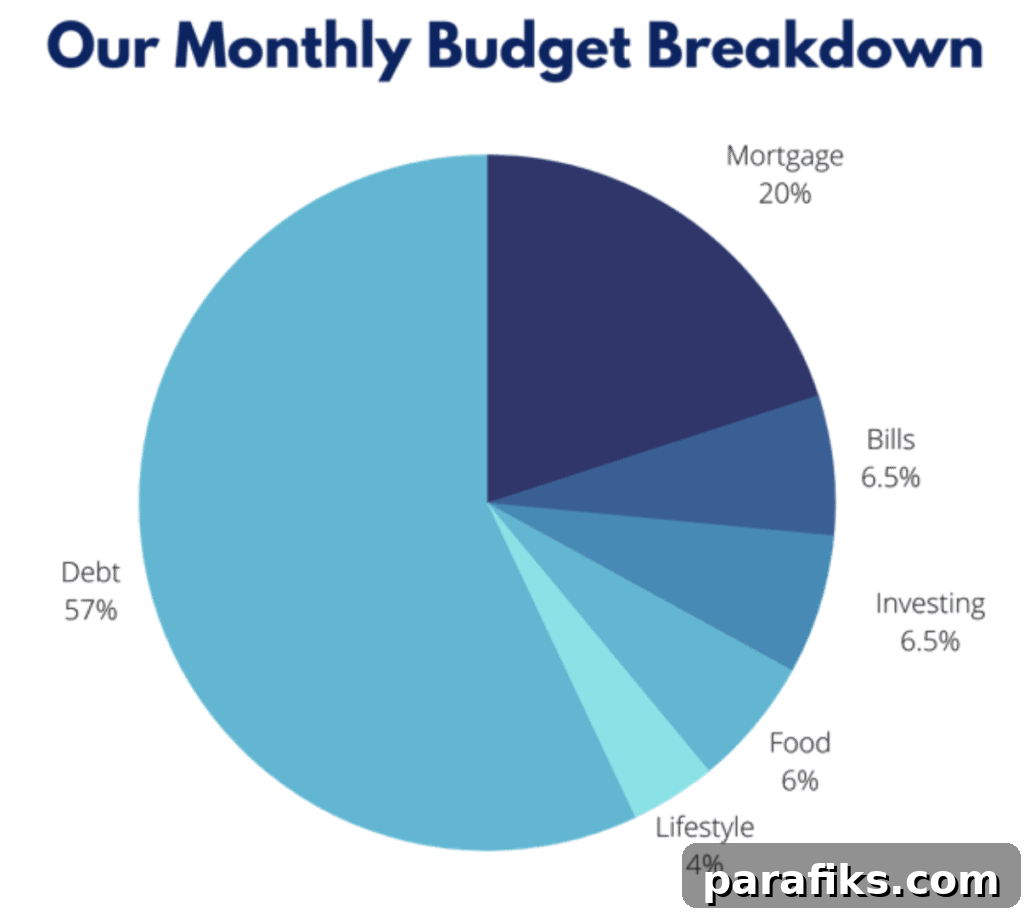
Soon after marrying we became disciplined about budgeting. Every dollar had a job. At the end of each month we review our finances and plan the next month, using a calendar reminder to keep us accountable.
Monthly planning helps us reconcile spending, adjust categories, and ensure our plan aligns with goals. A detailed budget allowed us to build an emergency fund for unexpected events without derailing our progress.
Our rule of thumb while paying down debt was to save one to three months of expenses for emergencies, increasing to three to six months once debt‑free. The appropriate amount depends on job security and personal comfort, but having a buffer prevents emergencies from derailing financial goals.
We Used The Debt Snowball and Paid Extra to Debt
We followed the Debt Snowball method because it helped us stay motivated and consistently add extra payments to our balances. The Debt Snowball focuses on paying debts from smallest to largest, regardless of interest rate, allowing you to build momentum as you eliminate each account and roll payments into the next debt.
That momentum—like a snowball growing bigger—kept us committed and simplified our strategy. We recommend trying it to see if it fits your situation.
We Increased Our Income and Started Side Hustles
Increasing income was essential to accelerate debt repayment. We worked overtime, pursued performance bonuses, and maximized extra hours temporarily to push more cash toward debt—some months contributing an additional $7,000.
We also launched our blog, Secret to Finance, as another income stream. Although starting took courage, it allowed us to share our story and help others while earning extra income.
Side hustles don’t have to be big ventures—small efforts like online surveys or focus groups paid up to $250 for an hour of time and fit into lunch breaks. Creativity in finding extra income can meaningfully speed a debt‑free timeline.
Our Best Tips For Other People To Pay Off Debt Fast and Reach Financial Goals
Every family’s finances are different, so choose strategies that match your values and situation. Educate yourself, move deliberately, and don’t be pressured into financial decisions you don’t understand.
It’s okay to be uncertain—take time to learn and then commit to a plan. Paying off debt and building wealth can be frustrating, but once you find an approach that works, go all‑in.
Our core approach to money management is straightforward:
- Handle money the right way
- Use a detailed budget
- Build an emergency fund
- Eliminate debt with the debt snowball and make extra payments
- Increase income
- Start a side hustle
Do you have debt? What steps are you taking to pay it off?