
For many, retirement feels like something only older adults do after decades of work. Yet an increasing number of people are aiming for early retirement — by which I mean reaching a level of financial security that lets you stop working if you choose to, not because you must.
Although retiring early requires planning, discipline, and effort, a surprising number of people respond with skepticism or negativity. I often see comments calling early retirees lazy, naïve, or even boring when reading articles on the topic. Those reactions frustrate me because they ignore what early retirement truly involves.
Early retirees are typically thoughtful planners. They map out budgets, consider future expenses like children, health care, inflation, and market downturns, and design saving and investment strategies intended to support them for decades. While no plan can be precise to the penny, thoughtful saving and investing account for many of the “what ifs” people worry about.
Part of the resistance to the idea of early retirement comes from misunderstandings about investing and compound interest. Some commenters mistakenly divide a nest egg by the number of remaining years and assume retirees will use only that fixed amount each year. That’s not how investing works — when properly invested, retirement savings can continue to grow and support sustainable withdrawals.
For those who want to learn more about investing basics, it’s worth researching practical steps to begin. The core point is simple: with disciplined saving and sensible investing, early retirement can be a realistic goal for many people.
Early retirement doesn’t demand extreme sacrifice or a radically ascetic lifestyle. The timeline for retirement is personal — it might be age 30 for some and age 60 for others. The essence is financial freedom: the ability to avoid living paycheck to paycheck, reduce debt, and make choices about how you spend your time.
Sadly, many people are underprepared. Surveys show a large portion of the population has little or no savings for retirement, which is why saving should be a higher priority for more people. Even if you love your career, thinking about how to create optionality later in life is wise.
Personally, I save aggressively and watch discretionary spending. I enjoy my business and the work I do, but knowing I could step away if necessary offers peace of mind. Life is unpredictable — health concerns, industry shifts, or personal changes can arise — so building financial resilience matters.
Freedom and flexibility are the main advantages of retiring early. It doesn’t mean you must stop working; many early retirees continue doing paid work, pursue passion projects, volunteer, travel, or spend more time with family. Early retirement simply expands your choices.
There are several widespread myths I often encounter about early retirees:
Are early retirees dumb, lazy, or boring?
Do early retirees naively assume their money will last forever?
One common myth is that early retirees haven’t planned for future costs like kids, rising medical expenses, inflation, or market volatility. In reality, early retirement planning usually starts with a thorough budget and projections that account for many of these factors. The planning process involves honestly evaluating expenses and saving accordingly.
Another misunderstanding is the belief that typical nest eggs are insufficient. Again, a lack of familiarity with compound interest and long‑term investing often fuels that view. Properly invested assets can continue to grow, and many early retirees adopt withdrawal strategies designed to preserve capital over the long term. Rather than dismissing the idea, explore how saving rates, investment returns, and spending choices interact to make early retirement feasible.
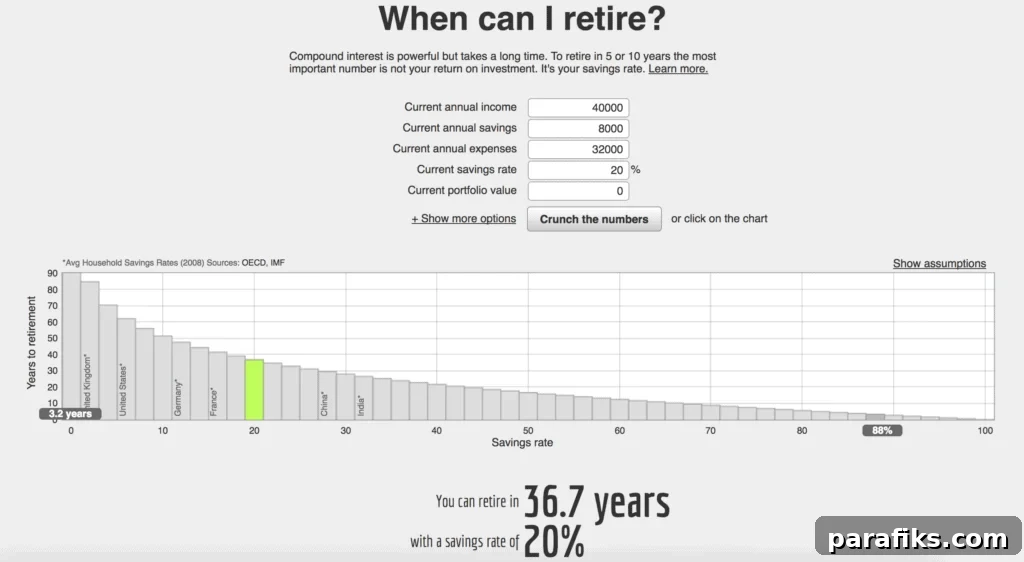
Here’s a simple illustration of how saving rate affects the time needed to reach retirement (assuming reasonable investment returns and consistent saving habits):
- A 1% savings rate could take many decades to accumulate sufficient funds.
- A 5% savings rate shortens the timeline, but it still spans many working years.
- Higher rates, such as 20%, 50%, or 75%, dramatically reduce the years needed to reach financial independence.
The conclusion is straightforward: saving a larger portion of income generally allows you to retire sooner.
Are early retirees lazy and simply avoiding work?
This claim is unfounded. Reaching early retirement usually requires more effort and discipline than a typical career path. Early retirees often work hard to increase income, reduce unnecessary spending, and invest wisely. For most, the goal isn’t to avoid meaningful activity but to gain the freedom to choose how to spend their time — whether that’s paid work, volunteerism, travel, or creative pursuits.
Do early retirees just sit around all day to save money?
Another stereotype is that early retirees lead dull, joyless lives or survive only by extreme deprivation. The truth is far more varied. Many early retirees live active, fulfilling lives filled with hobbies, travel, learning, fitness, family time, and meaningful projects. Some remain engaged in part‑time work or freelance roles because they enjoy them. Others embrace low‑cost, high‑value activities — hiking, reading, spending time outdoors, and connecting with loved ones — which can be deeply rewarding without requiring excessive spending.
Frugality doesn’t equal misery. You can enjoy life while being mindful about expenses. Many people find creative ways to have fun on a budget and still pursue their dreams while saving for long‑term goals.
Ultimately, early retirement is a personal choice and a planning strategy that suits some people more than others. It’s not a moral failing to choose a traditional career timeline, nor is it a sign of irresponsibility to aim for financial independence earlier. If you’re curious about early retirement, consider evaluating your savings rate, investment approach, and lifestyle priorities — and remember that the goal is freedom: the ability to decide how you want to live.
When do you want to retire, and when will you realistically retire? What do you think of early retirement?