Please enjoy this guest post by Norman Ling of Spreadsheet Productions. Norman works in healthcare strategic sourcing, which means he regularly negotiates business agreements. After reading the post “Are You Afraid To Negotiate?” he reached out to share his professional perspective and practical negotiation tips with readers.
Not long ago I began searching for a new home. After years of renting, I decided it was time to buy. To make that possible, I moved out of the San Francisco Bay Area to a region with much more affordable housing.
I discovered that mortgage payments plus HOA fees for a condo would be less than renting a comparable apartment in the new area—and I would build equity at the same time. With that in mind, I set out to find a condo and negotiate as efficiently as possible. I had already given my leasing company the required 60-day notice, so I had a clear deadline: find a place within that window or face either being temporarily homeless or paying a high fee to extend my lease. Since my day job involves negotiating with manufacturers and suppliers, I planned to apply many of those skills to home shopping.
My objective: get a fair deal as quickly as possible.
The first step was practical: I compiled every condo that interested me into a spreadsheet, listing price, square footage, and other relevant details. That spreadsheet served as my decision-making tool and gave me the freedom to walk away if a deal didn’t look fair.
Once I narrowed the options, I toured each unit with my real estate agent and gathered information about the seller’s situation:
- How long has the property been listed?
- Has a prior deal fallen through?
- Does the seller have any time constraints?
These questions help reveal how willing a seller might be to negotiate.
I also did market research. I compared price per square foot against nearby units and used that data to make an initial offer below asking price, planning to settle somewhere in the middle. When the inspection flagged necessary repairs, I calculated their market cost and asked the seller to reduce the price by roughly three times that amount—again settling on a compromise. After the appraisal came in lower than expected, I used that too as leverage, since lenders only finance up to the appraised value.
In the end I negotiated a final price about 5% below comparable units in the area and completed the purchase in under a month. The savings weren’t huge and I could probably have saved more with more time, but given the short search window and my priorities, I was satisfied.
Over the years I’ve developed practical negotiation habits that work across large purchases, job offers, expense reductions, business contracts, and more. Below are the key principles I rely on.
Know Your BATNA
BATNA stands for “Best Alternative To a Negotiated Agreement.” If you take away only one lesson from this piece, it should be this: a strong BATNA gives you bargaining power. If you can walk away and still be okay, you negotiate from a position of strength.
For example, staying at your current job, continuing to build your own business, or pursuing other opportunities are all valid BATNAs during a job negotiation. I once rejected a job offer because staying at my current role offered a better overall outcome. In everyday buying decisions, remembering that you don’t have to buy today—there are other stores and future sales—protects you from poor choices.
It’s perfectly acceptable to decline a purchase if it doesn’t meet your needs.
Get Multiple Proposals and Offers
Having multiple offers gives you market perspective and leverage. When car-shopping or sourcing suppliers for a business, solicit quotes from several dealers or manufacturers. Competition raises your value and often leads to better pricing.
A friend of mine emailed several dealers for the same car model and had them bid against one another. He saved both time and money without visiting every dealer in person—an efficient and effective approach.
Condition Your Prospects
Don’t disclose your position too early. If sellers, employers, or suppliers think you are committed, they lose incentive to offer better terms. Buy yourself time to decide and give the impression you can walk away at any moment.
When negotiating with suppliers, I sometimes act on behalf of a fictional manager to defer questions I don’t want to answer; this tactic often improves service and pricing. Conditioning the other party to believe you have alternatives can greatly improve outcomes.
Understand the Market
Know whether you’re in a buyer’s or seller’s market. Are jobs plentiful or scarce? Are overseas manufacturers seeking new business or operating at full capacity? Market conditions heavily influence how much leverage you’ll have during negotiations.
Understand the Product
Know what you’re negotiating over. Simple, commoditized items usually have thin margins, leaving little room for discounts. Complex or branded products often have higher markups and thus more flexibility. For example, diamonds and luxury goods typically allow greater bargaining range than basic commodities.
If you’re negotiating salary, understand how your skills and experience compare to others. Internal candidates may face different dynamics: you’re a known quantity, which reduces onboarding risk but also reveals current compensation. Being clear about your value and backing it with results strengthens your position.
Understand Negotiating Ranges
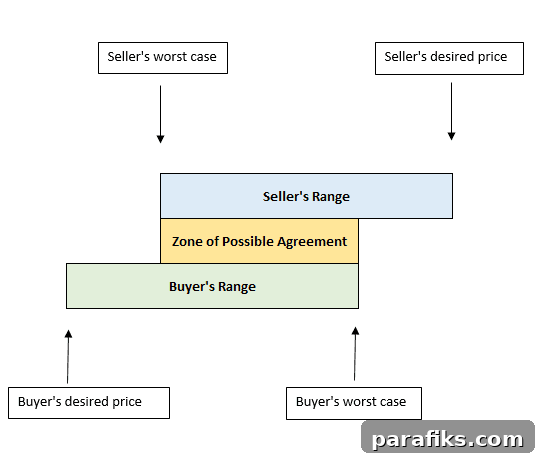
Negotiations occur within a zone where buyer and seller interests overlap. The seller wants the highest price; the buyer wants the lowest. If there’s no overlap, no deal will be reached. If there is overlap—the zone of possible agreement—you negotiate within that area. The lower the final price within that zone, the better for the buyer.
You Can Always Ask
Ask for what you want—within reason. Radical requests can offend unless you hold overwhelming leverage, but reasonable, research-backed asks are often successful. Beyond price, request additional value items such as better accessories, extended warranties, flexible work arrangements, volume discounts, or improved shipping terms—these extras are often negotiable.
My mother grew up in Vietnam, where bargaining in markets was common. She’s comfortable asking for better deals and regularly gets favorable outcomes. Practicing negotiation can remove psychological barriers and deliver real savings.
For example, if you face large medical bills, hospitals often prefer some repayment over none. Explaining your situation and asking for a reduction can produce results. The hardest part is starting the conversation.
Use a Spreadsheet
Track offers and details in a spreadsheet before making major purchases. Record prices, specifications, and responses to the same set of questions for each supplier or seller. This makes comparisons straightforward and helps you craft reasonable proposals or counteroffers. You can even show a supplier a lower competing quote and ask them to beat it.
When I relocated for a job, I used a spreadsheet to compare apartments, prices, square footage, and amenities. That approach clarified which options offered the best value.
Final Words
Negotiation is more art than science. There’s no single formula—only guidelines. We aren’t trained to negotiate in school and are often conditioned against it from childhood, so many people feel uncomfortable asking for more.
Learning negotiation is a valuable life skill. By applying the principles above—knowing your BATNA, gathering multiple offers, conditioning the other party, understanding market and product dynamics, making reasonable asks, and tracking details—you can negotiate more effectively and get better results.
Do you tend to negotiate? Why or why not?