Today I’m pleased to share a guest post from Matt of Method To Your Money. Below are the practical strategies he used to graduate almost entirely debt-free.
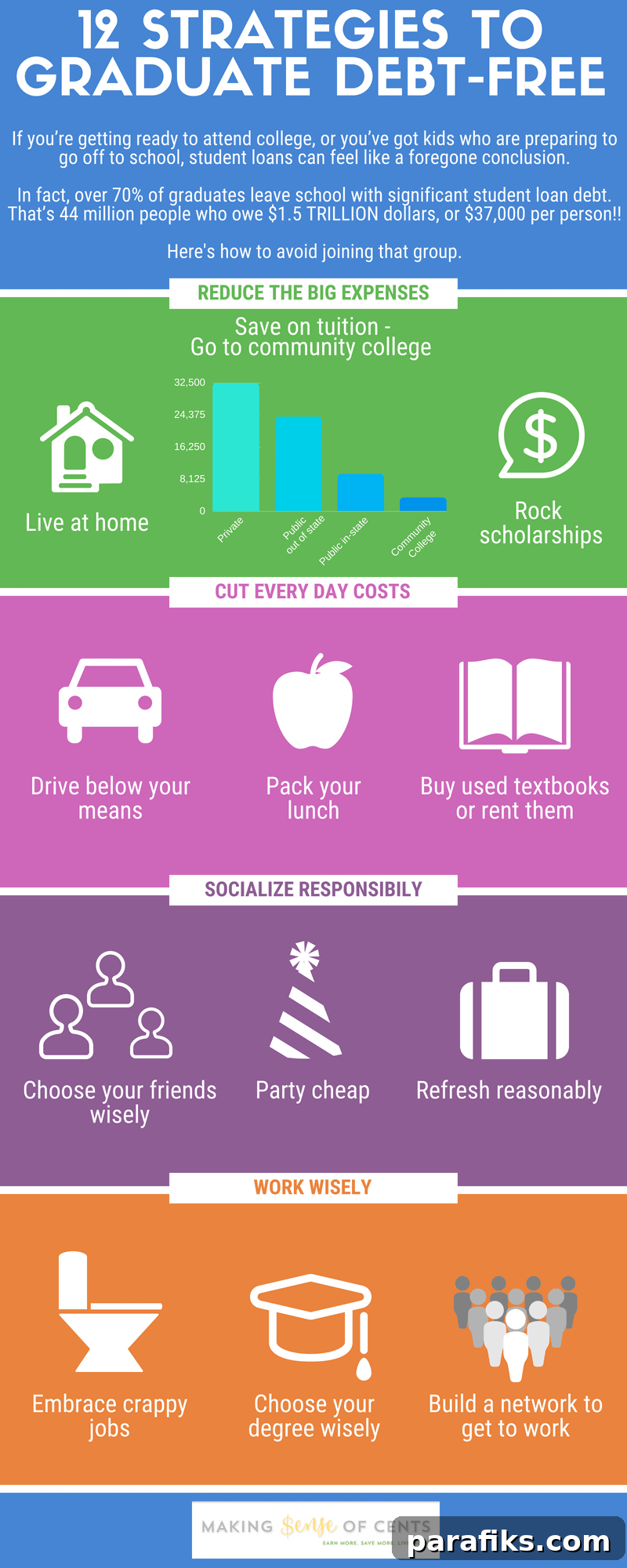
If you’re preparing for college, or you have children who will be heading off to school, student loans can seem inevitable.
In fact, over 70% of graduates leave school with significant student loan debt. That’s millions of people carrying trillions of dollars in debt. It’s a sobering reality—but it doesn’t have to be your future.
What follows are realistic, proven steps Matt used to avoid becoming a heavily indebted graduate and to begin his career on solid financial footing. He’s already sharing these lessons with his own children so they can succeed academically while building healthy financial habits.
Matt grew up in a middle-class family—his father a pastor and his mother a nurse. Money was never unlimited, and his parents made financially sensible choices. Those values shaped many of the decisions he made about college and beyond.
When Matt graduated high school he knew cost would influence where he attended and how he’d pay. He spent five years in college, earned two bachelor’s degrees, studied abroad, traveled, and—remarkably—was debt-free one year after graduating.
How did he manage it? Not charisma or luck, but hard work, frugality, careful choices, and refusing to spend to impress others.
1 – I lived at home
Living at home isn’t an option for everyone, but for many it is. Large metro areas often put schools within commuting distance, and living with family can save a huge amount versus dorms or apartments. Matt paid a small rent to his parents, who later gifted it back at graduation.
Living at home meant missing some typical college residential experiences, but it significantly reduced costs. If living at home isn’t possible, sharing housing with multiple roommates is the next best way to cut room-and-board expenses, which often represent one of the largest parts of college costs.
2 – I went to community college…and saved a TON of cash
Community college can be an excellent, cost-effective starting point. Matt began at a local community college where classes were smaller, tuition was roughly half that of the state university, and a transfer agreement guaranteed admission to a four-year school after two years. This approach reduced costs while providing strong academic preparation and close relationships with instructors.
Before you enroll, confirm with your desired transfer university that your credits will transfer—most schools have established articulation agreements with local community colleges.
3 – I rocked the scholarships
Scholarships and grants are essential sources of free money for college. Fill out the FAFSA—many families who assume they earn too much still qualify for aid, and billions in grants often go unclaimed each year. High school counselors can help identify opportunities, and scholarship books and online databases make searching easier.
Apply for everything you’re eligible for: national databases, community scholarships from civic organizations and churches, and niche awards based on hobbies or unique talents. Over $100 million in scholarships go unclaimed annually—apply widely.
4 – I drove below my means
Matt drove an old Toyota Tercel—reliable, inexpensive to repair, and free from car payments. Driving an economical, used vehicle avoided monthly payments and high insurance and maintenance costs. Choosing transportation that fits your budget can free money for tuition, books, and savings.
5 – There is a cheaper lunch, and it comes in a brown bag
Daily food and coffee purchases add up quickly. Buying lunch and coffee on campus can cost $5–$20 a day; bringing homemade lunches and brewing coffee at home dramatically reduces those expenses. Small daily savings compound into substantial annual amounts that can be redirected toward school costs.
6 – I bought used textbooks
Books are a notable cost—buying used, renting, or seeking digital editions can make a big difference. Campus bookstores, online marketplaces, and comparison sites help find the lowest prices. Renting textbooks is often overlooked but can be a cost-saving alternative for many courses.
7 – I embraced crappy jobs (literally)
Matt chose physically demanding jobs that paid better than typical retail or food service positions. He worked jobs most would avoid, which allowed him to save aggressively for college. Working tough jobs for higher pay during high school and college helped him accumulate the funds needed without relying heavily on loans.
8 – I didn’t party like it was 1999— I found cheaper alternatives
Social life doesn’t have to be expensive. Matt and his friends favored low-cost activities—game nights, sports, bonfires, and outdoor pursuits—instead of costly nights out. Enjoying time with friends without overspending made it possible to live well below his means and save consistently.
9 – I refreshed reasonably—avoid expensive vacations with friends
Vacations and spring breaks can be reimagined to fit a budget. Short road trips, local getaways, or low-cost outdoor trips can provide rest and fun without breaking the bank. In today’s social-media-driven world, resisting the pressure to overspend for appearances is critical for long-term financial health.
10 – I chose my friends wisely
Surrounding yourself with friends who value frugality makes it easier to stick to your financial goals. Social circles influence behavior—if your friends prioritize low-cost activities and sensible spending, you’ll have less peer pressure to overspend. That pattern holds true well beyond college; many high-net-worth individuals practice modest lifestyles and avoid costly displays of status.
11 – I chose my degree wisely
Think carefully about the degree you pursue. Consider both your passions and your earning potential. Matt chose education intentionally—because he loves teaching, finds it meaningful, and values the stability it offers. He also planned for post-graduation by living at home to aggressively pay down about $15,000 of student loans within a year on a teacher’s starting salary.
Choosing a career with sustainable earnings and sensible expectations can make repaying any unavoidable loans far more manageable.
12 – I built a network to get to work
A degree is most valuable when it leads to employment. Matt cultivated mentors and professional connections during high school and college who helped him find opportunities, improve his resume, and prepare for interviews. Networking—being polite, genuinely interested in others, and providing value—opens doors. Classic resources like Dale Carnegie’s How to Win Friends and Influence People still offer useful networking principles.
Bringing It All Together
One year after completing two degrees and several years of disciplined saving and intentional choices, Matt was employed and debt-free. It wasn’t always easy—he worked difficult jobs, turned down costly social pressures, and made sacrifices—but the result was worth it.
Those habits came from how he was raised: frugality and gratitude felt normal. Now he’s passing those lessons to his children, encouraging them to save, work hard, and take responsibility for their education costs so they learn the valuable lessons that come from financial independence.
Bio: A husband and father of two young children, Matt is an assistant principal who teaches kids about money by day and writes about personal finance, family, and mindset at Method To Your Money by night.