
Hello! Today I’m sharing a terrific article from JT. He tells the story of going from his last dollars in a hostel to reaching his retirement number just over a decade later. If you’re interested in another early-retirement story, check out How This 28 Year Old Retired With $2.25 Million. Below is JT’s piece on how to retire in your 30s. Enjoy!
Have you ever watched a grown man ugly cry? Our faces twist like a squeezed sponge, shoulders shake, and the sounds we make are somewhere between a laugh and a grunt. It’s not a pretty sight.
It was the year 2000. I was sitting on the bed of the Spanish Harlem hostel where I lived, down to my last dollars, ugly crying. Months earlier I’d graduated college, sold my car, and driven across the country from Los Angeles to New York with optimistic West Coast energy. Months of rejections from employers followed, and reality hit like an East Coast blizzard.
People say, “New York City: if you can make it here, you can make it anywhere.” For those of us who’ve tried and failed, it can feel more like, “If I can’t make it here, I can’t make it anywhere.”
I wasn’t crying because I’d failed at something specific. I was crying because I felt like a failure.
Yet a little over a decade later I reached my retirement number. What changed between those tears of despair and a later moment of relief? Below I’ll lay out exactly what I did to retire in my 30s.
Note: If you’re working toward early retirement, one tool I recommend is Empower. It’s a free financial tool that lets you connect accounts and track net worth, investments, and spending in one place. Watching progress month to month is motivating when you’re aiming to retire early.
Related articles on how to retire in your 30s:
- The 6 Steps To Take To Invest Your First Dollar – Yes, It’s Really This Easy!
- Are Your Excuses Making You Broke And Unsuccessful?
- 56% Of Americans Have Less Than $10,000 Saved For Retirement
- 75+ Ways To Make Extra Money
What is Your “Retirement Number?”
First, let me define “retirement number.” It’s not just lounging under an umbrella on a distant beach—though that might be nice. It’s simply the point where you could quit working and still cover your basic needs. In other words, going to work becomes a choice.
Once you reach your retirement number, you might find, as I did, that you still want to keep working. The best part of reaching it isn’t the money; it’s agency—the freedom to spend your time as you choose (unless, like me, you have little ones waking you at 6:00 a.m.).
Sound appealing? Here are six steps to discover your retirement number and reach it. I’ll spend more time on the first two since they’re the foundation for the rest. The math may seem intimidating, but if you write it down it becomes manageable—you don’t need to be a math genius to retire early.
The 6 Steps to Retire in Your 30s:
Budget to a Balance Sheet:
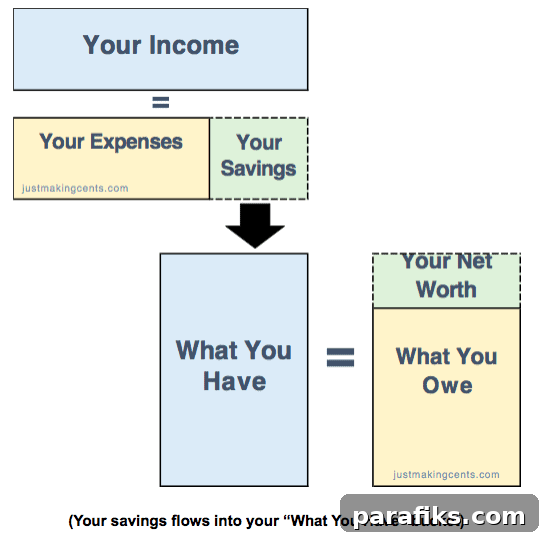
When most people manage finances, they focus on the “income statement”—tracking money in and money out. Typical budgets look like that. Understanding your savings is a good start, but many stop there. Use your savings as the foundation to build a balance sheet, which shows what you have and what you owe.
Your balance sheet is essentially two buckets: What You Have and What You Owe. Your savings from the income statement becomes an asset in the “What You Have” bucket. Add investment accounts to this bucket too. Don’t include personal items like your car or jewelry unless you plan to sell them within a year; you’re identifying assets that can fund living expenses.
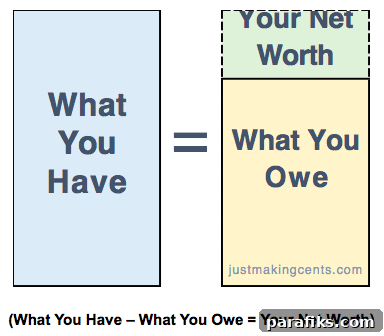
“What You Owe” includes credit cards, student loans, mortgages, or personal loans—your liabilities. Once you assemble this information, you’ll have a clear balance sheet. Later steps show why understanding both your income statement and balance sheet is so important.
Know Your Retirement Math:
Financial planner William Bengen’s research suggests that a 4% annual withdrawal rate would have historically lasted at least 30 years with a balanced stock-and-bond portfolio. Other studies suggest that with certain portfolios, you might even end up with more money than you started.
Bengen derived the 4% rule by back-testing worst-case scenarios like the Great Depression. The rule is a useful guide for withdrawal rates but doesn’t directly tell you how much you need to save. To make it a practical goal, invert the formula: instead of 4% withdrawal, multiply annual expenses by 25 to get your retirement number. For example, if you need $35,000 a year, your target would be $875,000 (35,000 x 25).
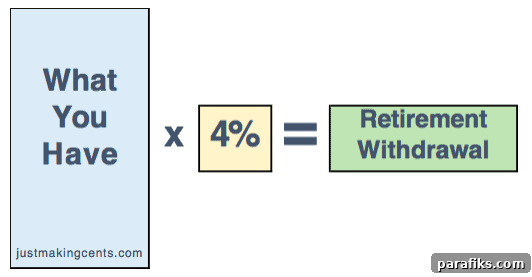
Seeing the 25-times rule as a ratio highlights the power of cutting expenses. For every $1 you reduce in annual expenses, you need $25 less in savings to hit your retirement number. If you shave $4,000 off annual expenses, that change reduces your retirement target by $100,000. Cutting expenses is a guaranteed, high-return way to accelerate your path to financial independence.
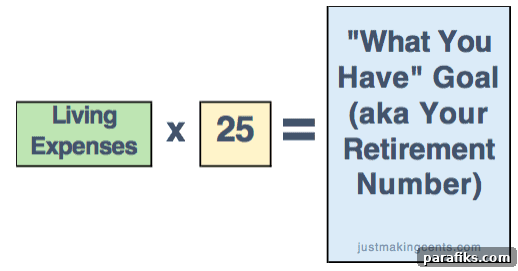
Reducing liabilities (what you owe) lowers expenses, which increases savings, which grows assets—bringing you closer to your retirement number faster. Prioritize paying off high-interest debts like credit cards so your balance sheet improves and your path shortens.
Make As Much As You Can:
This step is simple but important: if you want to retire early, you earn with the goal of saving. If a high-paying job puts you closer to retirement faster, take it—even if it’s not your dream job. Work hard now so you can enjoy the freedom later.
I kept odd jobs to extend my runway until a full-time position at a hedge fund allowed me to stay in New York. Even after that, I kept the retail job as a side hustle for a while to build savings and pay down debt. Side income accelerates your progress—consider some of the many side hustle ideas out there to boost your income and your “What You Have.”
Change Your Spending Mindset:
Change your default question from “What can I afford?” to “What can I withstand?” When pay increases, many automatically upgrade lifestyle. Instead, resist lifestyle inflation. Small sacrifices compound into large gains for your retirement target.
Even while earning six figures, I lived with roommates in less desirable parts of Manhattan, cooked at home most nights, avoided cabs, and delayed lifestyle upgrades. Those choices helped me pay off $15,000 in student debt and build net worth quickly.
Invest (Almost) Everything:
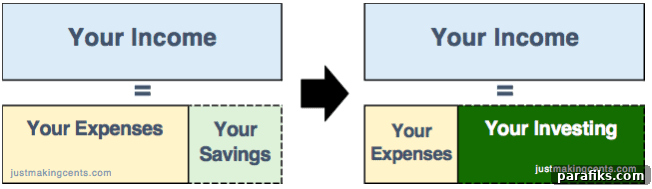
Saving and investing are different. Saving builds a buffer; investing puts money to work and helps combat inflation. After you keep 3–6 months of living expenses as an emergency fund, invest the rest. The S&P 500 has historically returned about 7% annually after inflation, while average annual raises hover around 3%. Over time, investments can outpace your salary and become a major source of wealth.
Move to a Lower Cost Area:
Moving to a lower-cost location can be the most powerful single move you make. If your employer has offices in cheaper cities, consider transferring. For example, moving from Manhattan to a borough like Queens or to a city such as Philadelphia can save thousands monthly on housing. I moved to Philadelphia while keeping my New York salary, which reduced housing costs dramatically. That move allowed my wife to stay home with our children and significantly accelerated our retirement timeline.
But Can You Really Hit Your Retirement Number Before 40?
Put all six steps together and yes, it’s possible even without a huge salary. Consider this example: start with $50,000 salary and a $12,000 side hustle, live frugally with a roommate, and follow these assumptions:
- Salary and expenses grow 3% yearly (roughly inflation).
- Investments return 7% annually (historical S&P 500 real return).
- Promotions at ages 28 and 34 give $5,000 raises each time.
- After your first promotion, you quit the side hustle due to higher responsibilities.
If at age 34 you move to a lower-cost area and reduce living expenses by 15%, by age 39 you could be withdrawing roughly $43,000 a year—enough to cover living expenses and taxes until Social Security begins. The math shows it’s feasible even without six figures.
The real question isn’t “can you?” but “do you?” Do you have the will to turn this math into lifestyle choices? Can you sustain investing consistently for nearly two decades, start a side hustle while your friends socialize, and resist lifestyle inflation? If so, the only barrier is you.
A Different Cry:
Years later, I sat down again and realized I had surpassed my retirement number. There was no ugly crying this time—just a calm, liberating lightness. From that day, going to work became my choice.
Interestingly, I still wanted to work because I enjoyed it. My 67-year-old boss recently retired and felt fear and uncertainty about filling his days. Avoiding that fate means discovering new purposes while you’re still employed. That’s why I started Just Making Cents: to pursue work I enjoy, choose projects that matter to me, and have greater impact.
And that’s when life truly gets fun.
Author bio: JT has spent over 15 years on Wall Street and is passionate about viewing money differently. He writes about finances through the lens of faith and as a father of three.
Are you interested in learning how to retire early? Why or why not?