
Today I have partnered with Aura. Aura is a leader in intelligent safety solutions and offers all-in-one digital protection for consumers.
We now do nearly everything online.
From shopping and paying bills to banking and staying connected with friends and family, many people spend a large portion of each day online.
On average, online consumers manage roughly 90 accounts and spend more than six hours per day on the internet.
Unfortunately, the growth of online activity has been matched by a rise in scams and cybercrime.
The online world brings convenience, but it also brings risk. Cybercrime occurs frequently and can cause significant stress and financial loss.
Financial fraud is increasingly common and expanding rapidly.
Even if you assume you couldn’t be a victim, ordinary people experience fraud every day—regardless of where they live, their income level, or their age. Many don’t think it will happen to them until it does.
According to the FTC, identity theft and fraud cost U.S. consumers $3.3 billion in 2020 alone. Someone fell victim to identity theft or fraud approximately every seven seconds that year, and identity theft cases doubled in 2020. Additionally, researchers detected over 46,000 scam websites each week in 2020.
Given the scale of the problem, it’s important to take steps to protect your finances and personal information.
In this article I’ll cover:
- What financial fraud is
- Signs that your personal information may have been stolen
- How fraudsters gain access to your information
- What to do if you become a victim of financial fraud
How To Prevent Financial Fraud From Happening To You
What is financial fraud? What is the most common type of financial fraud?
Financial fraud occurs when someone steals your money, assets, or identity. It affects people across all demographics—young and old, across cities and countries, and across income levels. Scammers don’t discriminate; their goal is to access your funds or personal data.
Financial fraud can take many forms, including:
- Opening bank accounts in your name
- Taking over existing financial accounts
- Charging purchases to your credit cards
- Opening loans or credit cards using your identity
- Identity theft
- Pyramid or Ponzi schemes
- Intercepting home purchase deposits by posing as a real estate or escrow contact (a growing and common scam)
This list is far from exhaustive—fraud schemes evolve constantly, and new varieties appear often.
What are signs that my personal information has been stolen?
There are several warning signs that your identity or personal information may have been compromised:
- Unfamiliar charges on your bank or credit card statements. Review monthly statements carefully and question any transactions you don’t recognize—fraudsters often test accounts with small charges first.
- New credit cards or loans in your name that you did not authorize. This is an immediate red flag that requires investigation.
- Calls or letters from debt collectors about debts you don’t owe. This can indicate someone is using your identity.
- Receiving mail or bills for accounts you didn’t open.
If you notice any of these signs, act quickly to investigate and contain potential damage.
How does financial fraud happen?
Fraudsters use many methods to access personal information, such as:
- Connecting to unsecured or malicious Wi‑Fi networks
- Falling for classified-ad scams (for example, fake rental listings)
- Responding to email or phishing scams
- Losing a wallet or having it stolen
- Clicking deceptive links in email or on websites
- Being affected by data breaches at companies that store your information
- Having your computer, router, or accounts hacked
There are many pathways for criminals to obtain sensitive data, so it’s important to adopt multiple layers of protection.
How can I prevent financial fraud and scams?
Many scams are detectable if you remain cautious and look for common warning signs. Take these practical steps to reduce your risk:
- Watch for poor spelling and grammar in emails. Major banks and reputable companies rarely send messages riddled with errors—poorly written communications are often scams.
- Verify unexpected requests for personal information. If someone claims to be from your bank or another institution, contact the organization directly using a phone number or website you know to be legitimate rather than replying to the message.
- Check website security. Look for secure connections (HTTPS) and browser security indicators before entering sensitive information.
- If an offer sounds too good to be true, it probably is. Take time to research deals and offers before proceeding.
Additional precautions include researching and independently contacting companies that reach out to you, monitoring your credit reports, creating strong and unique passwords for every account, avoiding public or unsecured Wi‑Fi for sensitive transactions, and enabling transaction alerts on your financial accounts.
Another effective approach is to use a comprehensive protection service like Aura, which combines identity, financial, and network security features.
How can Aura help protect me?
While the prevalence of fraud can be unsettling, there are proactive steps you can take to protect your personal information and finances. One straightforward option is to enroll in a service that continuously monitors and protects your data.
Aura offers an integrated suite of tools designed to protect consumers. More than one million people use Aura and its identity-brand offerings to safeguard their information every day.
Aura is easy to set up and works to protect your internet network, devices, and online accounts from scammers. Its services help prevent unauthorized access to accounts such as banking and email, stop criminals from opening credit or loans in your name, and reduce the impact when sensitive data—like Social Security numbers or passport details—appears on the internet or dark web.
Aura’s identity protection features include:
- Credit monitoring to spot new inquiries or account openings
- Credit freeze assistance to block new accounts
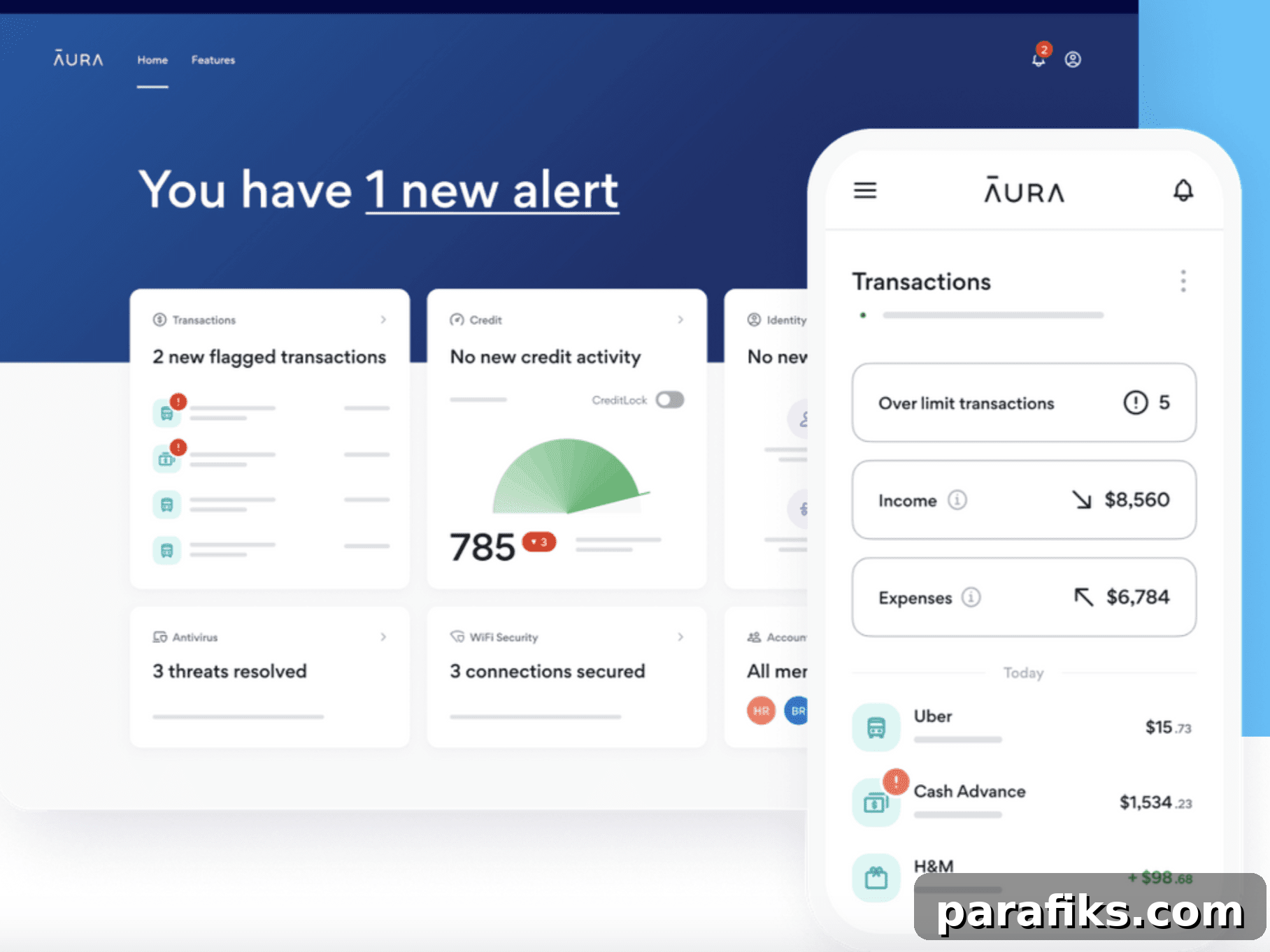
- Bank account monitoring with alerts for unusual activity or unauthorized changes
- Dark web monitoring to detect if your data appears for sale
- Public record monitoring
- Home title monitoring to notify you of changes to property records
- Additional protections such as antivirus, VPN, password management, and upcoming parental controls
By combining financial, identity, and network safeguards in one product, Aura helps you secure your online accounts, receive timely alerts, lock or monitor your credit, and protect against scams and malware.
Aura can alert you to suspicious spending and unusual credit activity. For example, you can link bank accounts to receive notifications if an unrecognized transaction appears or if changes are made to account details. Early alerts make it easier to stop fraud before it escalates.
If you want to evaluate the service, Aura offers a trial period so you can test its features and see how it fits your security needs.
What steps do you take to protect yourself from financial fraud?