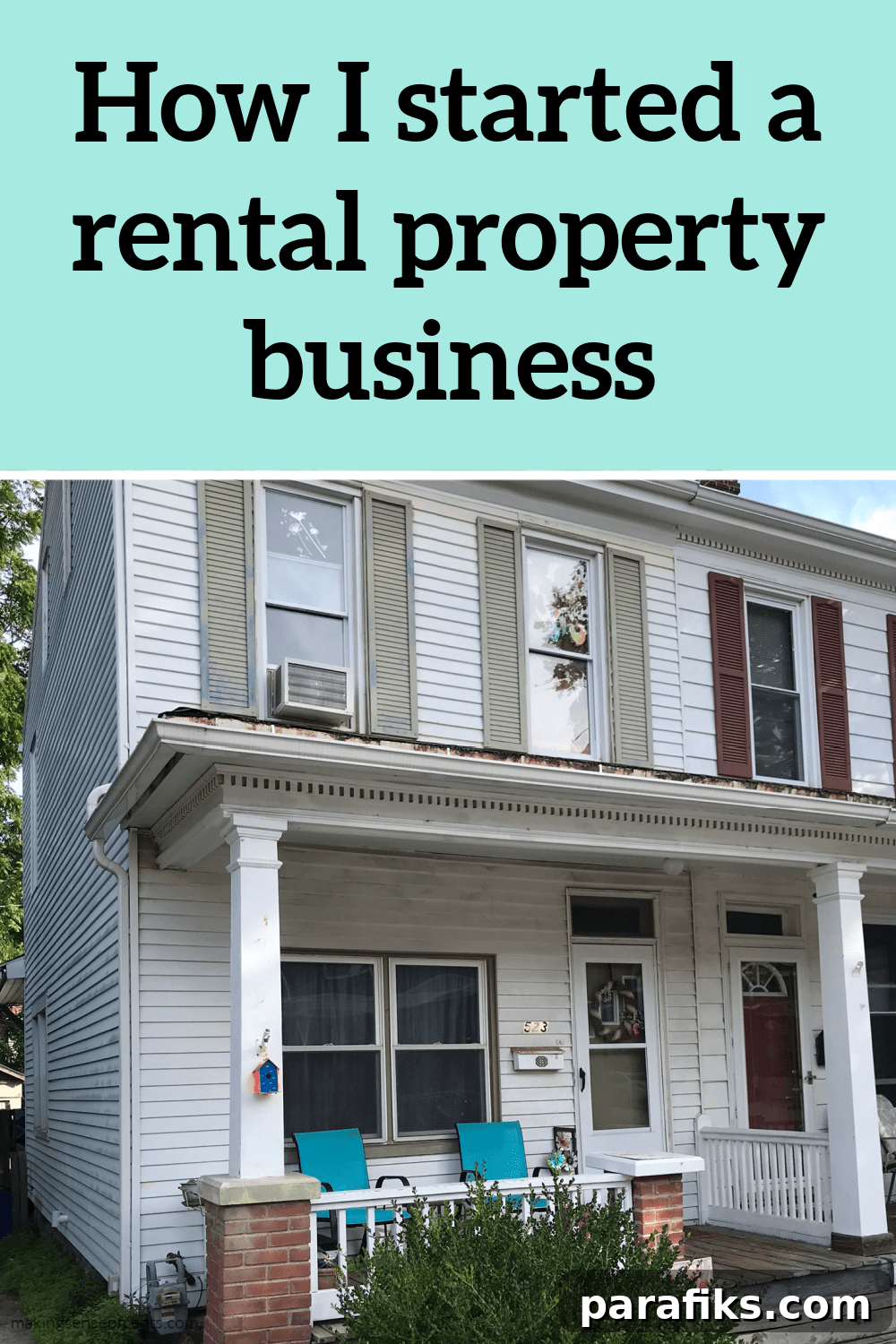
Are you interested in learning how to start a rental property business? Today’s guest post, from Nikki of Making Sense of Cents, explains how she built a rental real estate business starting with just $30,000 — and now owns 28 rental units.
When should you begin saving for retirement? Many people wait until it’s urgent, but investing in real estate makes it possible to start building retirement income passively and often without thinking about it daily.
That’s exactly the path my husband and I chose. We invested $30,000 in a rental property, and in under ten years we scaled that single investment into a portfolio of 28 units. Our aim has always been to create reliable passive income that will support an early retirement.
Here’s our story, from the first purchase through growth, management, and how we think about the future.
How we began our rental property business
Buying & renovating our first home
We married in 2009 and, even in our early twenties and with a wedding behind us, we were ready to buy a house. The housing market was still recovering from the Great Recession, which left opportunities for buyers willing to find distressed and foreclosed properties.
We purchased a 1,900-square-foot foreclosed home at age 24. The house was dated, but my husband had grown up doing DIY work with his father, so renovations were feasible. Over two years we painted, laid new flooring, updated bathrooms and the kitchen, and built an outdoor entertaining area. After completing those projects, we sold the house for a $70,000 profit. That first successful flip taught us important lessons and provided seed capital for future investments.
From flipping to renting
Rather than continually flipping houses — which can trigger high capital gains taxes — we decided to flip and rent. We used $30,000 from the sale to buy one half of a double house (a duplex-style property) and rented it out immediately; it already had a tenant.
Buying low often comes with maintenance challenges, and this property had many. Because my husband and my brother-in-law are both handy, we handled most repairs ourselves, saving on labor costs. If you can’t do the work yourself, budget for contractor costs and weigh the value of your time against paying for repairs.
Forming an LLC
Once we formalized the business plan, we created an LLC. A limited liability company protects personal assets by placing liability on the business entity rather than individual owners. For real estate investing, this is an important step because properties are used as collateral for loans; an LLC helps separate personal exposure from business risk.
Adding the second property via a line of credit
With the first rental running and producing rental income, we tapped into a home equity line of credit (HELOC) on that property to fund the next purchase. A HELOC is a revolving credit line secured by home equity. In our market at that time, lenders would let us borrow up to around 90% of a property’s value, which helped us leverage our holdings to buy additional foreclosures and expand the portfolio.
Using leverage increases risk — if a major problem occurs, multiple properties are exposed — so this strategy requires strong planning, good credit, and willingness to accept greater debt to accelerate growth.
Growing our portfolio
We continued buying single-family homes and small multi-units, often purchasing foreclosures and using HELOCs or similar financing. Early on, my husband and brother-in-law invested countless hours handling repairs and maintenance, which allowed us to keep costs down. Their schedules as schoolteachers also made seasonal renovation work manageable.
As we expanded, turnover and periodic cash shortfalls were inevitable. We sometimes used personal funds to cover gaps, and we always retained profits within the business to fund future acquisitions. That meant sacrificing immediate personal income to grow the company long-term.
Multifamily units and scaling
Once we could consistently achieve a target monthly profit — in our case about $200 per unit after factoring in repairs and expenses — we focused on multi-units to scale more efficiently. Buying properties with two to four units felt like “getting serious” in the landlord business and improved cash flow potential compared to single-family homes alone.
Property management essentials
Managing rental properties involves far more than fixing things. From our experience, eight core areas matter most:
1. Accounting
Keep accurate books for each property. Track rental income, utility charges, maintenance costs, and reconcile statements monthly. Plan for quarterly and annual taxes. If bookkeeping isn’t your strength, consider outsourcing, but factor the cost into your budget.
Note: In some jurisdictions, unpaid utilities can result in liens. One approach is to pay utilities yourself and bill tenants to avoid service interruptions or liens.
2. Banking
Establish a strong relationship with a bank. Understand mortgage terms, refinance opportunities, and whether 15-, 20-, or 30-year loans fit your strategy. Good financing partners can make growth smoother.
3. Rental agreements
Always use thorough, up-to-date rental agreements that clearly set expectations for tenants and owners. Have a real estate attorney review or draft lease agreements to ensure compliance with local laws and to protect your interests.
Note: If you acquire a property with existing tenants, make sure new lease terms, including rent changes, are provided with proper notice as required by law.
4. Finding tenants
Finding reliable tenants is one of the hardest parts. Screen carefully with credit checks, rental history, and references. Show the property and use that interaction to assess fit. We found Facebook Marketplace and simple yard signs effective for marketing vacancies.
5. Real estate agent
A responsive agent can get you access to new listings quickly. In competitive markets, seeing properties within 24 hours matters. If you can buy directly without an agent, it may save on commission costs — but only if you’re comfortable handling transactions yourself.
6. HVAC
Heating and cooling issues often generate the most emergency calls. Have a trusted HVAC contractor available; reliable and affordable small-business contractors work well for us.
7. Plumbing
Good plumbing support is essential. If you handle plumbing yourself, ensure work meets code. Tools like a water jetter can resolve many clogs and save on service calls.
8. Electrician
Electrical work should generally be outsourced to a licensed professional. Proper, code-compliant electrical repairs are critical for safety and legal compliance.
Setting rent and additional considerations
When pricing rentals, research the market and evaluate:
- Location — areas with high demand allow higher rents.
- Number of bedrooms and bathrooms — more bedrooms and bathrooms increase desirability and rent potential.
- Utilities — decide whether utilities are included and how you’ll bill tenants.
- Pet policy — determine pet fees and deposits.
- Parking and garage availability — consider fees for assigned spots or garages.
- Renter’s insurance — require tenants to carry insurance for personal belongings.
- Security deposit terms — define the deposit amount and the rules for first/last month’s rent.
Passive income and long-term strategy
Set clear, actionable goals. Our plan has been to retain profits inside the company to build buying power rather than taking regular personal draws. We’ve refinanced many 30-year mortgages into 15-year terms to reduce interest and accelerate equity growth. When mortgages are paid off, monthly profit rises considerably.
Real estate investing involves ups and downs — tenant turnover, unexpected repairs, and cash flow challenges are part of the business. Staying disciplined, reinvesting profits, and focusing on long-term goals are essential.
Current status and future plans
At the time of writing, we own 28 units. As home values rise, we’re preparing to sell off single-family homes to consolidate capital and purchase a larger rental complex. Instead of acquiring small duplexes or four-unit buildings, our goal is to buy a larger complex that scales more efficiently and produces stable income at a higher scale.
To recap
Starting a rental property business doesn’t require vast upfront capital, but it does demand research, planning, and a team of experts — including a real estate attorney, accountant or bookkeeper, reliable contractors, and a responsive lender or agent. Write a clear business plan with measurable goals, build a network of trusted professionals, and budget for contingencies.
Growing a rental business takes hard work, patience, and perseverance, but the long-term rewards of passive income and financial independence can make it worthwhile.
Author bio: Founder of Pumpkin to Polished, a blog focused on personal transformation, small business, and home design. I created Pumpkin to Polished to share lessons learned while building businesses and pursuing a more fulfilling life.
Are you interested in owning rental real estate? Why or why not?