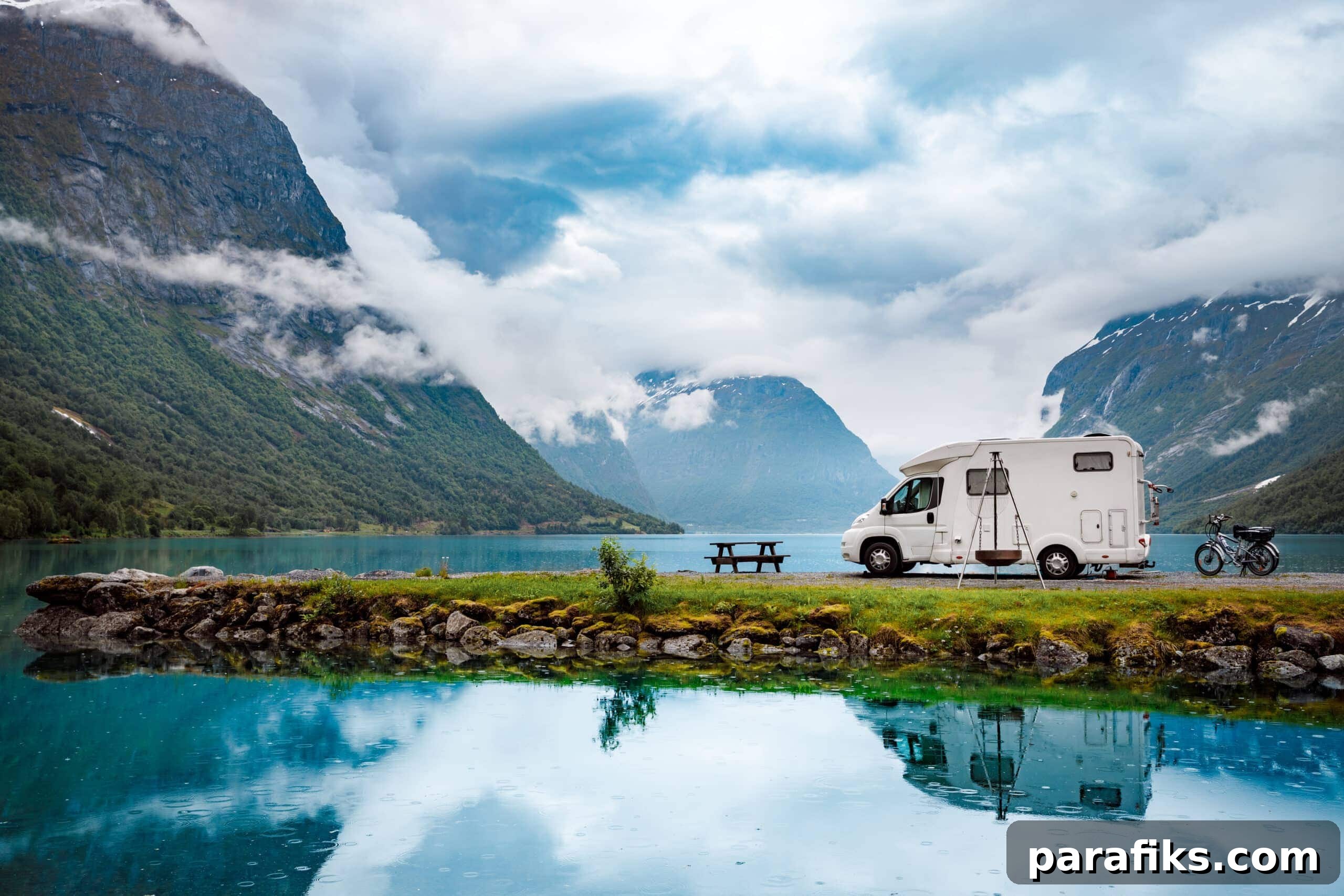
 A few months ago, we bought an RV. Since then we’ve lived in it almost continuously, only returning home for about five days total to restock supplies or have warranty work done.
Outside of those brief visits, we’ve embraced full-time RV living: traveling, exploring national parks, visiting friends and family, and enjoying the freedom of being location-independent.
We truly love RV life, and that has us seriously considering making this lifestyle permanent.
Overall, we’re leaning toward living full-time in the RV. The reasons not to are mostly minor and easy to solve — nothing insurmountable. The main hesitation is that we’ve never done anything like this before; getting rid of a conventional home and committing to life on the road feels like a big, scary change.
Below are the key considerations we’ve been weighing as we decide whether to pursue full-time RV living.
Our RV is small for full-time living.
When we bought the RV in July, full-time living wasn’t even on our minds. But we’ve grown so fond of it that the idea now seems like a natural next step.
That said, our RV is only 24 feet long. So far the limited space hasn’t been a problem, but living in it for a year or more—especially with two dogs—might feel cramped.
A simple solution when we start to feel boxed in is to book short stays in Airbnbs or small rentals. Using occasional short-term accommodation could provide breathing room while keeping the benefits of mobile life.
Full-time RV living would save us money.
Financially, full-time RV living makes sense. Right now we maintain a house in Colorado that we rarely occupy; eliminating that expense would cut rent or mortgage payments, utilities, and other costs tied to a stationary home.
We expect to spend much of 2016 on the road, so keeping a separate house during that time would likely be a waste. If we forgo keeping a house, we’ll need to address practical matters such as establishing a mailing address and choosing a state of residence for tax purposes.
Related article: How To Live On One Income
We have a lot of possessions to manage.
Although I value downsizing and a minimalist approach, we still own many things. My belongings won’t stop us from living full-time in the RV, but storage is a real consideration.
I inherited over a hundred large photo albums from my father, along with furniture and other items I don’t want to discard—especially since we expect to buy another house in 2017. Additionally, we own a car that our RV can’t tow, so we would need to decide whether to store, transport, or sell it if we commit to full-time RV life.
Full-time RV living will create unforgettable memories.
Living on the road full-time promises to be an incredible, once-in-a-lifetime experience. Traveling across North America in an RV appeals to both of us—we love discovering new places and experiences—and we know the journey will be memorable.
Related article: Beginner RV Tips – Dreaming Of A Life On The Road?
Handling mail while living in an RV will require a system.
Because I run my business from the RV, I sometimes receive checks and important documents by mail. There are RV mail services that scan and email mail contents, which helps, but we still need a reliable way to cash checks when companies don’t offer electronic payment options. Setting up a dependable mail and payment workflow is an important logistical step.
I can maintain my business while living on the road.
Since taking the RV on the road, my income and business operations haven’t suffered. Initially I was worried about the impact, but the experience has proven positive: working while traveling has been not only possible but energizing.
For connectivity on the road, I’ve been using a Verizon MiFi Jetpack, which has supported my needs so far.
Related page: My Latest Online Income Reports
Should we try full-time RV living? Would you try living in an RV full-time?