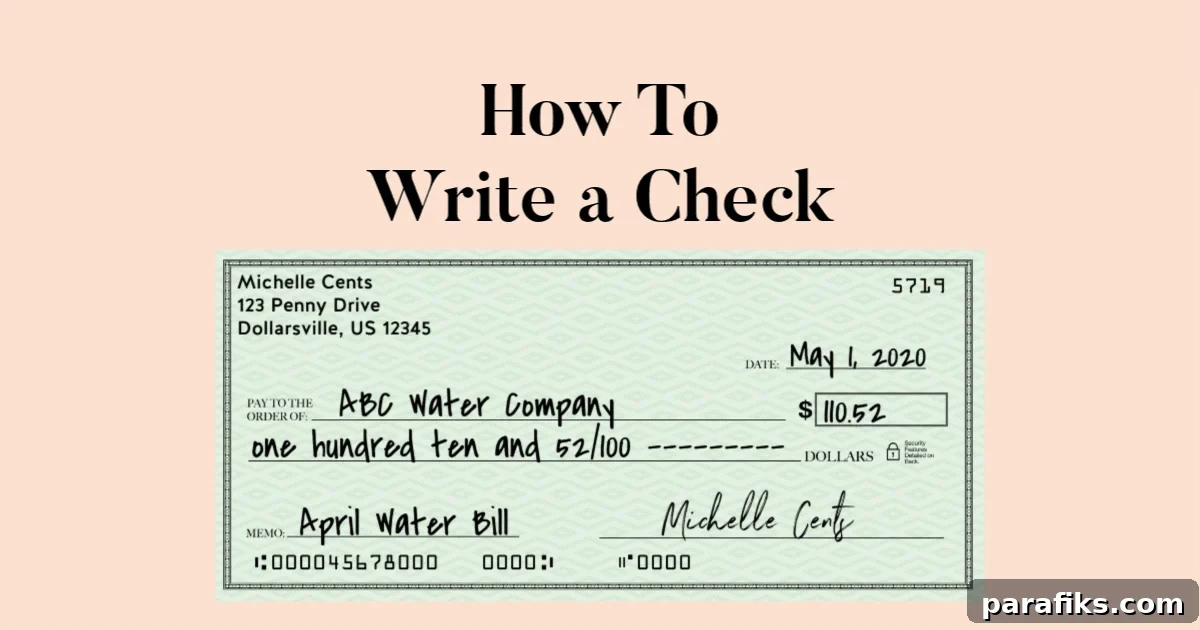
Do you need to learn how to write a check? Wondering how to properly complete one or how to fill it out for a specific dollar amount? If you’ve never written a check before or need a refresher, this guide will walk you through the process step by step.
Although many people rely on cards and money-transfer apps today, checks are still used in a number of situations. If you’re reading this, chances are you need clear, practical instructions on how to write a personal check.
I learned how to write checks in school years ago, but not everyone receives that instruction now. Still, checks remain necessary for a variety of transactions:
- A down payment on a house or similar large purchase
- Monthly rent payments
- Gifts for weddings, graduations, or birthdays
- Some campgrounds or park facilities that accept only checks
- Certain government offices that require payment by check
- Payments to independent contractors or service providers who prefer checks to avoid card processing fees
- Charities, community groups, and churches that save on processing fees by accepting checks
- Situations where using a card would trigger an extra processing fee
Even if checks are less common than they once were, knowing how to write one is still valuable. Below is a straightforward, practical walkthrough that covers each part of a check and answers common questions.
This guide will teach you not only how to write numbers in words on a check, but also best practices to prevent mistakes and fraud.
Related content:
- Personal Finance Topics That Should Be Taught In School
- Why You Need An Emergency Fund and How To Start One Today
- 15 Of The Best Money Books For Young Adults
- Where To Cash Coins For Free Near Me
Below you’ll find a clear walkthrough on how to fill out a check, plus answers to frequently asked questions. Follow each step carefully to make sure your check is valid and secure.
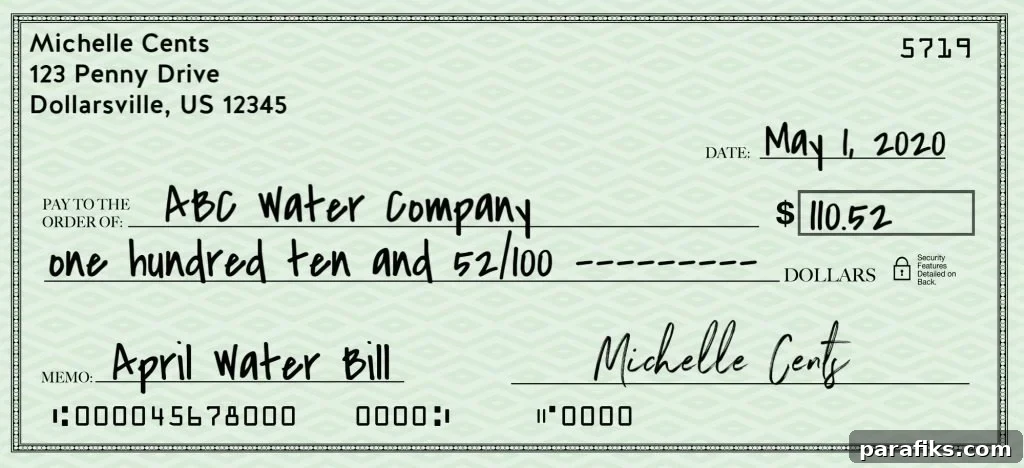
How to write a check
The example above shows a completed check written with both dollars and cents. Each field on a check has a specific purpose and must be completed correctly to ensure the check can be processed and to reduce the risk of fraud. Below is a step-by-step breakdown.
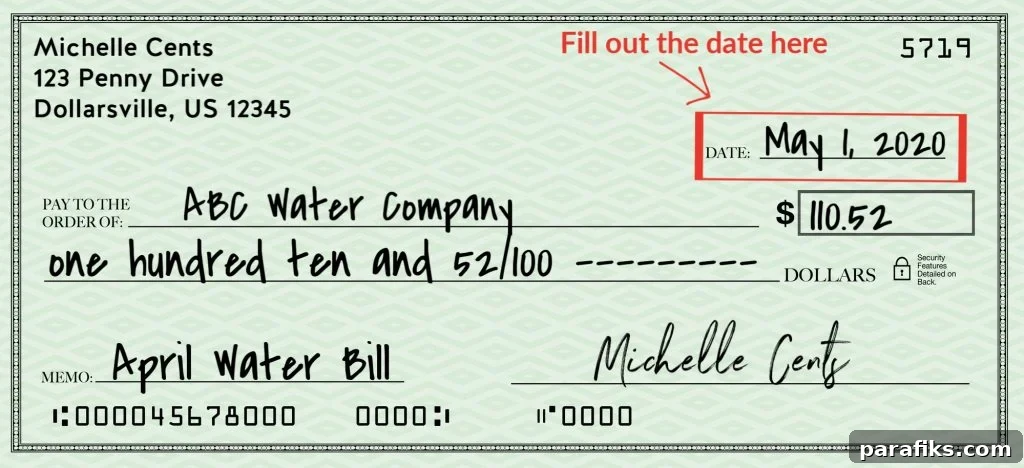
Step 1: Fill in the date
Write the date in the upper right-hand corner. Most of the time you’ll use the current date, but you can postdate the check if you need it to be cashed later (more on that below). You can write the date with words or numerals—just make sure it’s legible.
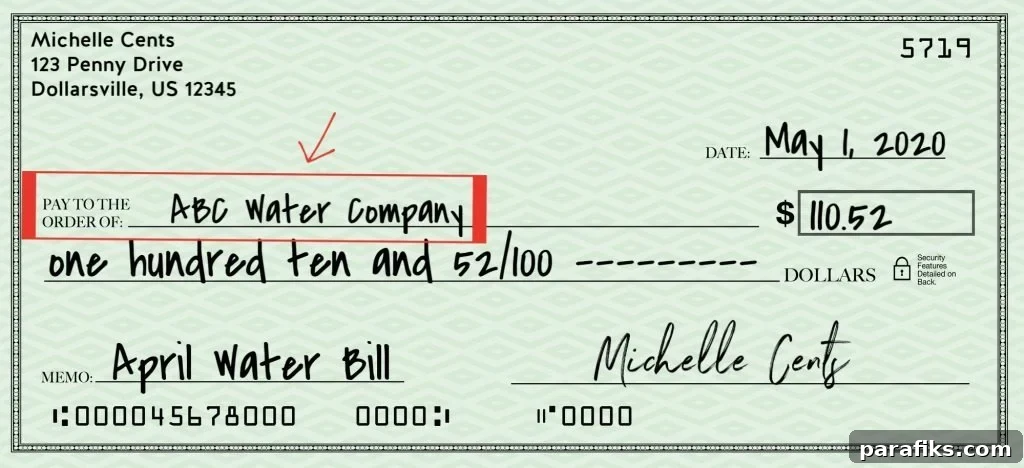
Step 2: Write the payee
On the “Pay to the order of” line, write the exact name of the person or business receiving the money. Confirm the correct spelling—mistyped names can cause delays or rejection when they deposit the check.
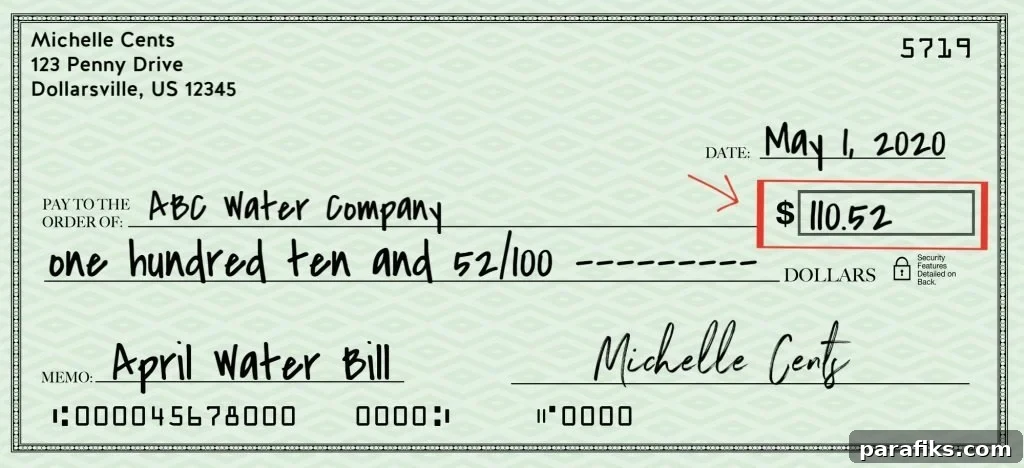
Step 3: Enter the amount in numbers
In the small box on the right, write the amount numerically (for example, 110.52). Place the numbers as close to the left edge of the box as possible so someone cannot add digits to increase the amount.
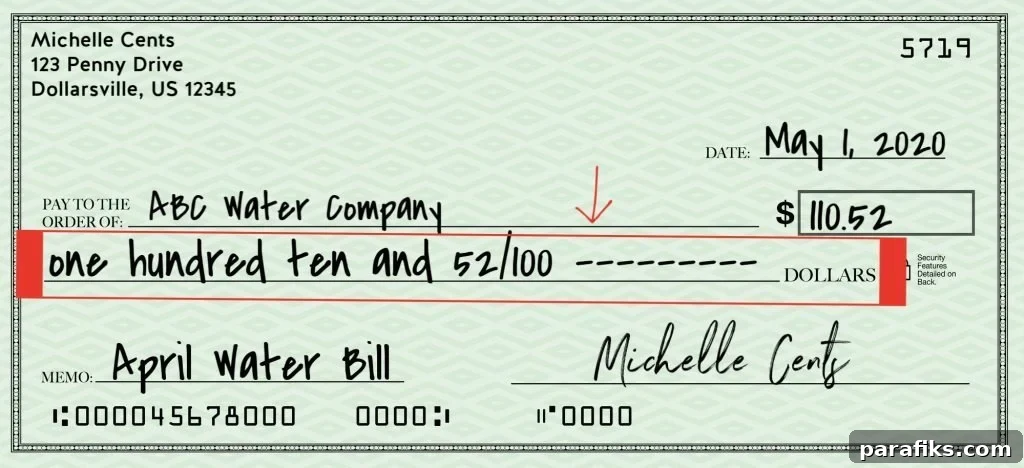
Step 4: Write the amount in words
On the line below the payee, write the dollar amount in words to match the numeric box. This is the legally binding amount, so be precise. Include both dollars and cents, using “and” between them (for example: “One hundred ten and 52/100”). If your words don’t fill the line, draw a line to the end so nothing can be added.
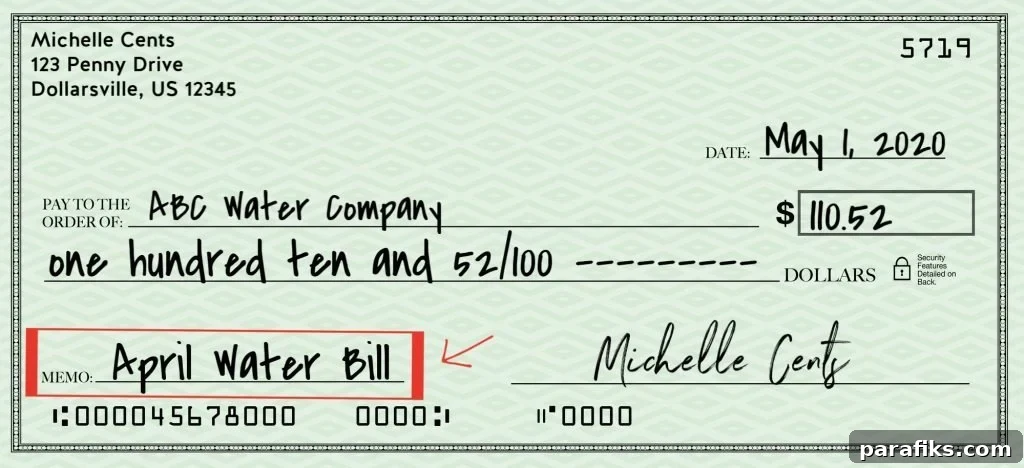
Step 5: Fill the memo line
Use the memo line to note the purpose of the payment—rent for May, account number, gift, etc. This is optional but helpful for your records and for the payee to identify the payment.
- Birthday present
- Wedding gift
- Billing account number
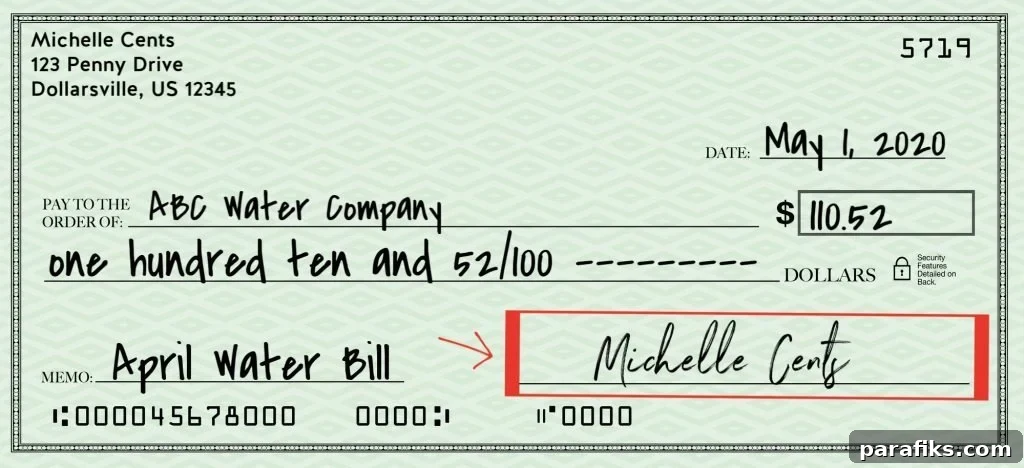
Step 6: Sign the check
Sign on the signature line in the bottom right corner. The bank will not process the check without your signature. Don’t sign until all other fields are complete to avoid creating a blank signed check.
After signing, record the check details—date, payee, amount, and check number—in your check register to track your balance and prevent overdrafts.
Common questions about writing checks
Here are answers to frequently asked questions that may come up when you’re writing a check.
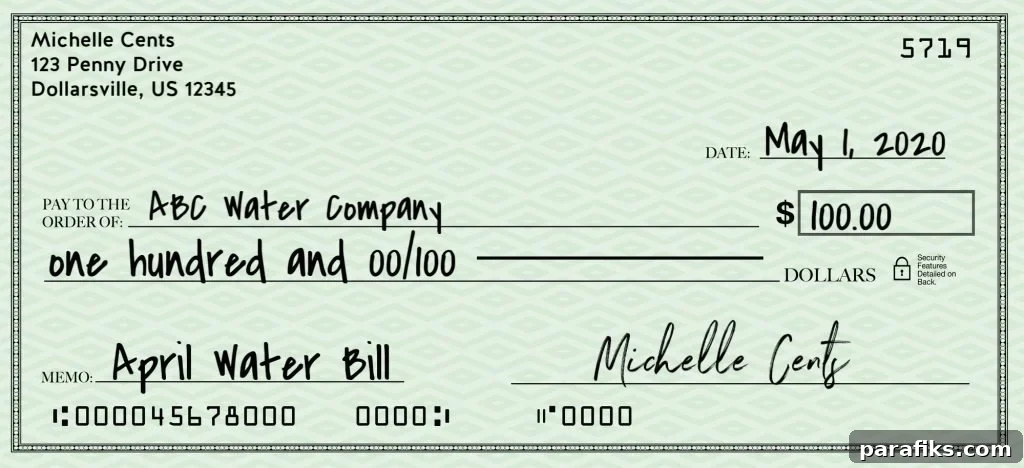
How to write a check for $100
To write a check for one hundred dollars with no cents, put the numeric amount in the box (100.00) and write “One hundred and 00/100” on the words line. Draw a line to the end of the line if needed. Examples for other amounts:
- $150 – “One hundred fifty and 00/100”
- $250 – “Two hundred fifty and 00/100”
- $1,000 – “One thousand and 00/100”
- $2,500 – “Two thousand five hundred and 00/100”
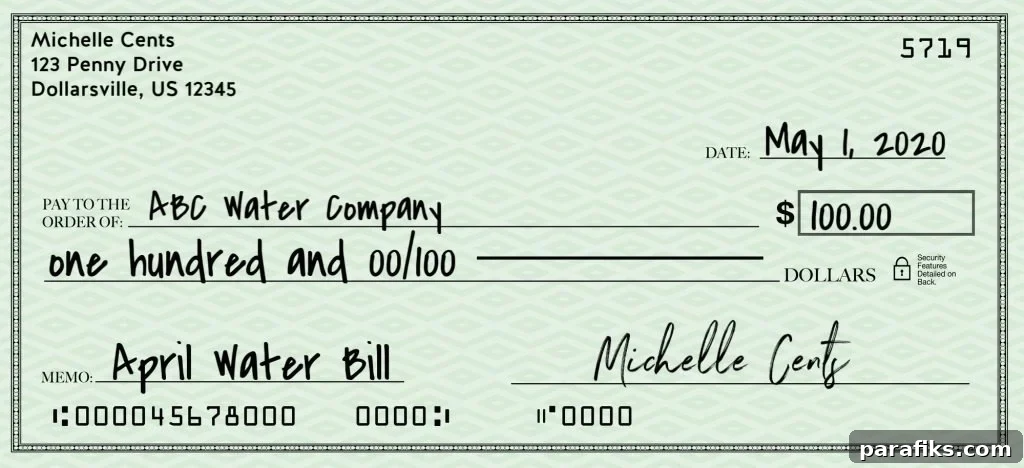
How to write a check with no cents
If there are no cents, include the cents portion as 00/100 or write “zero cents.” For example: “Fifty and 00/100” or “Fifty dollars and zero cents.”
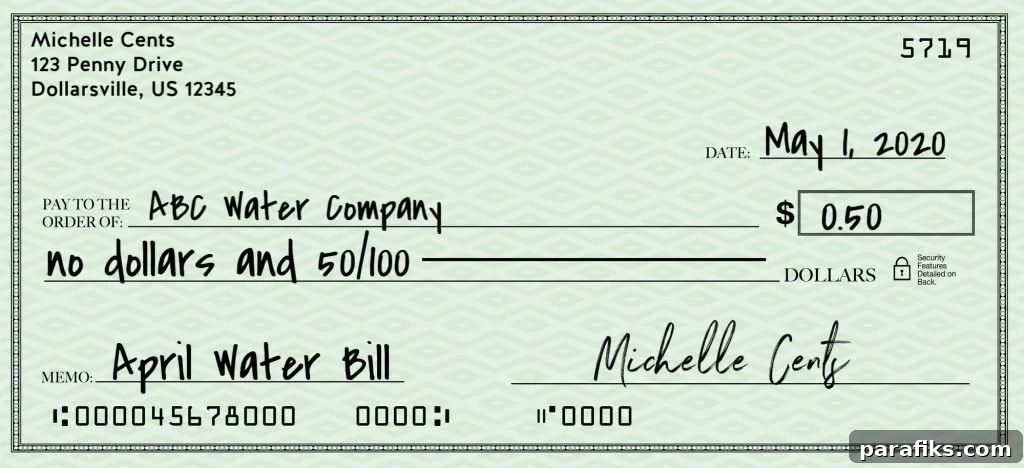
How to write a check with only cents
If you need to write a check for only cents, write the dollar portion as “No dollars and” followed by the cents in the fraction form (for example, “No dollars and 50/100”). Put the numeric amount as .50 in the box (or 0.50) and complete the rest of the check as usual.
How to write a check to yourself
To write a check to yourself, simply put your own name on the “Pay to the order of” line. You can then deposit or cash it as you would any other check.
How to void a check
If a check is filled out incorrectly or you no longer need it, write VOID across the front in large letters. For direct-deposit forms, write VOID and provide the check as requested. If the check is not needed, shred it to protect your information.
Can I write a check in pencil?
No—never use pencil. Pencil can be erased and altered. Use a permanent ink pen to reduce the risk of fraud.
How to deposit a check via mobile deposit
Most banks require you to endorse the back of the check with your signature and write “For mobile deposit only” above it. Check your bank’s specific instructions before depositing.
Should I postdate a check?
Postdating means writing a future date on a check. Generally it’s best to use the current date, but you can postdate if there’s a reason. Keep in mind banks may still process checks regardless of the written date, so verify with your bank if you have concerns.
What is the number in the top right corner?
That number is the check number. It helps you and your bank track which check was written and where you are in your checkbook.
What are the numbers on the bottom of a check?
The numbers along the bottom are, from left to right, the bank routing number, your account number, and the check number. These are read by the bank to route the funds properly.
What is a blank check?
A blank check is a signed check with key fields left empty. Never sign a check until you’ve completed all fields, because a signed blank check can be altered or misused.
What is the back of the check for?
The back of the check is for endorsement by the payee when they deposit or cash it. You typically don’t need to do anything to the back unless you are the recipient.
How to write a check to more than one person
If you want either of two people to be able to deposit the check, write “Name or Name.” Using “and” can require both parties to endorse the check or be on the same account at their bank.
Alternatives to writing a paper check
If you prefer not to write a check, consider these alternatives when available:
- Debit or credit card
- Paying bills online through the provider
- Cash
- Money-transfer apps like PayPal, Venmo, Cash App, or Zelle
Can I write my own check?
Yes. If you have a checking account and checkbook, you can write checks using the steps outlined above.
Who signs the back of a check?
The recipient endorses the back of the check—this is their signature to deposit or cash it.
How to write a check to the DMV
Always ask the DMV which name to make the check out to (an agency name or specific office) before writing it. Confirming this prevents rejected payments.

Where to order checks
You can order checks from your bank or from third-party check printers. Banks may charge more or take longer, so many people order from specialized companies. Keep at least one checkbook on hand in a secure place for emergencies.
Reference: how to write dollar amounts in words
Use a written-number reference when you’re unsure how to spell larger amounts. Below is an image showing common examples and how to write them in words, which is helpful for amounts up to tens of thousands of dollars.
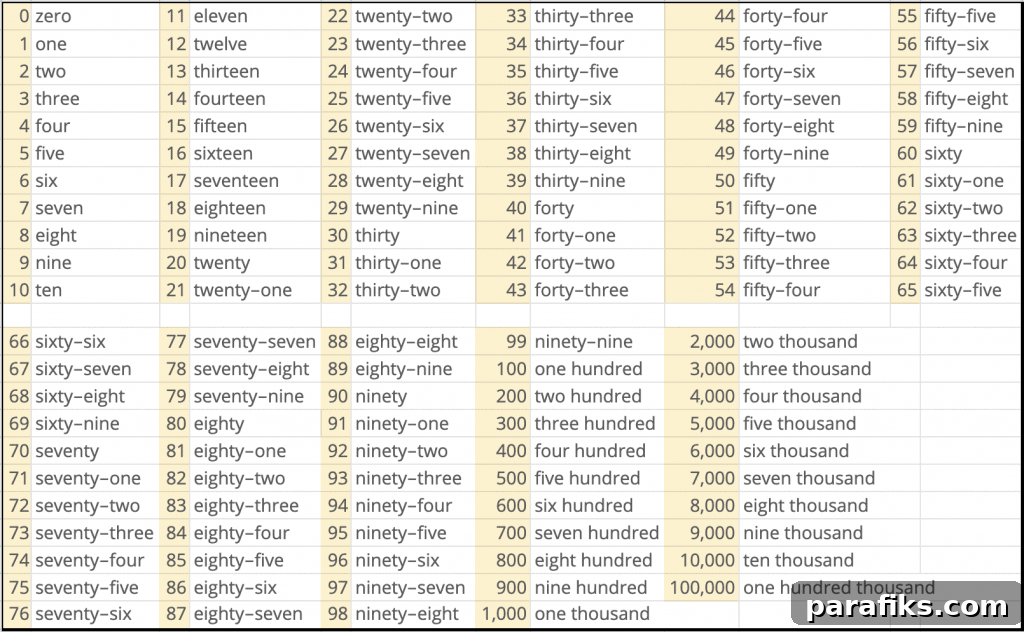
For instance: $1,500 would be written as “one thousand five hundred and 00/100”; $3,000 as “three thousand and 00/100”; $1,200 as “one thousand two hundred and 00/100.”
How to read the numbers on a check
The bottom line contains the routing number (identifies the bank), the account number (identifies your account), and the check number. These enable banks to route and clear the funds correctly.
Conclusion: the correct way to write a check
Writing a check correctly is straightforward when you follow the proper steps: date the check, name the payee, enter the amount in numbers and in words, add a memo if desired, and sign the check. Record the transaction in your register to track your balance and avoid overdrafts.
If you have any remaining questions about filling out a check, refer back to the examples and tips here or consult your bank for specific requirements, such as mobile deposit endorsements. Keeping one checkbook on hand is a practical precaution for situations where checks are required.
Do you know how to write a check? How often do you fill out checks?
Recommended reading:
- 11 Best Places To Get a Money Order Near Me
- 8 Best Places To Cash A Check Without A Bank Account
- Where To Buy Stamps – 13 Best Places