

Do you want to retire early?
Five years ago I interviewed a woman who achieved what many only imagine: she retired at 30 with $500,000 saved. Her story became one of the most-read posts on my site because it demonstrated that financial independence doesn’t require a lottery win, a billion-dollar startup, or grueling nonstop work. Instead, she saved consistently, boosted earnings through strategic job changes, and invested in low-cost index funds until she reached the amount she needed to leave full-time employment.
She continued sharing her journey online and inspired thousands looking for more freedom. Today she returns with an exciting update: five years after retiring early, her net worth has doubled to over $1,000,000 — and she didn’t add a single new dollar to her investment principal.
In this updated interview she explains how her portfolio grew after retirement, what she’s learned about living off investments, and how early retirement reshaped her views on happiness, priorities, and what “enough” means.
The interview covers topics such as:
- How she retired at 30 with $500,000
- Whether she’s happy in early retirement
- Whether she still earns income or lives entirely off investments
- Her withdrawal strategy and withdrawal rate
- How her net worth doubled from $500,000 to $1,000,000 after retiring
- What she does for health insurance
- How she would respond to a 30% stock market drop
This interview is full of actionable insights and honest reflections about achieving financial independence early.
How I Retired 5 Years Ago With $500,000 And Now I Have $1,000,000
Before the new questions, here’s a brief summary of who she is and how she originally retired at 30 with $500,000.
She goes by “Purple” from APurpleLife.com. Raised in Atlanta, she attended college in the Northeast, then moved to Manhattan to start a career in advertising. After several years she transitioned to marketing and stayed in that field. In 2012 her partner introduced the idea of financial independence; at first she dismissed it, thinking she just needed to find the right job. After job-hopping and landing what she thought was the dream position, she realized the stress and hours still weren’t what she wanted for decades to come.
She joined the financial independence community, quietly wrote a blog to track her journey starting January 2015, moved to Seattle that summer, launched the blog publicly in July 2018, and reached her goal in October 2020, leaving her job and retiring at 30.
Her $500,000 target came from analyzing annual spending (about $18,000 in Seattle at the time) and adding an 11% buffer. She backtested scenarios to confirm $500,000 invested would likely sustain her spending across a long retirement.
1. How did you retire at 30 with $500,000? Which steps mattered most?
Here’s what she did:
- Analyzed spending – She tracked expenses, trimmed anything that didn’t add joy, and kept what mattered.
- Increased income by job-hopping – She changed jobs frequently; over nine years she moved from $35K to roughly $115K, adding about $20K per job hop.
- Used domestic geo-arbitrage – Moving from Manhattan to Seattle cut living costs dramatically while improving quality of life, lowering annual spending from about $35K to $18K.
- Invested in low-cost index funds – She learned DIY investing and primarily used Vanguard’s Total Stock Market Index Fund.
- Stopped when she hit her goal – She calculated how much she needed given her spending and retired once investments reached that amount.
The steps reinforced each other: trimming wasteful spending freed up money to invest, and higher income from job moves accelerated savings. What seemed like a ten-year plan while living in Manhattan compressed to five years after these changes.
2. Why did you want to retire early? Are you happy?
She left because even the “dream job” proved unsustainable long-term — the relentless stress and hours left no time to live. Early retirement offered a chance for uninterrupted time with loved ones, travel, creativity, and rest. She notes a sobering truth: none of us are guaranteed tomorrow, so she pursued a life that mattered now as well as later.
She reports being the happiest she’s ever been. Retirement gave space to manage clinical depression, prioritize calming activities, and focus on what actually brings joy.
3. Do you still earn income or live entirely off investments?
She planned to live entirely off investments and has been withdrawing a planned amount annually (about $20K in 2020 dollars, adjusted in some seasons). Unexpectedly, she received some incidental income — higher-than-anticipated interest on savings accounts, modest blog-related earnings, and other small streams. These have been nice bonuses but aren’t required to cover core spending. She’s grateful to have optional income but values the freedom of not needing it.
4. What is your withdrawal strategy and rate?
Her approach relies on the well-known “4% rule,” modeled using cFIREsim. Backtesting showed that $500,000 invested could support her planned withdrawals through many historical market sequences, including worst-case 70-year periods, especially with a modest temporary spending reduction (for example from $20K to $16,500) during early downturns. She also uses a flexible approach aligned with spending a percentage of the current portfolio some years, which improved long-term success probabilities in her simulations. Her planning assumed no retirement income and no Social Security, so real-life outcomes have a margin of safety.
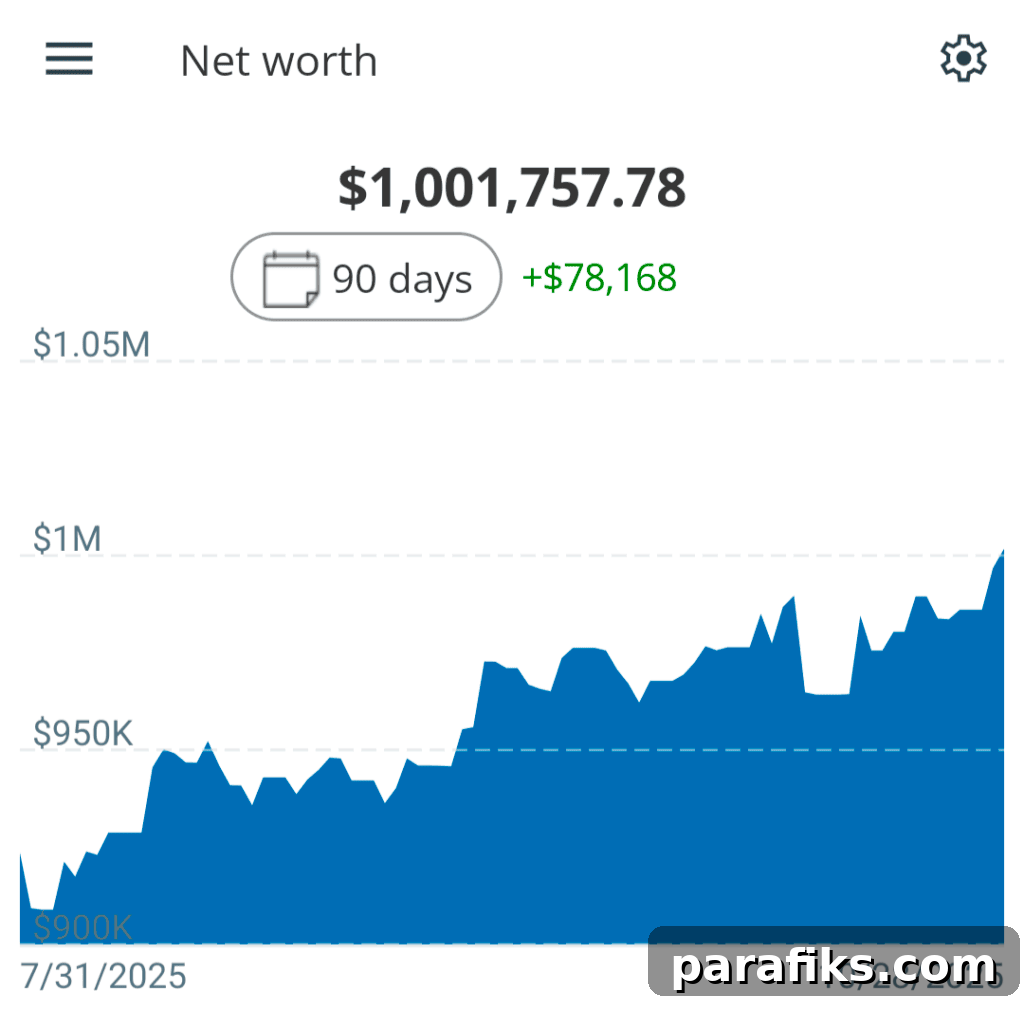
5. How did net worth grow from $500,000 to $1,000,000 after retiring?
Her portfolio doubled purely from market returns; she didn’t add new principal after retiring. Year-by-year net worth progression shows market-driven gains and occasional incidental income. She continues to update her net worth publicly and shares periodic financial reviews.
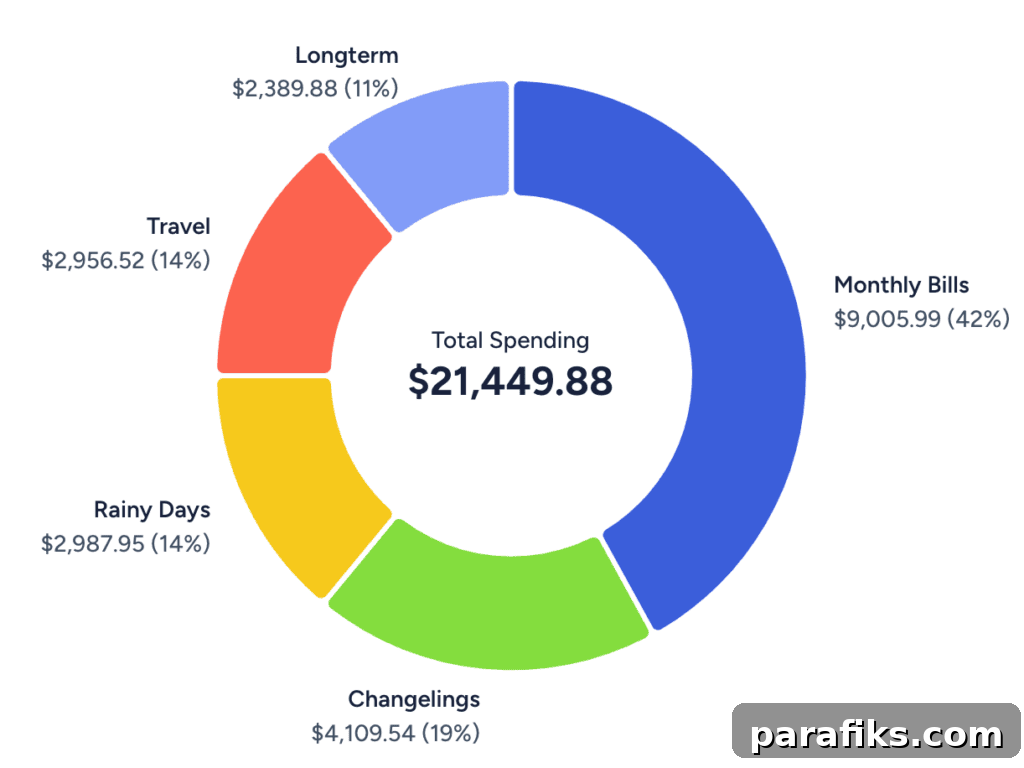
6. Has your spending changed since retiring?
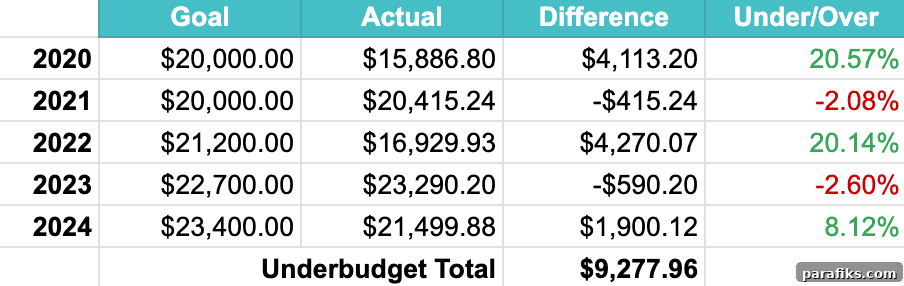
Spending has remained roughly the same after adjusting for inflation. Some years are higher, some lower, but it generally evens out. By the end of 2024 she was about $10K under budget for all of retirement. She also produces detailed annual spending reports for transparency and planning.
7. What about health insurance?
She uses Affordable Care Act coverage and supplements travel with SafetyWing when abroad. While nomading, she sometimes obtains prescriptions or dental work in countries where costs are lower and care is accessible. For many early retirees, ACA coverage plus travel insurance and international options are part of a pragmatic healthcare approach.
8. Any financial surprises in early retirement?
She was surprised she could travel full-time for five years while spending under $25,000 annually. Flexibility, advance booking, and unlimited free time helped secure lower prices on accommodations and flights. She also unexpectedly purchased a car and rented an apartment in 2025, but being under budget allowed for those choices without jeopardizing her plan.
9. Do you ever consider returning to traditional work?
No. She doesn’t miss Corporate America. Although grateful for what her career earnings enabled, she has no desire to return to that environment.
10. If the market fell 30% tomorrow, what would you do?
Likely nothing immediate. She keeps a two-year cash cushion in a high-yield account to cover living expenses during downturns, allowing her to maintain lifestyle without selling investments at depressed prices.
11. Do you keep a cash cushion? How much?
She started with a two-year cushion in 2020 because retiring that year felt risky. After markets recovered she lowered it to one year, but in 2025 she returned to two years due to new commitments like a car and apartment, preferring the peace of mind of extra liquid reserves.

12. Where have you traveled and what are favorite experiences?
She has lived in many U.S. states and traveled across numerous countries. Rather than quick sightseeing, she practices slow travel, staying at least a month in each place to experience living there. Favorite experiences include circumnavigating Iceland, snorkeling the Great Barrier Reef, learning Spanish in México, feeding elephants in Thailand, flying Singapore Air First Class Suites, and flying in a hot-air balloon at a major festival.
She lists U.S. states she’s lived in and a wide array of countries visited, emphasizing that slow travel lets her immerse in places and keep costs manageable.
13. Best tips for someone seeking early retirement?
Her top advice is honesty with yourself. Identify what truly brings happiness and spend money and time on those things. Track spending to understand what provides value; cut what doesn’t and keep what does. Be intentional with both money and time, and don’t be afraid to be an outlier — people will judge no matter what, so choose a life that makes you happy.
When do you think you’ll retire? What questions do you have about early retirement?
Related content:
- What Is Financial Independence, Retire Early? Answers To FAQs About FIRE
- Boldin Review: Is This the Best Retirement Planning Tool?
- 21 Best Early Retirement Tips To Help You Retire Early
- How This Couple Retired at 38 and 41: Interview With OurNextLife
- How This 34 Year Old Owns 7 Rental Homes
- 12 Passive Income Ideas That Will Let You Enjoy Life More
- 13 Best Early Retirement Books