

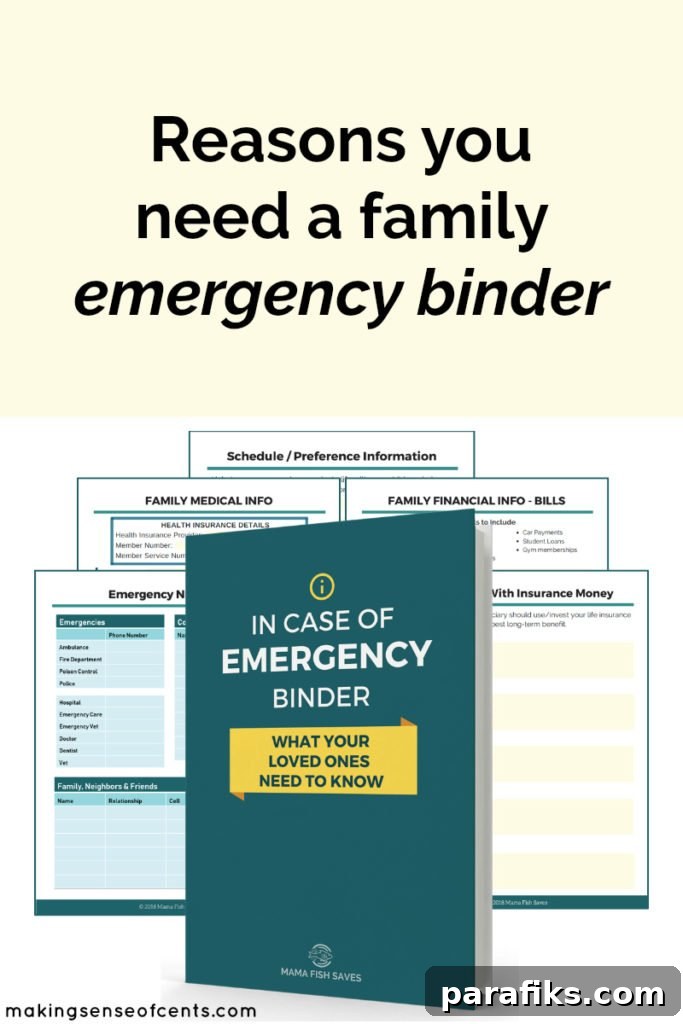
 Are you looking to learn how to create family emergency binders? Here is an in-case-of-emergency binder template and clear answers to common questions.
In our household, I handle most of the bills, financial accounts, and administrative tasks. That arrangement is common—often one person quietly manages the family’s important details.
I’ve been in charge of our information for years. It became routine because I knew how to do it and kept everything running smoothly. But we realized this reliance on one person could be a serious risk. Most of our accounts are paperless or on auto-pay, and much of the knowledge about how everything works lives only in my head.
That’s a problem: if something happened to me, my husband Wes would be overwhelmed and uncertain where to start. Important bills might be missed, life insurance claims could be hard to locate, account passwords might be unknown, and essential documents could be difficult to find. To avoid that chaos, we needed a clear plan—a family emergency binder that gathers everything someone would need in a crisis.
Having a consolidated emergency binder makes life simpler and reduces stress during unexpected events. It provides a practical roadmap so that loved ones can manage finances, care for children and pets, and access essential services without guessing or frantic searching.
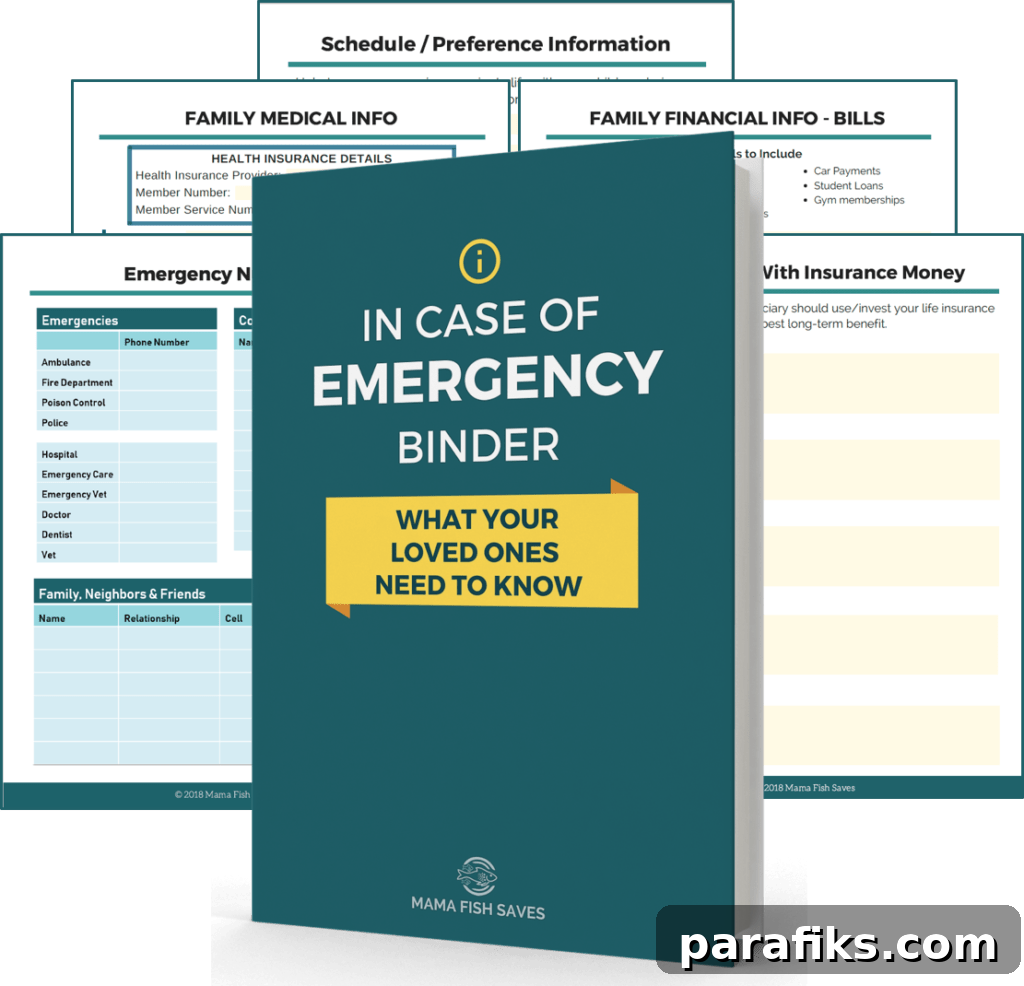
My top recommendation is to consider the In Case of Emergency Binder, a 100+ page fillable PDF workbook designed to streamline the process. The workbook organizes the necessary information into easy-to-follow sections so you can compile and protect your family’s critical data. I encourage you to explore tools that help you put this information together in a secure, organized way.
I invited Chelsea Brennan, the creator of the In Case of Emergency Binder, to share her experience and explain why an emergency binder matters. Below is her guest post, edited for clarity and flow.
Answers to 7 Common Questions About Family Emergency Binders
Hi, I’m Chelsea Brennan. Three years ago, while five months pregnant, I sat in a dim office waiting for a call for a life insurance physical and realized I hadn’t prepared my family for the practical aftermath if something happened to me. At the time I was working as a hedge fund analyst and managing our family’s finances—paying bills, managing investments, and handling tax and mortgage paperwork. I knew, however, that in a crisis my husband wouldn’t be able to easily manage everything on his own.
That realization kicked off the process of building an “In Case of Emergency Binder” to hold both practical and emotional information. I consulted more than 30 professionals—doctors, estate attorneys, conservators, and others—and added personal touches like letters to loved ones and guidance from family members about what mattered most during loss. Over time the binder became a comprehensive resource that covers financial, legal, medical, and personal preferences.
The result is a fillable PDF workbook that walks you through compiling everything your family might need in an emergency. Below I answer the most common questions I receive about emergency binders.
I have a will—why do I need an emergency binder? What is an emergency binder?
A will and life insurance are essential parts of estate planning, but they don’t cover everything your family will need immediately after an emergency. A will won’t list what bills are on auto-pay, where account logins are stored, or what a person’s memorial preferences are. Life insurance is only useful if survivors can find the policy and file a claim.
An emergency binder collects practical details—account numbers, location of original documents, contact information for professionals, and instructions for immediate needs—so the family doesn’t waste weeks or months hunting for paperwork. It also covers situations other than death, such as incapacitation, house fires, or unexpected travel delays where someone else must step in and care for kids or pets.
Do I only need one if I’m married or have kids?
No. Single people especially benefit from an emergency binder because the people who would step in likely haven’t observed day-to-day routines or know where documents are kept. Young adults should consider starting an emergency binder when they begin working and gain independence—once you turn 18, parents don’t automatically have decision-making authority unless a durable power of attorney or similar documentation is in place.
What should I include in an emergency binder?
Our binder is organized into two main sections: Basic Information and Need to Know.
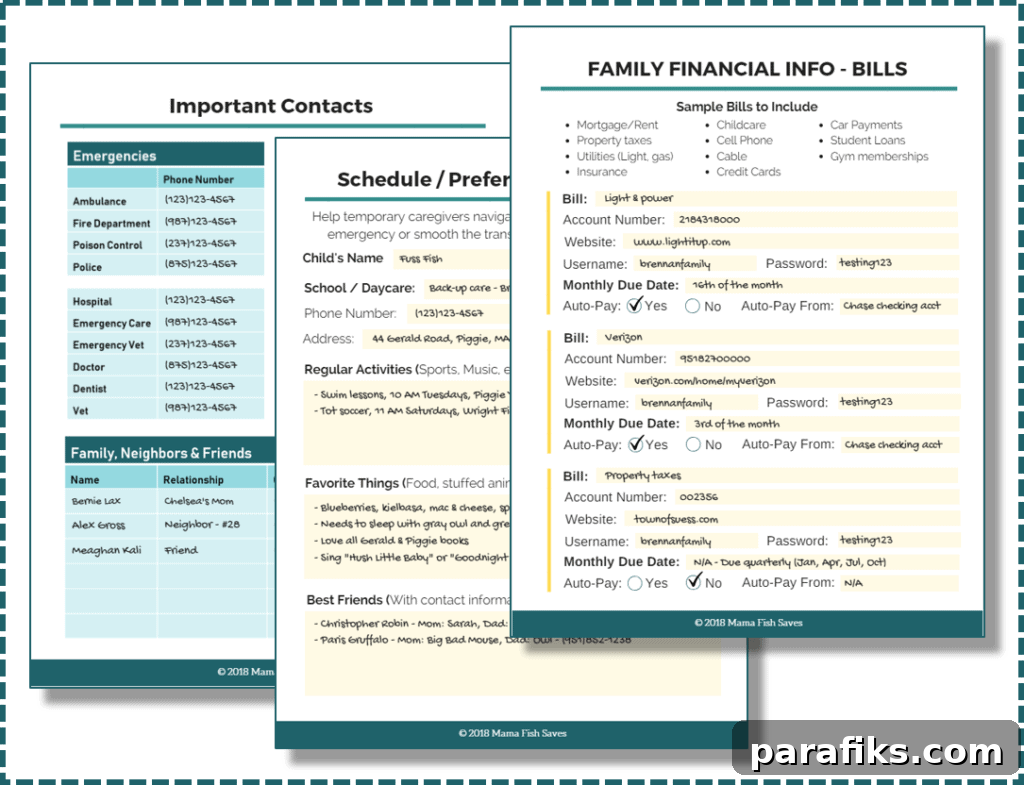
Basic Information typically contains:
- Household contact numbers
- Key personal documents (birth certificates, marriage license, Social Security cards, passport copies)
- Medical information
- Childcare and pet care details
- Insurance documentation and details
- Basic financial information: properties, regular bills (including what’s on auto-pay), bank accounts, and credit cards
The Need to Know section—used if someone dies or for deeper estate settlement—can include:
- Where original documents and keys are stored
- Employer information
- Social media, email, and website logins
- Investment details and suggested strategies, trusted professionals, and instructions for life insurance proceeds
- Memorial service preferences
- Letters to loved ones
Including personal letters or legacy notes is emotionally challenging but invaluable for loved ones and caregivers who will appreciate clear guidance and heartfelt messages during difficult times.
Will this only be useful in emergencies?
No. We use our binder regularly for everyday needs—locating documents, handing details to a caregiver, or updating accounts after a move. Having information organized in one place saves time and makes many routine tasks easier. You will likely refer to it more often than you expect.
How do I keep it updated?
Update the binder regularly. Even a somewhat out-of-date binder is helpful, but set a yearly reminder to review and refresh information. Better yet, build a habit: after major life events—new assets, a new doctor, new insurance policy—update the relevant section immediately. Small, consistent updates prevent the binder from becoming overwhelming.
Is it safe to keep all this information in one place?
Centralizing sensitive information raises security concerns. We address this by splitting the binder: the Basic Information that we use frequently sits on a shelf, while highly sensitive items and originals are locked in a fireproof safe. We also keep a digital copy on a thumb drive stored in a trusted location and update it annually.
If you keep digital copies, protect them. Use encrypted password managers or secure cloud services with unique, strong passwords. Avoid reusing simple passwords. The goal is to balance accessibility for trusted family members with protection against identity theft.
Why should I pay for a workbook like this?
The content in a paid workbook isn’t magic—you could research and assemble it yourself. The benefit of a guided workbook is that it saves time, reduces the risk of missing critical items, and provides a structure that makes completion far more likely. For many families, paying for an organized, expert-created template is worth the convenience, clarity, and peace of mind it provides.
Ready to get started? Create your family’s emergency binder today!
Compiling a family emergency binder takes time and reflection, but completing it brings real relief. It’s one of those difficult tasks that, once finished, removes a heavy burden from your loved ones. If you invest the effort now, you’ll give your family practical guidance and emotional comfort in times of need.
Author Bio: Chelsea Brennan is the founder of Mama Fish Saves, a personal finance blog focused on family finance, investing, and reducing money stress. Chelsea is an ex-hedge fund investor whose work has appeared in several publications.
Do you have a family emergency binder? Why or why not?