
This article is sponsored by Midland States Bank. The information provided is for educational purposes only. Please verify current rates, fees, and terms directly with each institution.
Community banks are increasingly popular among Illinois residents seeking personalized attention and local expertise for managing their financial lives. Comparing options carefully will help you find the best community bank near you. Below are four respected banks that serve Illinois communities, along with features to consider when choosing a local bank.
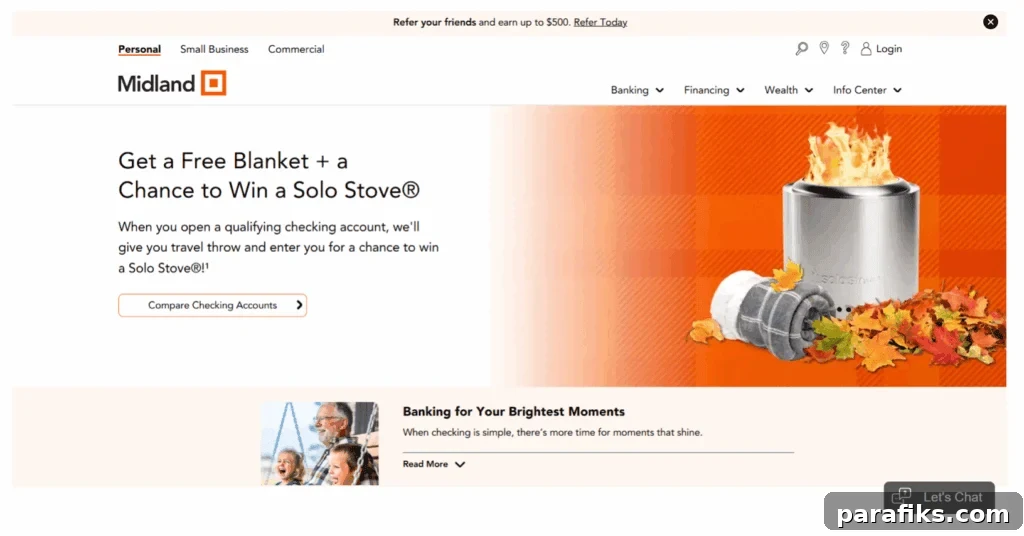
Midland States Bank
Midland States Bank has a long-standing regional reputation for supporting customers and local communities. Combining traditional banking with modern digital tools, Midland offers accessible ways to manage finances while prioritizing local decision-making.
Its checking accounts commonly feature no minimum balance requirement and no monthly service charge, and deposits are insured by the Federal Deposit Insurance Corporation (FDIC). Customers also have access to a large network of fee-free ATMs—over 55,000 locations.
Midland’s product lineup includes personal loans, auto loans, home equity loans, home equity lines of credit (HELOCs), home improvement loans, mortgage options, refinancing, and investment advice to help clients meet short- and long-term goals.
Key features:
- Access to over 55,000 ATMs
- Free checking accounts with no minimum balance
- Varied loan and investment products
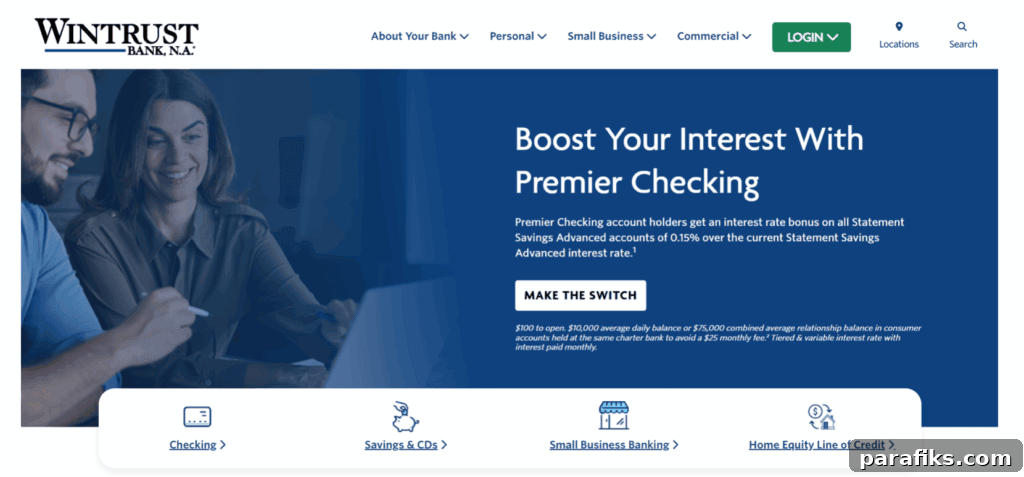
Wintrust Bank
Wintrust Bank began in northern Chicago in 1991 as an alternative to national banks and has maintained a community-oriented approach. With roughly 175 locations, it offers local service while providing many of the conveniences customers expect.
Wintrust offers a range of checking and savings accounts. The Total Access Checking option includes access to a fee-free nationwide ATM network and typically carries no minimum monthly balance requirement or maintenance fees. Customers can manage accounts through a mobile app, pay bills online, and perform transfers.
Individual branches make many lending and account decisions locally, and the bank also provides services like safe deposit boxes, foreign currency exchange, and coin counting—useful for people who need in-person banking services.
Key features:
- Approximately 175 branch locations
- Fee-free access to a nationwide ATM network
- Foreign currency exchange for travelers

North Central Bank
North Central Bank focuses on personalized customer service and local decision-making. Staff often participate in community events and organizations, which helps the bank build long-term relationships with customers and neighbors.
The bank offers multiple checking and savings accounts. Its Elite checking account tends to minimize fees and balance requirements while including perks such as free personalized checks, free money orders, a complimentary one-year safety deposit box rental, and free notary services—advantages for clients who value in-person support and local benefits.
Key features:
- A variety of checking and savings account choices
- Low or no minimum monthly balance requirements on select accounts
- Mobile banking and digital wallet support
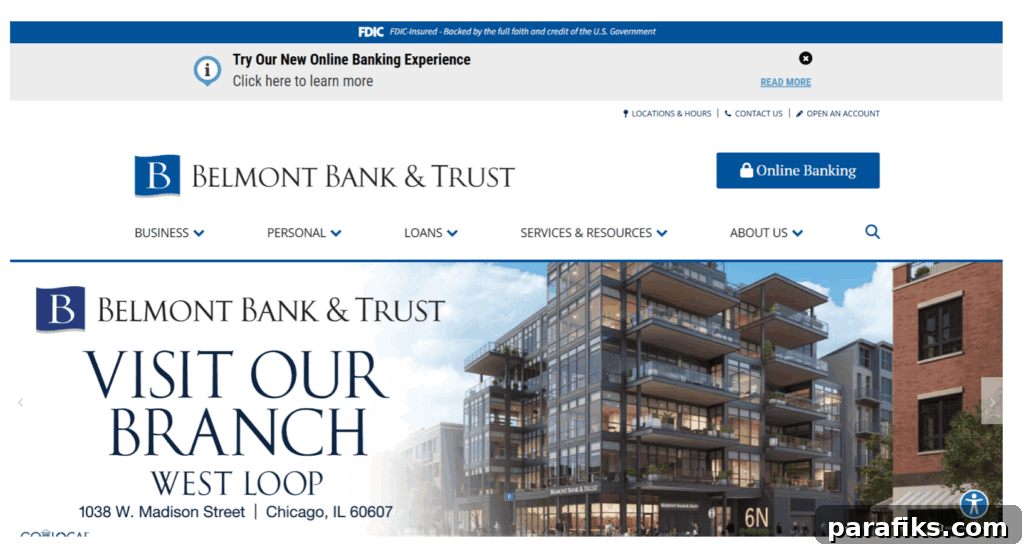
Belmont Bank & Trust Co.
Belmont Bank & Trust Co. offers relationship-driven banking tailored to Chicago neighborhoods. The bank combines strong local service with modern digital account management tools such as online bill pay and virtual wallet compatibility.
One of Belmont’s notable offerings is a cash-back checking account that rewards debit card purchases—advertised as delivering a meaningful percentage back on purchases and up to a stated annual cash-back total. The account also typically includes ATM fee refunds up to a certain monthly limit. Belmont also provides home equity lines of credit (HELOCs) and personal credit card options.
Key features:
- Advanced digital banking tools
- Cash-back checking account options
- ATM fee refunds up to a specified monthly allowance
Choosing the Best Community Bank Near You
Selecting a bank is an important decision. When evaluating community banks, consider these core criteria to ensure the institution meets your needs:
| Community Presence | Look for banks with deep local roots and a record of engagement in Illinois communities. |
| Financial Products and Services | Confirm the bank offers a comprehensive suite of accounts and loans—checking, savings, mortgages, business services—and that terms and fees are transparent. |
| Technology and Accessibility | Ensure the bank provides robust mobile and online banking, a broad ATM network or participation in fee-free networks, and convenient branch locations. |
| Personalized Service and Local Decision-Making | Prefer banks that offer individualized advice, local lending decisions, and faster turnaround for community-based loans. |
| Security and Transparency | Verify FDIC insurance, strong digital security practices, and clear disclosures about fees and account terms. |
How Do Community Banks and National Banks Differ?
Community banks differ from national banks in their customer approach, governance, and local reinvestment. Many are led by community members who understand the regional economy and can offer more personalized service. The Federal Reserve commonly categorizes community banks as institutions with assets under $10 billion; regional banks may hold assets between $10 billion and $100 billion. Community banks often reinvest locally, which can benefit neighborhoods and small businesses.
Do Illinois Community Banks Offer Mobile Banking Services?
Mobile banking is widely adopted across generations. Many community banks now provide secure mobile apps that let customers check balances, deposit checks remotely, pay bills, transfer funds, and locate nearby branches or ATMs. When evaluating a bank, confirm the availability and functionality of its mobile and online services.
How Extensive Are Community Bank Branches and ATM Networks?
A potential drawback of community banks is a smaller branch and ATM footprint compared with national banks. However, many community banks join shared ATM networks that allow fee-free withdrawals and deposits across participating institutions. Before opening an account, check the bank’s ATM access and any fees for out-of-network transactions.
A Banking Experience Where Everyone Knows Your Name
One advantage of community banks is the personal connection—they often provide a familiar, relationship-focused experience. For many Illinois residents, partnering with a local bank means receiving attention tailored to their financial needs and supporting the community where they live.