
Have you ever wondered, “How much money do I need to retire comfortably?” You’re not alone—I’ve run these calculations many times, and this is one of the most common financial questions I hear. Retirement planning can feel overwhelming when people toss around round numbers like $1 million or $2 million, but there’s no universal answer. What matters most is your lifestyle, spending habits, and retirement goals.
Best Ways To Calculate How Much Money You Need To Retire Comfortably
This article breaks the process into clear, manageable steps so you can estimate your personal retirement number without feeling stressed or confused.
1. Define what “retire comfortably” means to you
Retirement looks different for everyone. Before calculating how much you need, picture what a comfortable retirement means for you personally. Does it include world travel, cruises, and warm winters? Or does it mean downsizing, spending time on hobbies like gardening, and enjoying family gatherings?
A useful exercise is to imagine a full day in your ideal retirement: when do you wake up, what do you eat, are you traveling, relaxing, or working part-time, and where are you living? Then list the expenses that accompany that lifestyle. This helps determine whether you’ll need more or less than broad retirement recommendations.
Also make a list of retirement priorities—travel budgets, helping family, a second home—and build your plan around those core goals.
2. Simple retirement rules of thumb
There are a few straightforward rules you can use to estimate how much you might need:
- The 25x rule – Multiply your expected annual retirement spending by 25. For example, if you plan to spend $40,000 a year, you’d need $1,000,000 saved.
- The 4% rule – Withdraw about 4% of your retirement portfolio annually to balance income and longevity of savings. With $1,000,000 saved, that equals roughly $40,000 per year.
These rules are closely related: the 25x rule estimates how much to save, while the 4% rule estimates how much you can safely withdraw each year. They work best when your savings remain invested and continue to grow. If you plan to rely on cash or low-interest accounts, you’ll likely need a larger nest egg since your money won’t grow as much.

3. Estimate your retirement expenses
Understanding your expenses is where real retirement planning begins. Start by tracking your current monthly expenses and organize them into categories such as:
- Housing: rent or mortgage, property taxes, maintenance, HOA fees
- Utilities: electricity, gas, water, internet, phone, sewer
- Food: groceries and dining out
- Transportation: fuel, insurance, payments, repairs
- Health: premiums, prescriptions, copays, dental and vision
- Travel and leisure: vacations, hobbies, entertainment
- Personal: clothing, grooming, gifts, subscriptions
Compare current spending to anticipated retirement spending. Some costs may drop—commuting or work attire—while others may rise, like healthcare and travel. Hobbies can also increase expenses since you’ll have more free time. Don’t forget inflation: the purchasing power of a dollar today will be lower in 10–30 years. Many people assume they’ll spend less in retirement, but that’s not always true.
4. Will you earn income in retirement?
Not everyone stops working completely. Many retirees choose part-time work, freelancing, or side hustles for extra income and purpose. Even modest earnings—$500 to $1,000 a month—can stretch savings, allow earlier retirement, or increase discretionary spending.
Retirement side hustle ideas include:
- Teaching music lessons, tutoring, or babysitting
- Selling handmade goods on Etsy
- Freelance writing, bookkeeping, proofreading, or virtual assistance
- Working at parks, museums, or retail
- Consulting for businesses
Ask yourself if you’d consider a small amount of work in retirement to gain financial flexibility or to retire sooner.
5. Your location affects your retirement needs
Where you live greatly influences how much you need to retire comfortably. High-cost areas require larger savings to cover housing, healthcare, groceries, and other expenses. Some retirees choose to:
- Downsize their home
- Move to a state with lower costs or no income tax
- Choose walkable communities and give up a car
- Relocate to a country with lower living costs
For instance, retiring in an expensive city will generally demand a higher nest egg than retiring in a rural or lower-cost region.
6. Include healthcare in your plan
Healthcare expenses usually rise with age and can consume a large portion of retirement budgets. Medicare helps after age 65 but doesn’t cover everything. Expect to pay for copays, deductibles, dental and vision care, prescriptions, and possibly long-term care or in-home help.
If eligible, a Health Savings Account (HSA) is a tax-advantaged way to save for medical costs: contributions are tax-deductible, earnings grow tax-free, and qualified withdrawals are tax-free. Some retirees return to part-time work to keep employer-based health coverage—worth considering depending on your situation.
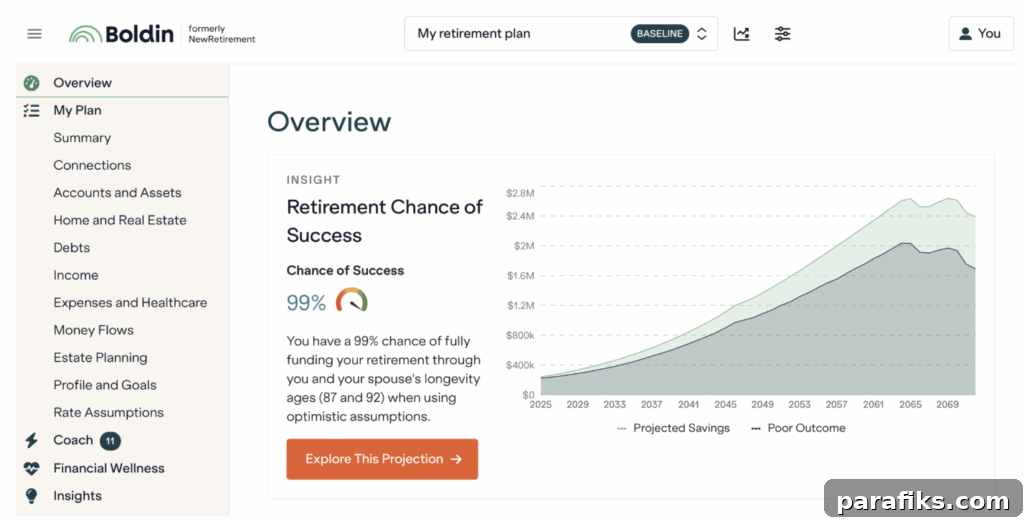
7. Tools to estimate your retirement number
If spreadsheets or financial advisors aren’t your preference, free retirement tools can help. Many platforms allow you to link accounts or enter data manually to estimate your retirement timeline, income needs, net worth, and Social Security timing. Explore options that fit your comfort level and privacy preferences.
It’s okay if you’re not there yet
If you feel behind, know that it’s never too late to start. Begin with small steps: increase retirement contributions, open or max out tax-advantaged accounts, reduce debt, downsize if possible, and find ways to earn extra income and invest it. Even modest efforts compound over time, and every contribution helps.
Frequently Asked Questions
Here are clear answers to common retirement planning questions:
Can you retire at 60 with $500K?
It depends on your lifestyle and other income sources like Social Security or a pension. In a low-cost area with careful budgeting, it can be possible, but a detailed plan is crucial.
Can you retire comfortably with $1.5 million?
For many people, yes—especially if annual spending is around $60,000 or less and major debts are paid off. This provides flexibility and security for various retirement goals.
Is $300,000 enough to retire on with Social Security?
It can be sufficient for a modest retirement in a lower-cost area combined with Social Security benefits, but it will require careful budgeting.
Can I retire at 55 with $2 million?
Possibly. Whether $2 million will last depends on your annual spending and other income. For many, $2 million provides a comfortable retirement if managed well.
Is $40,000 a year enough in retirement?
That depends on where you live, whether your home is paid off, and your lifestyle choices. Many retirees live on this amount, but it varies widely by circumstance.
What is a good monthly income in retirement?
Good monthly income varies based on lifestyle, location, debt, and goals like travel or expensive hobbies. Tailor your target to your specific needs.
Can I retire without a mortgage?
Yes. Paying off your mortgage before retirement is a common strategy because it significantly lowers monthly expenses and reduces the income needed to maintain your lifestyle.
Do I need to factor in inflation?
Absolutely. Prices rise over time, so plan for inflation in your retirement goals. If you need $50,000 today, you may need substantially more in 10–15 years to maintain the same standard of living.
How Much Money Do You Need To Retire Comfortably? – Summary
There’s no single retirement number that fits everyone. The right amount depends on your lifestyle, goals, and expenses. For some people the number might be $500,000; for others, $5,000,000. I know people who have retired happily with vastly different savings levels. The key is to understand your priorities, estimate expenses, plan for healthcare and inflation, and take consistent steps toward your goals.
What does your dream retirement look like? Have you calculated your retirement number yet?
Recommended reading:
- Empower Review: Is This the Best Free Financial Planning Tool?
- What Is Net Worth? How To Calculate Your Net Worth
- How To Start Investing For Beginners With Little Money
- How To Get Rich: The Steps To Build Wealth Now
- How I Retired At Age 30 with $500,000
- How My 401k Loan Cost Me $1 Million Dollars
- How Is Early Retirement Even Possible?