
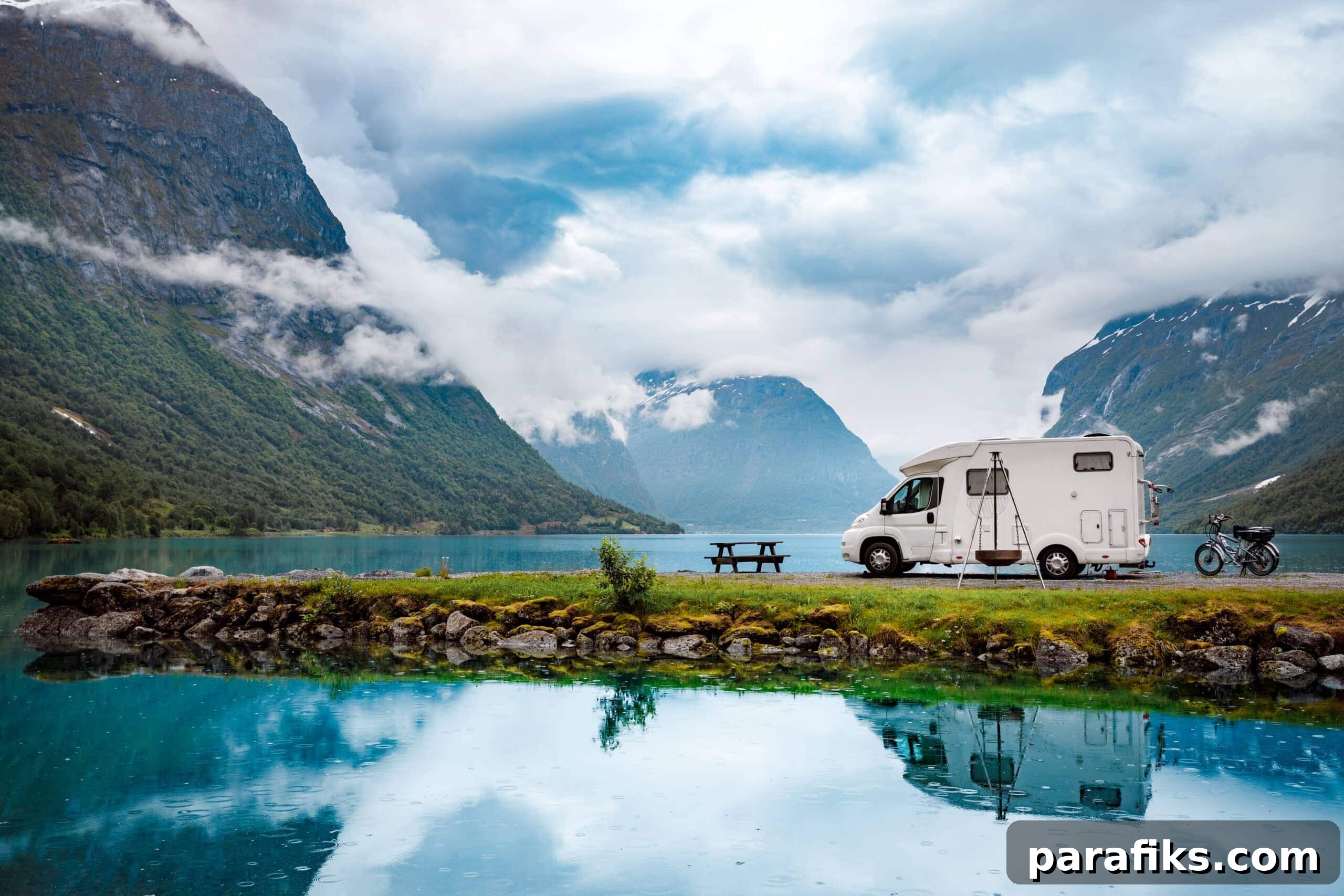
We’ve been living in our RV almost full-time since we bought it a little over a month ago (we returned home for three days to collect a few more items). I’m no RV expert, but we’ve picked up many useful RV tips and tricks during our travels.
There’s still much to learn, but I wanted to share this post because I know many readers are considering RV ownership and life on the road.
As a quick refresher, we bought a Class C RV, the Winnebago Itasca Viva, in July. We chose an RV because:
- We spent nearly the entire year driving on road trips.
- We were tired of spending money on dingy hotels.
- We wanted to travel more comfortably.
- We preferred a more relaxed pace of travel.
- We wanted to spend more time with friends and family even though we now live far away.
- We enjoy traveling.
- We are location independent and can work while traveling.
Below are my essential tips for beginner RVers. Keep these RV tips and tricks in mind to start your RV journey well — with more enjoyment and less stress!
Have a plan.
New RVers often have many questions, and planning doesn’t stop once you pick an RV. Make a thoughtful plan that covers practical and routine needs.
Consider the following:
- Set a budget for fuel, food, and overnight stays.
- Decide on destinations and trip durations.
- Track maintenance schedules and complete required maintenance on time.
- Keep pets in mind if you’re traveling with them — bring essentials like extra waste bags so you aren’t caught off guard.
- Make a packing list that includes extras such as fuses, toilet paper, light bulbs, trash bags, soap, shampoo, spare tools, dishes, utensils, and food.
- Reserve campsites in advance when possible. Unlike tent camping, many RV campgrounds book out months ahead during peak season, so plan accordingly.
Take a short trip first.
One of my top RV tips is to take a short test trip before committing to long journeys.
Our very first outing was only about 50 miles away for a day so we could get comfortable driving and operating the RV. Our next trip was a few hours from home in Colorado. Staying close initially has many benefits:
- You can learn the ins and outs of your RV without being too far from help.
- You’ll discover items you didn’t realize you needed.
- New RVs often have early issues; staying nearby lets you return quickly if something breaks — our dealership recommended this as well.
Earn income while RVing.
Many people dream of RV travel but worry they can’t earn an income on the road. While working while traveling presents challenges, there are plenty of possibilities.
We’ve met many RVers who make a living while on the road. I earn income through blogging and maintain income reports to track how this works for me.
Consider remote or portable income sources like freelancing, online businesses, consulting, or other remote-friendly work that fits a mobile lifestyle.
Research internet options.
Living in an RV doesn’t require completely disconnecting. Plenty of internet options exist for travelers, but coverage and cost vary widely.
Before choosing a provider, evaluate Wi-Fi coverage, mobile data performance, and cost. We found Verizon works best for our needs. It’s worth researching carriers and plans to find the best fit for your travel route and online requirements.
Find free camping options.
One of the biggest ways to save while RVing is to locate free camping. Many free sites exist, and testing what type of camping you prefer before investing in memberships or long-term campground plans is wise.
We prefer free camping for the solitude and cost savings. Our approach is to boondock or camp for free as much as possible, then visit commercial campgrounds occasionally to dump tanks, refill water, and get more reliable internet.
There are useful resources that list free campsites and dump stations — helpful when boondocking and planning where to empty tanks and get fresh water. Checking reviews and photos from other campers can help you choose safe, comfortable spots.
Bring tools with you.
We brought some tools on our first two-week trip but quickly learned we needed more. After returning home, we restocked our tool kit.
Carrying a basic set of tools saves time and money because you can handle many small repairs yourself. Taking a short initial trip helps you identify missing tools so you’re better prepared for longer travels.
Pack less stuff.
Pack conservatively. Whatever you believe you need, try to remove at least one-third of it. We plan to be on the road long-term and still have ample storage space in our RV.
Remember: more possessions mean more weight, which increases fuel consumption. Early short trips reveal what’s essential and what can be left behind, helping you travel lighter and more efficiently.
Use a checklist.
I do well with lists, and I consider a checklist essential. Even a simple mental list is better than nothing.
Make lists that include:
- Items you must have onboard at all times.
- Equipment to keep your RV operational, such as leveling blocks, hoses, tools, and spare parts.
- A departure checklist to run through before leaving a site, including a walk-around inspection and confirming hookups and storage are secured. You can also include the RV tips and tricks above on this checklist so everything is easy to find in one place.
What RV-related questions do you have? Are you interested in the RV lifestyle? What’s one item you’d definitely bring on the road?