
My monthly “Extraordinary Lives” series is something I truly enjoy producing. The first feature was JP Livingston, who retired with a net worth of over $2,000,000 at age 28. Today’s interview is with Tina, who immigrated to North America with her family at 18 with only a few hundred dollars. She now earns around $400,000 per year and has a net worth of about $2,000,000.
 In her first year here, Tina and her family rented a single small room in a triplex, sharing the bathroom and kitchen with other families.
Her story is an inspiring rags-to-riches example that demonstrates how determination and hard work can turn dreams into reality.
In this interview, you’ll learn about:
- The challenges they faced when immigrating.
- How Tina paid off her debt.
- Why she built a $100,000 emergency fund and how she used it.
- What it took to go from having almost nothing to earning $400,000 annually.
- How money changed her life.
After reading Tina’s story, I felt she would be a perfect fit for this interview series.
Related content:
- How My Wife and I Paid Off $62,000 in Debt in 7 Months
- How We Paid Off Almost $10,000 in 10 Weeks
- How I Paid Off $40,000 In Student Loans in 7 Months
I asked readers to submit questions for this interview, and below are those reader questions as well as a few of my own for Tina. Follow the series so you can suggest questions for future interviews.
1. Tell me your story.
Hi Michelle,
First, thank you for this opportunity. We are big fans of your work and visit your blog often.
I’m Tina and my partner in crime is Max. We are 36 and have a one-year-old who brightens our days—she’s always laughing, even in her sleep.
I’m a CPA and Max is a senior programmer. We immigrated with almost nothing and steadily increased our household income from $0 to $160,000 and now to over $400,000 per year.
We write at 99to1percent.com, sharing practical, outside-the-box career and financial advice for people who want to grow their income and pursue financial independence.
2. What challenges have you overcome?
The biggest challenge was adapting to North American life. Simple tasks, like finding our first apartment, were difficult. My sister and I applied to many places; only one landlord gave us a chance.
We toured the unit after school, when it was already dark, and it seemed fine—so we signed the lease. When we moved in during the daytime, we discovered it was noisy and poorly maintained.
Despite that, it was affordable and the only option at the time, so we stayed. Our neighbors included a range of people—some struggling with addiction or gambling, and others working hard like students and young professionals trying to improve their circumstances.
I remember when $70,000 was mistakenly delivered to our apartment instead of the superintendent’s. We returned it, and the deliverers were surprised by our honesty.
3. Do you have any debt?
We’ve paid off our student loans and our car loan. The only remaining debt is our mortgage.
4. How did you pay off your debt?
I graduated with $40,000 in student loans. A year before finishing school, I began job hunting and secured an entry-level accounting position starting at $40,000. By taking on overtime, my income climbed to about $70,000 per year. I paid roughly $4,000 a month and eliminated the full $40,000 in ten months—two months before graduation.
Max never took on student loans. He scheduled his classes strategically so he could work many days while attending classes only a couple of days a week, allowing him to graduate debt-free. After graduating, he bought a used luxury car on credit for over $30,000. Once we married, we committed to eliminating that debt as well and vowed to avoid new debt except for our mortgage.
We set an ambitious goal to pay off a $550,000 mortgage within eight years—our “Vision2020”—aiming to be mortgage-free by age 39.
5. How did you build a $100,000 emergency fund, and why that amount?
After clearing my student loans, I continued to live frugally. During the 2007–2010 recession, job losses and long unemployment periods were common, and some people even became homeless. I decided to save aggressively to prepare for worst-case scenarios while I still had a steady job.
We built a $100,000 fund. Although we haven’t had to tap it for emergencies, we have used it to seize financial opportunities that arose, which in many cases generated significant returns. For us it’s both an emergency fund and an opportunity fund.
6. What was it like going from very little to earning over $400,000 annually? How did you make that leap?
We increased our income by realizing we weren’t reaching our potential and by taking targeted actions. We discovered we were underpaid—my wake-up call came when I prepared taxes for colleagues and realized I earned the least despite being a team lead and Employee of the Year.
I pursued my CPA, sharpened my negotiation skills, and researched the highest-paying employers in my field. After earning my CPA, I was offered an internal promotion with only a 10% raise due to company policy. I declined and sought opportunities outside the company. Within months I received an offer from one of the industry’s top-paying employers and leveraged multiple offers to negotiate a higher salary than they typically paid.
Max also discovered he was underpaid when he accidentally saw a new hire’s salary that exceeded his, despite him being the manager. That motivated him to become a contractor. Once he secured his first client, he left his permanent role and never looked back—contracting allowed him to charge premium rates for his time.
We also run side businesses—a consulting practice and a tax preparation service. We didn’t come from wealth, didn’t attend Ivy League schools, and don’t see ourselves as geniuses. If we could achieve this, others can too.
7. How has money changed your life?
We continue to spend intentionally. We spend only about 15% of our income; the remainder goes to investments, taxes, paying down the mortgage, and charitable giving.
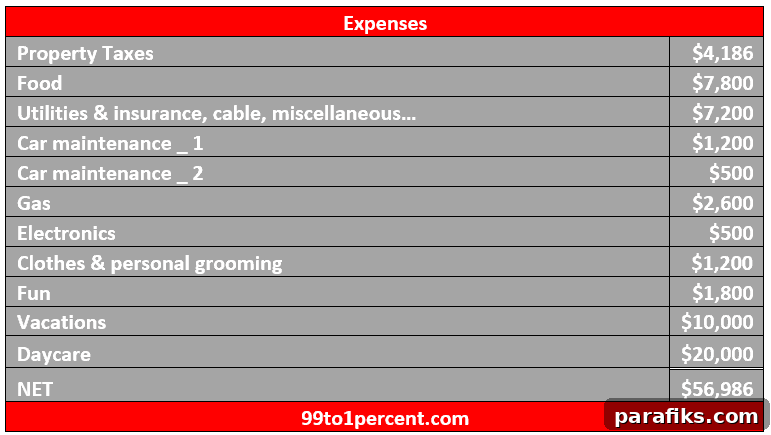
Family members aware of our finances often suggest luxuries: hire a chef, upgrade the house, take a nanny, buy newer cars. We prefer to cook and raise our child ourselves, enjoy our cozy home, and keep reliable older cars. We value simplicity.
Having savings gives us peace of mind. If we lost both jobs and our side businesses, our savings would support us for years; liquidating assets could sustain us longer. That security allows us to refuse unreasonable demands from employers, clients, or colleagues, making our work more enjoyable.
8. What’s your next financial goal?
After we’ve paid off our mortgage by age 39, we’ll keep working for a few more years until we reach full financial freedom—so we can secure a bright future for our child and future grandchildren and prevent them from facing the hardships we did.
We also hope to launch a school for underprivileged children. We began planning the project last spring but paused after realizing we need significantly more resources to meet government regulations and requirements.
9. What’s the biggest lesson you’ve learned about money?
We’ve made many financial mistakes, but the biggest lesson is that it’s okay to try and fail—what’s not okay is failing to try. If you have an idea, write it down, research it, and pursue it if it’s economically feasible. If it succeeds, you win; if it fails, you gained valuable experience.
10. What is your best tip for someone who wants to reach similar success?
One: stay determined and positive. Avoid negativity and people who insist you can’t eliminate debt, earn well, or achieve financial independence.
Two: continually seek knowledge. Follow personal finance resources and blogs where people share income, strategies, and lessons. Practical advice is abundant and helpful.
On our blog, for example, we share resume templates that helped us land multiple job offers. We also plan to study affiliate marketing to grow our blog further.
Knowledge is power—seek it out.
What questions do you have for Tina? Her story is inspiring, isn’t it?