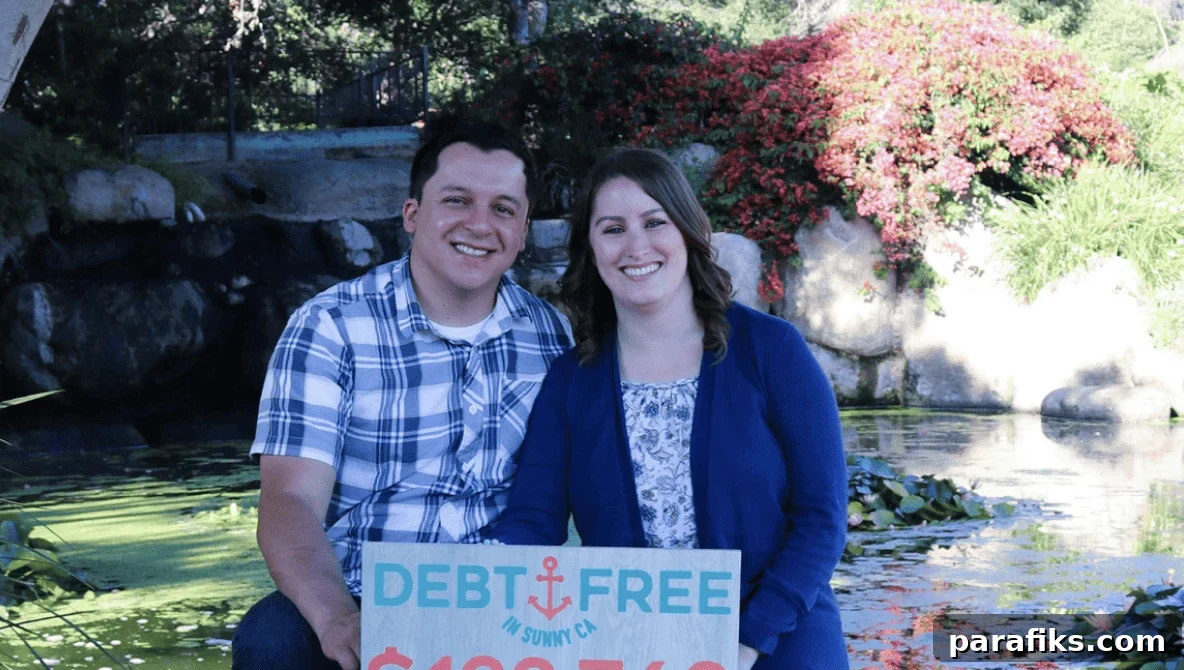
My monthly Extraordinary Lives series has been a lot of fun, and I’m back with another inspiring interview. The first profile featured JP Livingston, who retired with a net worth of over $2,000,000 at age 28. Today’s interview is with Amanda, who became debt free after paying off $133,000 in three years and seven months.
I’ve been following Amanda on Instagram for some time, and I’m thrilled I finally had the chance to interview her.
In this interview, you’ll learn:
- How Amanda accumulated debt.
- Why she decided to pay it off quickly.
- Which expenses she cut to accelerate debt repayment.
- Her thoughts on the cash envelope method.
- The sacrifices she made to reach her goal.
- How she stayed motivated throughout the process.
This interview is packed with practical advice and real-life lessons.
I asked readers what questions I should pose, and below you’ll find their questions alongside some of mine about Amanda’s journey. Make sure you’re following me on Facebook so you can submit questions for future interviews.
Tell me your story.
Thanks for having me. Here’s how it all began.
At 22 I worked as a massage therapist on a cruise ship when I was diagnosed with carpal tunnel and cubital tunnel, ending my ability to work in that career. Tired of commission-based jobs and unstable income, I pivoted into a high-demand field: cybersecurity. Like many people, I used student loans to pay for tuition without closely tracking how much I borrowed or what interest rates I accepted, assuming a big post-graduation salary would cover everything.
I worked hard to break into IT, landing an internship during my first year of school and gaining several years of experience by the time I graduated. But the pay bump I expected didn’t materialize, and I found myself unable to afford my student loan and car payments on a modest salary in California.
I knew something had to change. Years earlier I tried following Dave Ramsey’s plan but fell back into old habits. Determined to try again, I enrolled in Financial Peace University and returned to school for a master’s degree, which allowed me to defer loans while improving my career prospects. My employer also reimbursed tuition for degrees related to my field.
My debt was over $80,000 and included student loans, a car loan, and a small credit card balance. Once I committed to a zero-based budget, I began to make progress. I shared my progress with my then-boyfriend (now husband) and tried to get him involved, but he wasn’t interested at first. After months of incremental progress, I grew frustrated that the balances weren’t falling quickly enough. I decided to take decisive action.
I sold a Prius I was upside down on and bought a used Honda Civic. I saved $5,000 for the purchase and eliminated $17,000 of debt in one move. I still had to take a $7,000 loan to cover the difference, but reducing my debt from $24,000 to $7,000 felt transformative. That decision accelerated my debt snowball and gave me the momentum I needed.
Seeing my momentum and completing Financial Peace University convinced Josh to join the effort. He began paying off his debt, and he even cash-flowed my engagement ring. We paused our debt payoff for six months to cash-flow a $14,000 wedding and honeymoon, then resumed with renewed focus. Together we had $133,763 in debt—16 student loans, eight credit cards, two vehicles, and a personal loan. We combined finances, used a zero-based budget and cash envelopes, increased our income while keeping lifestyle spending steady, and became debt free on July 5, 2018—after three years and seven months of work.
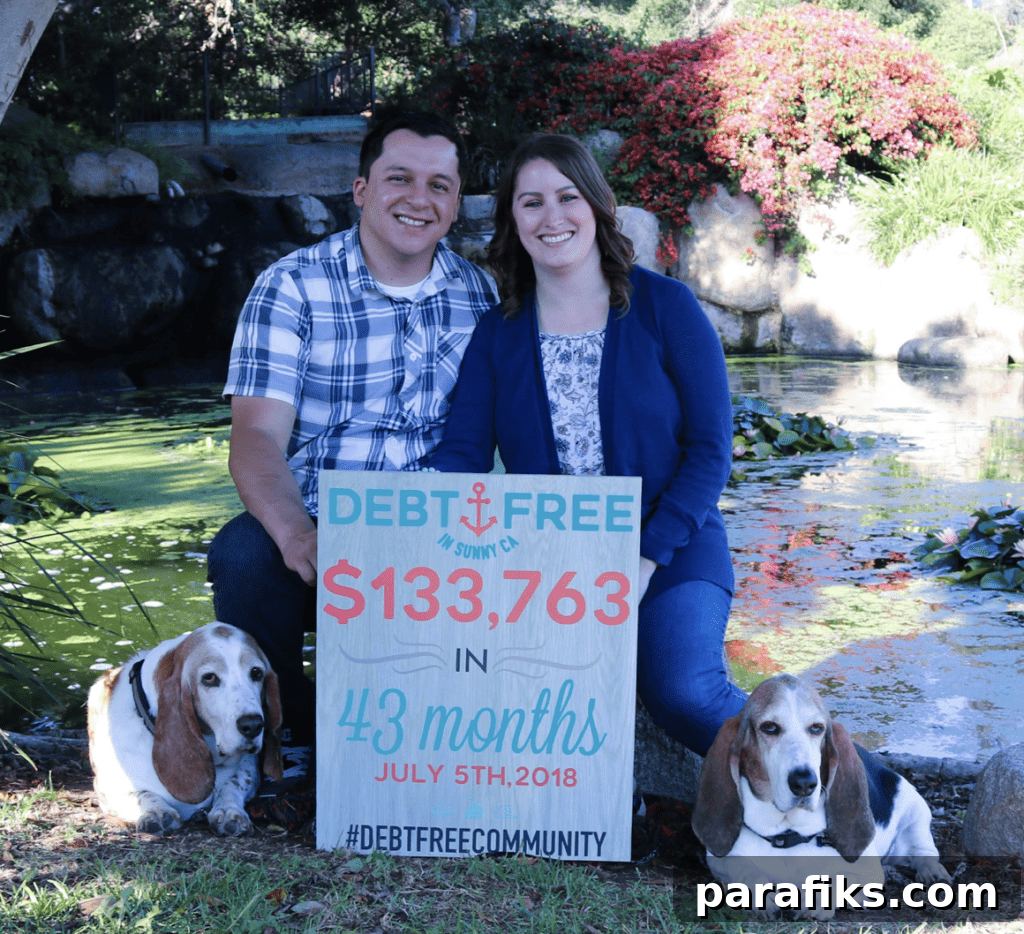
How much debt did you have and where did it come from?
Our total debt was $133,763, composed of 16 student loans, eight credit cards, two vehicles, and one personal loan. Nearly half of that balance came from my associate’s and bachelor’s degree student loans.
Why did you want to get out of debt quickly?
Living without enough money to cover bills or having to say no to friends and family because you’re broke is demoralizing. I wanted financial breathing room so we could afford bills and enjoy life. Over time our “why” evolved into a shared dream: Josh had once considered buying a sailboat, and I’d long been fascinated by tiny house living and life on the water. Becoming debt free was the first major step toward that goal.
How long did it take to reach debt freedom?
We spent three years and seven months paying off our combined debt. I started a year before Josh joined in, we paused for a six-month wedding splurge, and then finished the remaining balances a year and a half after our wedding.
How did you pay off debt so quickly?
Paying off debt came down to two things: increasing income and cutting expenses.
On the income side, our combined income rose by about $75,000 through raises, overtime, and on-call pay. My part-time internship during school helped me move up quickly, and getting into IT security brought substantial pay increases. Josh’s experience from eight years in the Army and his strong work ethic made him indispensable in his IT role; overtime and on-call pay added meaningfully to our household earnings.
On the expense side, we made multiple practical cuts:
- Housing: We lived in a 550 sq. ft. home for 2.5 years, saving around $400 per month—about $12,000 in total.
- Vacations: Aside from our honeymoon, we didn’t take vacations during the payoff period. We prioritized local, low-cost activities like hiking and visiting friends at home.
- Hobbies and entertainment: Expensive hobbies were paused, restaurants, date nights, and excessive clothing purchases were reduced, and we substituted inexpensive at-home date nights. We did budget small rewards when we hit major milestones.
- Work perks: Working at the same company allowed carpooling and access to affordable benefits and paid cell phones because we were on-call, which reduced monthly costs.
Can you explain cash envelopes and why they help?
The cash envelope system means withdrawing cash for specific categories—groceries, gas, spending money—and using only that cash for the designated period. Once an envelope is empty, that category is done until the next payday. Because most of our bank balances went directly toward debt, cash forced discipline. Physically handling cash makes spending feel more real and helps curb impulse purchases. For Josh, a natural spender, having a wallet with multiple dividers made the system simple and effective.
Carrying cash can feel risky, but we limited how much we carried and kept the rest at home in a safe. If something happened, we still had an emergency fund as a backup.
What about the “invest instead of paying debt” argument?
My answer: do what works for you. Everyone’s financial situation and priorities differ. When I began, I couldn’t afford minimum payments, so paying down debt was non-negotiable. Later on, investing could have been an option, but becoming debt free was a guaranteed, immediate win. Paying off debt also forced better spending habits and removed the risk of having to liquidate investments to cover financial shortfalls.
What sacrifices did you make?
The biggest sacrifice for me was selling a cherished Prius and buying a 2005 Honda Civic. I resisted initially, but after eight months of slow progress I realized a bigger change was necessary. The Civic was inexpensive, basic, and paid off—far better than being underwater on an expensive car. I still miss conveniences like keyless entry and Bluetooth, but the financial benefit was worth it.
Did you ever splurge?
Yes. We moved from a tiny 550 sq. ft. place into a larger rental with office space and a yard for the dogs after calculating that pushing our debt-free date back a few months was worth the lifestyle improvement. We bought essential furniture and settled in, then returned to aggressive debt payments.
Another splurge was a surprise graduation gift: a Canon DSLR. My mom and Josh conspired to get it for me—Josh used his housing allowance to contribute, and my mom created a story about a gift card to get me out to dinner. It was a rare treat during an otherwise strict period.

How did you stay motivated?
Motivation came from visual tracking, community, and daily reminders. I used charts, spreadsheets, and countdowns—coloring in progress charts and updating a whiteboard at work made payments feel tangible. Finding others on the same path was crucial. I searched hashtags like #debtfree and #daveramsey on Instagram and connected with a small group that led to the #debtfreecommunity. Their encouragement and shared progress kept me focused when friends and coworkers weren’t on the same financial path.
If you could start over, what would you do differently?
I’d make several changes: buy a reliable used car instead of financing an expensive one at 16, save more to pay for school upfront, research and choose a non-commission career with strong earning potential, start investing early (even $100/month), and continue paying cash for purchases. Those choices would have positioned me for long-term financial stability sooner.
Your best tips for someone pursuing similar success?
First, create and follow a zero-based budget. It isn’t glamorous, but a budget gives you control and freedom to spend intentionally. Include fun in the budget so you don’t feel deprived. Second, find your people—supportive friends or an online community who understand and motivate you through the process.
What’s your next financial goal?
Our next objective is to build a $25,000 emergency fund to cover six months of expenses with minimal lifestyle adjustments. We keep $2,000 in a local savings account for quick access and plan to hold the remainder in a high-yield savings account. Making transfers take a few days helps prevent dipping into the fund for non-emergencies. Having a fully-funded emergency fund will bring peace of mind and reduce money-related conflicts when unexpected costs arise.
Do you have any other questions for Amanda? Are you working toward paying off debt?