
Hello! This is a guest post from one of my readers, Alberto. He shares how he managed to save $149,000 for retirement by age 30. Enjoy!
Sometimes it still feels unreal that I saved so much for retirement before turning 30. Looking back, I’m amazed at how far my net worth has come.
What’s even more surprising is that I didn’t have a full-time salaried job until two and a half years after graduation.
When I finally got a full-time position, I didn’t understand 401(k) plans and gave retirement almost no thought—I was simply relieved to have steady work.
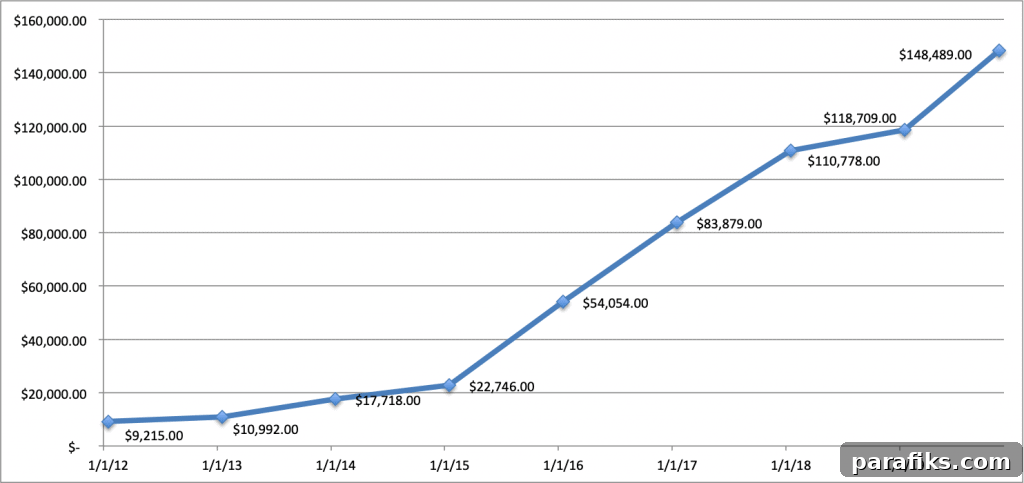
It’s hard to imagine the jump from $9,215 in a Roth IRA (from years of small gifts my parents made me save) to $149,000 in seven years. But if I could do it, you can too.
Related content:
- How To Become Rich – It’s More Than Millions In The Bank
- How Is Early Retirement Even Possible?
- You CAN Reach Retirement! Avoid These Top 5 Retirement Mistakes
- What Are Dividends & How Do They Work? A Beginner’s Guide
How to save for retirement in your 20s
Take an interest in your future self
Visualizing your older self is one of the best ways to make smarter decisions today. After college I realized there wouldn’t be second chances to coast through life. I had no job lined up and spent over two years trying to secure full-time work.
I originally wanted a career in sports—working for Major League Soccer or doing statistical analysis for Mexican soccer league games—but I could only find internships and part-time roles. I even worked New York Giants home games on Sundays.
Eventually I took a paying position at ADP in their insurance agency. That’s when things started to change: I began thinking about my future and realized I needed to learn everything I could about saving and investing to give myself the best chance at a comfortable retirement.
Look where you can cut costs
I began my career making $35,000, so even small savings mattered. Fortunately I lived with my parents rent-free while working full time from late 2014 until I moved out in 2016, which helped me save aggressively. I know that isn’t possible for everyone, but it made a big difference for me in the high cost New York area.
I tracked daily spending and spotted easy cutbacks: making my own coffee and bringing lunch saved me over $3,000 a year—about 8.5% of my gross income at the time. Small changes add up fast.
Can you contribute to an IRA and a 401(k)?
At first I knew almost nothing about retirement accounts or tax rules. As I learned, I discovered contribution limits, the ability to choose contribution amounts, and the option to pick investments. That motivated me to dive deeper.
While studying for insurance licenses I read about compound interest and slowly understood how powerful it is. I started maxing out my Roth IRA each year while living at home and eventually maxed my Roth 401(k) in 2016.
Importance of starting a 401(k) early
Starting early gives compound interest time to work. People tend to think linearly, not exponentially, which makes it hard to grasp how much early investing helps. Even a decade of early contributions can outperform a later, longer period of investing. Time is a powerful ally.
Why participate in a 401(k) plan?
Pensions are fading, and for most people the 401(k) is now the primary retirement vehicle. It used to complement pensions, but today it’s the main plan you’ll rely on. Start early and contribute automatically if possible; increase your percentage each year, especially after raises.
Challenge yourself to understand the details of retirement plans
Knowing the details of your retirement plan matters. Many people don’t realize they’re paying fees—sometimes up to 2%—which can cost you substantially over a career. Learn whether your plan offers Roth options, what taxes apply now versus at distribution, and which investments are available.
For most people, a Roth option is attractive because you pay taxes now on contributions and avoid taxes on qualified withdrawals later. I learned I could choose specific investments—target date funds, index funds, mutual funds—and I chose an S&P 500 index fund for my 401(k).
Also learn your employer match. My company contributes 4% automatically and matches 50% up to 6%—basically giving me 3% of my salary if I contribute 6%. Once you understand these details, you can optimize contributions. For example, I’ve been able to contribute $8,450 annually to tax-advantaged retirement accounts and set up my fiance’s contributions to maximize tax-free investing in an S&P 500 index fund.
Should I reinvest dividends in an IRA or 401(k)?
Reinvesting dividends is one of the best decisions you can make. Taking dividends as cash reduces long-term returns. Historically, reinvested dividends have contributed a significant portion of total market returns—often a couple percentage points per year—which compounds dramatically over decades.
For example, reinvesting dividends from age 25 to 65, using conservative growth assumptions and steady annual contributions, creates a huge difference in final value versus taking dividends as cash. Also check your brokerage accounts to ensure dividend reinvestment is enabled—some brokers’ defaults don’t reinvest automatically.
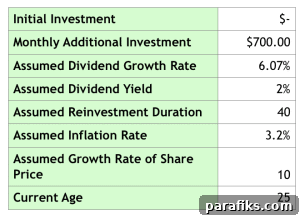
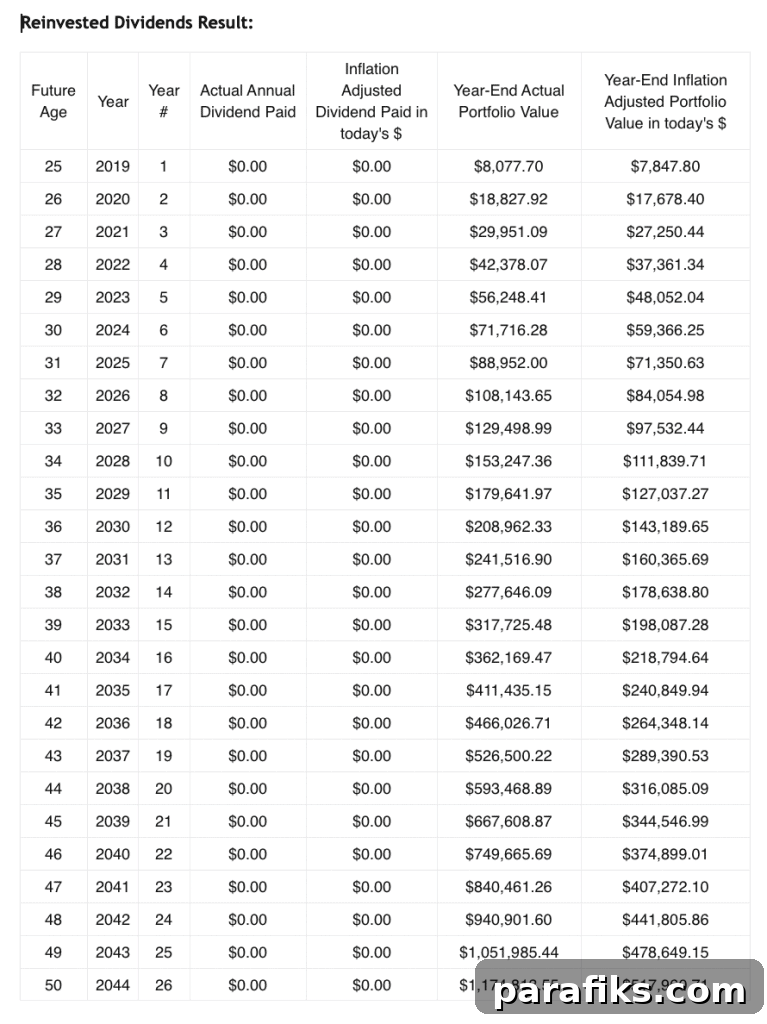
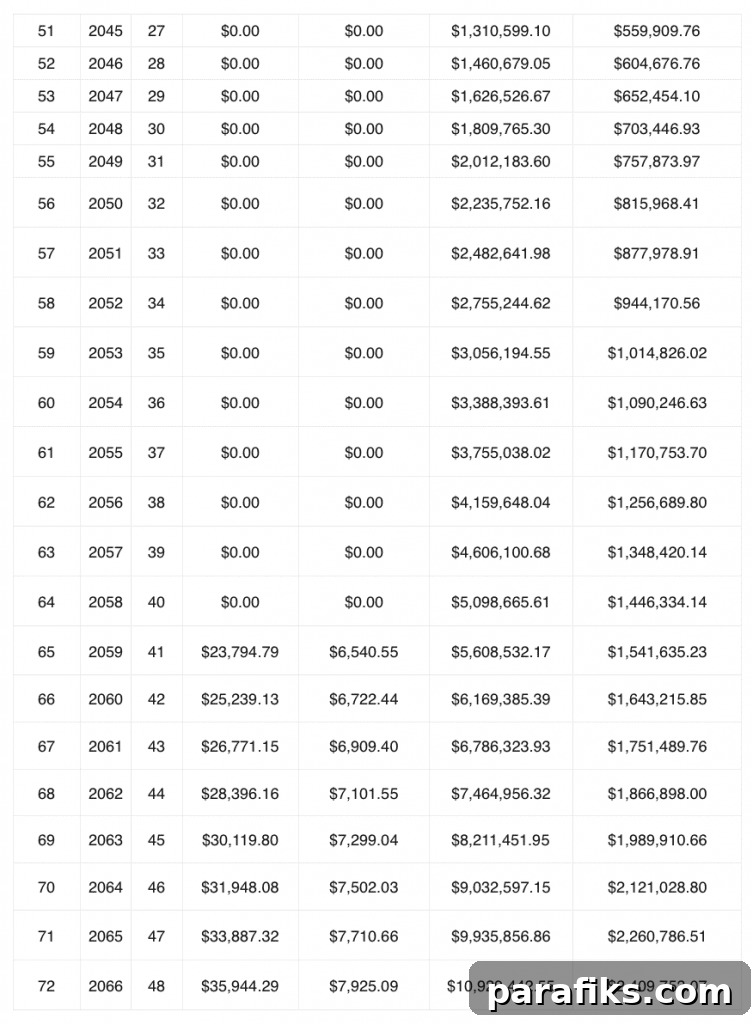
These examples assume no promotions or raises, but they still show how impactful dividend reinvestment and consistent contributions can be. Long-term buying power matters, and reinvesting dividends accelerates growth significantly.
Use a brokerage account in addition to an IRA and a 401(k)
IRAs and 401(k)s are aimed strictly at retirement, but you can supplement them with a taxable brokerage account. I use a money market fund for short-term savings—wedding costs, a house down payment—and use the taxable account for additional investments and flexibility outside retirement accounts.
Learn the benefit of an S&P 500 index fund
I was skeptical at first, but the S&P 500 represents a broad cross-section of large U.S. companies and is commonly used to describe “the market.” Index funds are inexpensive because they are passively managed. If you don’t want to study investing intensely, putting money in an S&P 500 index fund is a sensible, low-cost choice with historically strong average returns.
Run simulations to see how powerful compound interest is
I regularly run scenarios to see how small changes in contribution rate or return affect long-term outcomes. Using compound interest and dividend reinvestment calculators helps me stay disciplined when saving feels hard. These tools show how patience and long-term thinking pay off.
Train yourself to manage your emotions
Controlling emotions is one of the hardest but most important parts of investing. I bought Apple near a peak in 2015 and watched it drop about 30% over the next year. I could have panicked and sold, but instead I kept reading, kept investing, and learned to focus on facts rather than headlines. Years later I recovered and turned significant gains because I stayed the course.
If you want to invest in individual companies as well as index funds, you must learn to weather volatility and avoid emotional trading.
Learn what to look for in individual companies
If you choose to pick stocks, be prepared to read and research extensively. Don’t rely on TV personalities; read financial statements, industry reports, biographies, and books on economics and psychology. I read about two hours a day on average. If that’s not for you, stick to index funds and you’ll still do well.
Key factors I research include:
- Company and competitor financials
- Dividend history (preferably a decade of increases)
- Sustainable competitive advantages
- Executive compensation and alignment with shareholders
- P/E ratio compared to industry
- Price-to-book ratio
- Return on equity relative to peers
- Cash flow and working capital
I learned these principles from books and podcasts. Starting from zero, you can build strong investing skills with consistent study.
Create mentors through books and podcasts
If you can’t find mentors at work, build them through the authors and investors you admire. I learn from people like Warren Buffett, Charlie Munger, and influential entrepreneurs by reading their books and listening to interviews and podcasts. This helps shape how I think about investing and business strategy.
Read and listen to podcasts every day
Daily reading and podcast listening are how I keep learning. I read the Wall Street Journal and a book during commutes, and I listen to podcasts while walking. Over time these habits dramatically expand your knowledge. Choose books that challenge you and avoid fluff that doesn’t add value.
Recommended books and podcasts
Books:
- The Little Book of Common Sense Investing
- Charles Schwab’s Guide to Financial Independence
- A Random Walk Down Wall Street
- The Intelligent Investor
- Common Stocks and Uncommon Profits
- Poor Charlie’s Almanack
- The Essays of Warren Buffett
- Security Analysis
- Big Debt Crises
- The Innovator’s Dilemma
- The Inevitable: Understanding the 12 Technological Forces That Will Shape Our Future
Podcasts:
- Berkshire Hathaway Annual Meetings
- Masters in Business
- How I Built This
- This is Success
- Masters of Scale
- The Tim Ferriss Show
- Zero to IPO
- This Week in Startups
Steps you can take to prepare for retirement
Here are actionable steps to improve your financial situation:
- Check if your employer offers a 401(k).
- If available, see if there is a Roth option.
- Confirm whether the company matches contributions.
- At minimum, contribute enough to capture the full employer match—free money.
- If possible, aim to max out your contributions (limits change by year).
- Choose investments in your 401(k) if you can—consider an S&P 500 index fund.
- Open an IRA/Roth IRA with a reputable brokerage firm.
- Supplement retirement accounts with a taxable brokerage account for additional saving and flexibility.
- Read a reputable newspaper and a book daily, even for a few minutes, to build the habit.
- Use the resources above if they resonate with you.
That’s a lot to take in, but the basics are simple: learn the rules, minimize fees, take advantage of employer matching, contribute consistently, and let time and compounding work for you.
I hope sharing my journey and what I learned helps you take steps toward a secure retirement. If you have questions, feel free to ask.
My journey so far:
BIO: Alberto is a casualty insurance broker in New York City. With an average salary, he built above-average retirement savings. He founded Appetite for Investing and plans to retire in his 40s with his fiancée, using both their retirement contributions and savings to reach that goal, ideally in a lower-cost location.
Are you currently saving for retirement? Why or why not?