
Today I’m pleased to share a guest post from Steph of Debt Free Family. She describes her blogging journey from the beginning to now and explains how she grew her traffic to 80,000 page views per month. Enjoy!
A little over a year ago I decided to start a blog.
Since then it has grown from zero visitors to more than 80,000 page views a month. I’ve been able to reduce my hours at my day job and now earn more from my blog than I do at work, which feels incredible. I’m excited to share how I did it.
Hello — I’m Steph Addison, mother of three and the founder of Debt Free Family, where I write about family finances, including saving, increasing income, and budgeting.
For many years we had almost no money. We routinely ran out partway through the month and never understood why we were always short. We financed cars, put holidays on credit cards, and didn’t have a budget. My husband and I both worked full-time, struggled with childcare costs, and lived paycheck to paycheck, assuming everyone lived that way.
Then, one Friday afternoon my husband lost his job when his company folded. Nine days before payday there were no wages and suddenly we were in serious financial trouble. With no savings and three children to support, I started looking for ways to bring in income quickly. That was the start of my journey into making money online.
Related content on growing a blog:
- 12 Free Resources To Grow Your Blog Fast
- How One Blogger Grew His Blog to Over 2 Million Visitors In A Year
- How we went from $0-$10,000/month blogging in less than a year
- The Daily, Weekly and Monthly Habits for Building a $100,000 Blog
Starting a blog
At first, making money online for me meant taking paid surveys, selling items on eBay, and doing occasional freelance writing on platforms like Fiverr and Freelancer. To my surprise, these activities did generate income. It wasn’t a lot, but it was enough to keep me motivated.
I kept reading that blogging could generate serious income, so I launched a site to share what I’d learned about making money online. I agonized over the logo, design, fonts, and color schemes and spent many hours creating content. I loved the result — but no one was reading it.
It’s frustrating to invest so much time and see little traffic. I did at least set up Google Analytics and spent many days checking it to see if anyone had found the site. Some days there were a few visitors and it felt exciting; other days there were none, and I felt discouraged.
That struggle is why I want to share how I went from a total beginner to someone earning more from blogging than from a day job and getting over 80,000 page views per month, with over 95% of traffic coming organically from Google.
Related: How To Start A Successful Blog In 10 Steps
Top tips I wish I’d known when I started out
Key lessons I wish I’d learned at the beginning. You can apply them anytime, but they would have accelerated my growth if I’d known them early.
My traffic shifted from the small amount Pinterest sent (I never really cracked Pinterest) to tens of thousands of organic visits. I record my metrics monthly so I can track progress; the strategies I’m about to describe compounded my traffic — once they started working, growth accelerated.
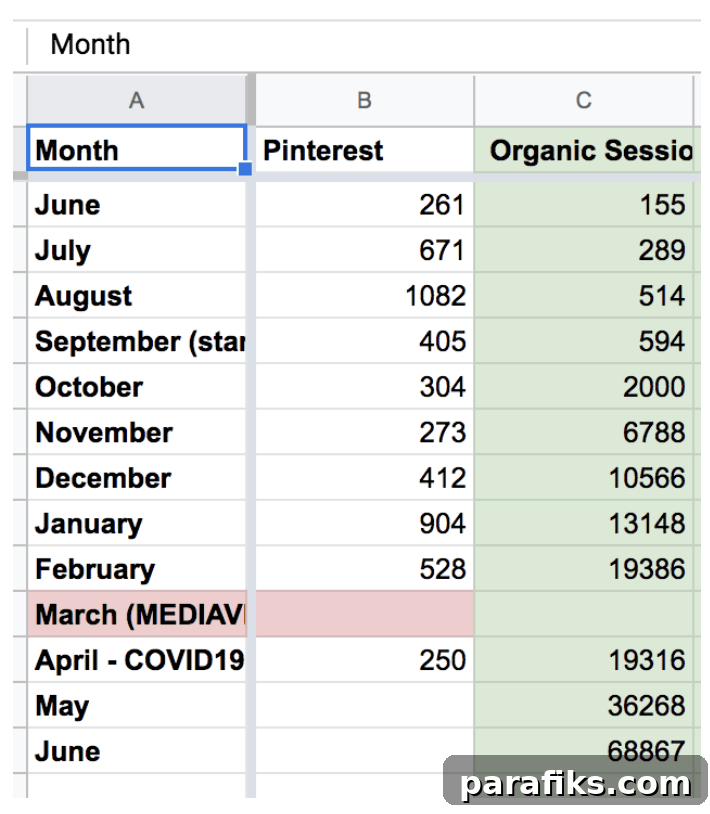
In June 2019, about two months after launching, I recorded 155 organic sessions. I honestly don’t know how I achieved that — I must have been lucky. But then I learned a system that produced consistent results.
Here are the things I wish I’d known when I began:
You need to learn on-page SEO
If I could change one thing about my blogging journey, it would be learning on-page SEO from day one — or even before launching. SEO transformed my blog: it turned a stagnant site into one that grows month after month, allowed me to meet the minimums for premium ad networks like Mediavine, and helped me earn a meaningful income.
How did I learn SEO? It’s mentioned in every guide to starting a blog, but I ignored it at first. After months of free resources with limited results, a fellow blogger recommended Mike Pearson’s “Stupid Simple SEO” course. I hesitated because it wasn’t free, but I enrolled and am grateful I did — the investment paid off many times over.
The course taught me practical skills that moved my site forward quickly. Key lessons included:
1. Keyword research
I learned to write content that people actually search for. Many bloggers write about topics they care about without checking if anyone searches for them. If you want to monetize your blog, write what people are looking for. I now evaluate potential topics for search volume and assess whether my site can realistically rank for them. The first post I wrote after the course reached page one of Google within a week because I picked a topic with achievable competition and used the right keywords.
2. How to write a post for SEO
There is an optimal structure for posts that improves chances of ranking, helps gain featured snippets, and signals relevance to Google. Every post I publish follows that structure now, and I’m confident that finished posts will perform well.
3. Site design
Design matters, but not as much as many new bloggers think. A professional-looking site is nice, but obsessing over perfect design wastes time better spent on SEO and content. Use your homepage to clearly communicate what your site is about so Google understands your niche. After learning proper SEO, I changed much of my earlier design work because it wasn’t helping my site rank.
Mike also offers a free email course that introduces the basics; the full course is available if you decide to continue. In my view, learning SEO properly is the single best investment you can make in your blog — the results are visible in the numbers.
Get to love Google Search Console
After SEO, Google Search Console became my next most powerful tool for increasing traffic. I use it daily and have seen excellent results. It complements your SEO work by showing which keywords and pages are already performing and where there’s an opportunity to improve ranking.
If Search Console looks confusing at first, spend time learning it — it will reward you with actionable insights.
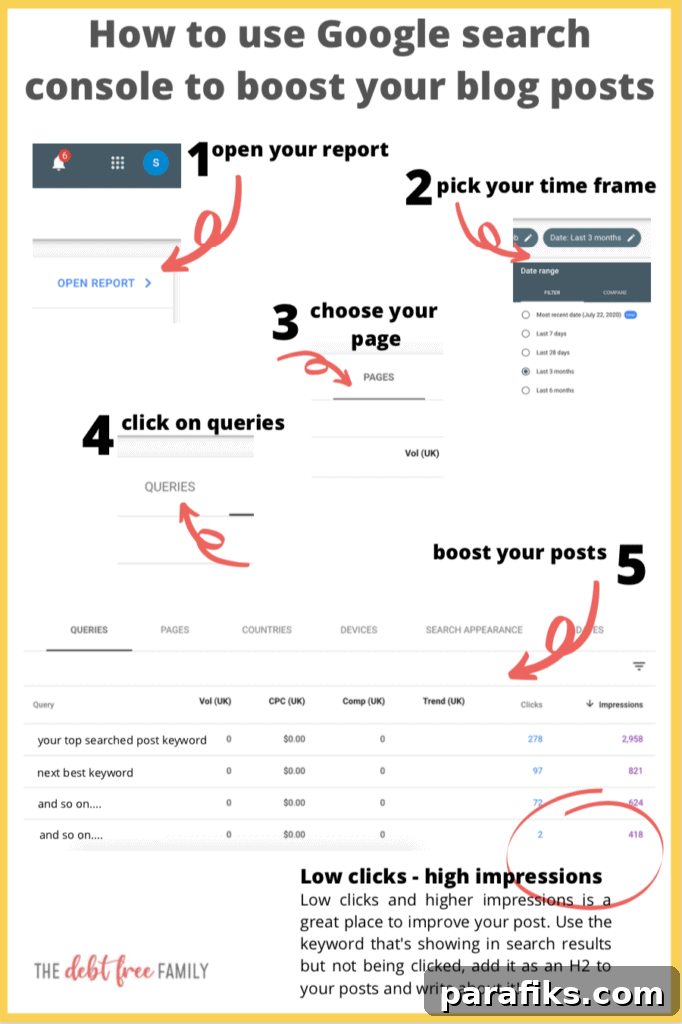
Here’s what I do in Search Console most days:
- Open the overview page to see site stats at a glance.
- Set the timeframe to the previous 28 days (or another period) to identify pages that could use a boost.
- Click “pages” to view posts ordered by popularity and select a page to improve.
- Click “queries” to see the search terms that bring traffic to that page — this shows how people find you on Google.
- If the top search term differs from your post title or meta description, update them to match and improve ranking.
- If you’re ranking for a keyword not strongly covered in your post, add it as an H2 and expand the content.
- Look at impressions versus clicks. High impressions and low clicks indicate an opportunity to improve the snippet and content to attract more clicks.
Content really is king
When you confirm a topic can rank, study the top five search results for that query — that’s where you want to be. Analyze what those posts cover and why Google ranks them.
Take notes: what are those results about, what user intent are they satisfying, and what words appear in all the titles? Ensure your post matches the user intent — that is, give the reader what Google expects them to find.
Next, list the H2 headings your top competitors use and incorporate similar headings when appropriate. Your goal is to be better than the top five results by covering everything they include and providing additional useful information. Use Google’s “people also ask” box as a source of related questions and answer those directly in your post.
Check competitors’ word counts and aim to cover the topic comprehensively without adding fluff. Make your post uniquely valuable to readers so it stands out.
DA matters, but backlinks matter more
When I started I didn’t know about domain authority (DA). At one point Debt Free Family had a DA around 7; it’s now 24. Early on I focused too much on increasing DA and worried about penalties from black-hat tactics.
I eventually realized that Google doesn’t use DA as a direct ranking factor — backlinks are what matter. Good backlinks help improve DA over time, but DA itself is a secondary metric. I shifted my effort to earning relevant, high-quality backlinks that bring referral traffic and visibility rather than chasing DA numbers. As a result, my traffic increased.
One caveat: avoid competing with large, branded sites for highly competitive terms. Instead, target non-branded competitors where you have a realistic chance to rank.
Going forward
I still consider myself a new blogger and I have a lot to learn. Building Debt Free Family has been a steep learning curve, but it now provides income I once thought unattainable. Blogging has allowed me to reduce my day job hours, earn more than I lost by working less, spend more time with my family, and even teach one of my daughters the basics of starting a site.
Most importantly, I’m in control of the blog’s direction. I’m excited to continue growing, add more content, and finally get serious about Pinterest.
What questions do you have for Steph? How are you growing your blog?