
Today I’m sharing an inspiring debt payoff story from Val Breit. She eliminated $42,000 in student loans in 34 months while earning $36,000 a year. Below is her journey and the exact steps she used to become debt-free.
I burst into tears.
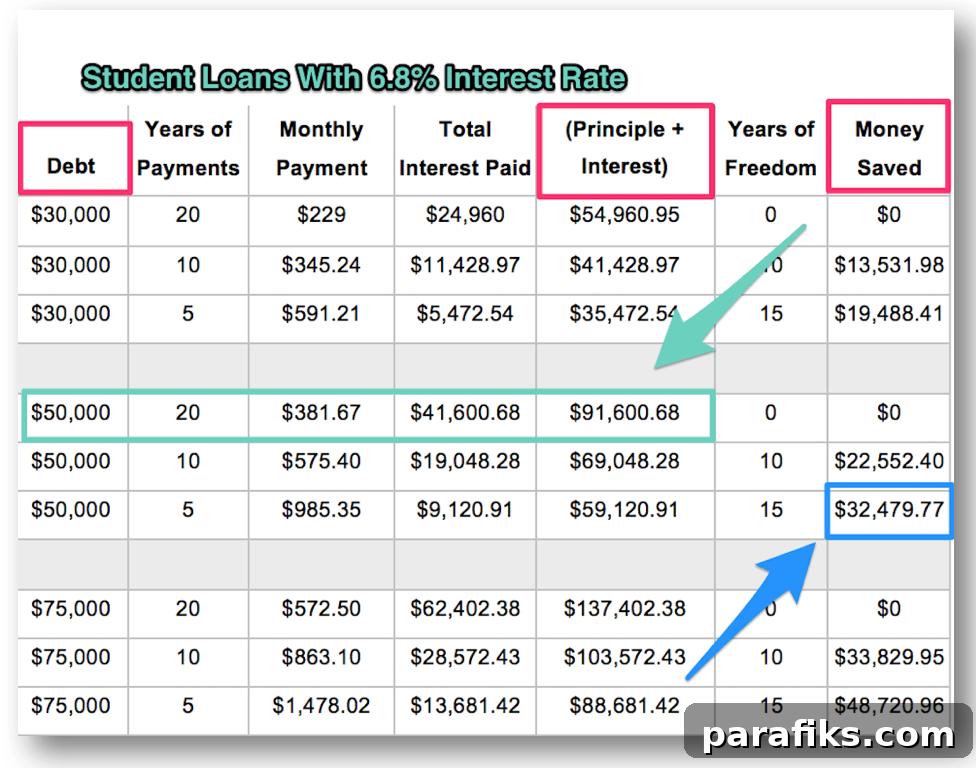
For the first time, I was choosing my student loan lender to help pay for graduate school. When I saw a chart showing that borrowing $50,000 could cost nearly $100,000 to repay, I cried. Hard.
I knew my future salary as a school counselor wouldn’t be high, so the prospect of decades of repayments felt like a sentence. That shock pushed me into action: I decided to do everything possible to avoid that terrifying $100,000 repayment figure.
After 6.5 years of school, I graduated with a 4.0 GPA, a master’s degree in school counseling, and just over $42,000 in student loan debt. My servicer placed me on the standard 20-year repayment plan, but I refused to be paying for college that long.
In fact, I paid off those loans—despite 6.8% interest—in only 34 months, less than three years after graduation.
Here’s how I accomplished it:
Step 1. Stop borrowing “just in case” or for living expenses
Financial aid offers can be tempting. During grad school I was offered about $20,000 per year in aid even though tuition was only around $8,500. I could easily have ended up with $100,000 in debt, but after that awakening moment I calculated exactly what I needed for tuition and declined extra funds for living expenses. That decision kept my total borrowing under $50,000.
Step 2. Look at the big picture
Rather than focus on the lowest monthly payment, I compared total repayment amounts under different plans—standard, extended, and income-driven—and chose the standard plan because it saves the most money overall. I used repayment calculators to estimate principal plus interest and discovered I could save over $30,000 by paying loans off in five years instead of twenty. For someone making $36,000 a year, that was a compelling incentive.
Step 3. Target one loan
I reviewed each loan and its interest rate. Most were Direct Unsubsidized loans at 6.8%, while a few were around 2%. Using a repayment calculator, I determined the debt avalanche method—paying the highest interest loan first—saved the most money, so I targeted my largest, highest-rate loan first.
Step 4. Create a detailed budget
I created a monthly budget that compared projected income to fixed and variable expenses. I audited every expense to find savings opportunities and stuck to the budget for the entire payoff period. Budgeting identified the extra dollars I could direct toward loans.
Step 5. Save $1,000 as an emergency fund
Before aggressively paying down principal, I built a $1,000 starter emergency fund. That small cushion prevented catastrophic setbacks and established a saving habit. Once it was in place, I focused additional funds on fast repayment.
Step 6. Set a SMART goal
With my budget and a prepayment calculator, I set a concrete goal: pay off the largest loan—about $38,000 at 6.8%—in eight years by adding $200 extra per month. That felt ambitious but achievable and far better than a 20-year schedule.
Step 7. Don’t sit on your grace period
Many loans include a 6–9 month grace period before payments begin. I started making payments immediately after graduation while interest hadn’t yet accrued, directing every dollar toward principal reduction. That lowered the balance before interest started compounding.
Step 8. Consolidate selectively
I consolidated most Direct loans with similar 6.8% rates into one loan at 6.75%, but I left the low-rate 2% loans alone so they wouldn’t increase. Consolidation simplified management by combining smaller loans into one account, which helped focus payments.
Step 9. Set automatic payments
I enrolled in automatic payments to avoid missed payments and to earn a small interest rate reduction (0.25%). Instead of using automatic withdrawals for only the minimum, I arranged the autopay to include my $200 extra, making my monthly payment about $450. Treating that amount as a non-negotiable bill prevented temptation to spend it.
Step 10. Persist through customer service issues
Despite setting up autopay, my servicer repeatedly withdrew only the minimum or debited the wrong date. After many calls and wasted time, I stopped autopay to avoid further errors and lost the 0.25% discount. My priority was consistent extra payments, so I manually paid $450 each month and tracked it on my calendar.
Step 11. Differentiate wants from needs
I continually examined expenses to find more cuts. I didn’t get a smartphone until after being debt-free, saved on transportation by driving a paid-off car and carpooling, negotiated lower rates for TV and cell phone service, and limited clothing spending to about $20 a month. I planned weekly meals, cooked at home, packed leftovers for lunch, and declined many social meals out. Delayed gratification and a temporary minimalist lifestyle made rapid paydown possible.
Step 12. Make additional random payments
As I reduced expenses, I made extra payments beyond the committed $200. Sometimes I deposited $50, often another $200. Watching the principal shrink became motivating and accelerated payoff.
Step 13. Use gifts and tax refunds as bonus payments
Cash gifts and tax refunds were mostly applied to loans. Although it sometimes felt discouraging when others spent on vacations, I stayed focused on avoiding wasted interest and kept pouring windfalls into debt reduction.
Step 14. Say “No” to more debt
I avoided new debts. I drove a paid-for car worth about $9,000, used credit cards responsibly by paying balances in full, and resisted extra financing. Eliminating new monthly obligations freed income to attack the student loan balance.
Step 15. Celebrate paying Sallie Mae off
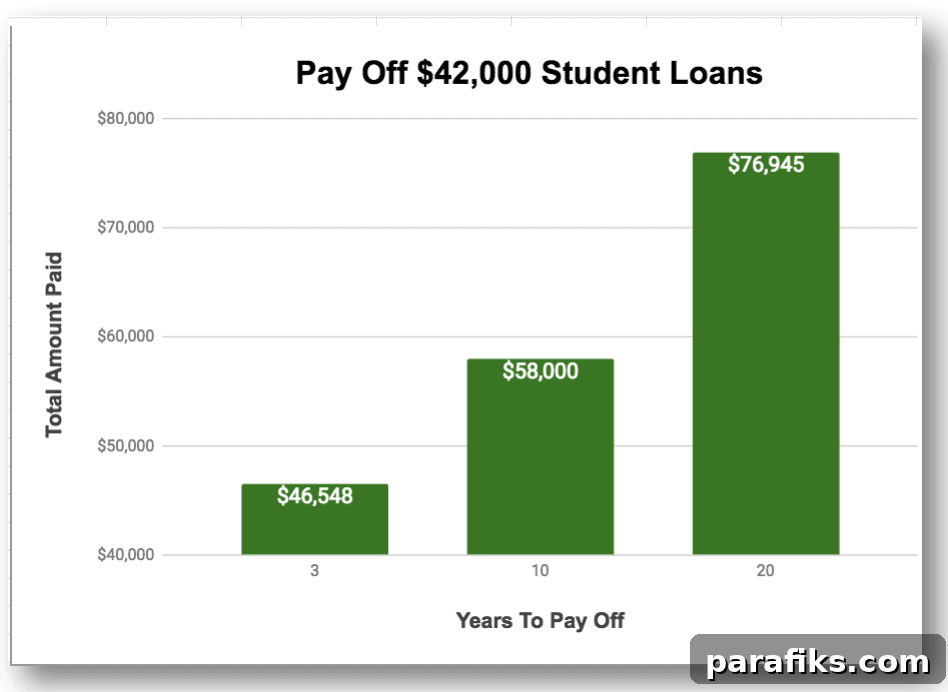
After 34 months of strict budgeting, constant expense cutting, and steady extra payments, I logged into my loan account, made the final payment, and saw a $0 balance. It felt surreal. The plan worked: instead of 20 years of payments, I finished in under three years and saved nearly $30,000 in interest.
What if you have more debt?
The more you owe, the more urgent rapid repayment becomes because the interest savings grow. Use a loan repayment calculator to project different payoff timelines and savings so you can plan a realistic strategy.
Anything I would do differently?
I wish I had researched refinancing options more thoroughly. Services that shop multiple lenders can sometimes secure lower interest rates than a local bank. Refinancing could have saved even more interest if I had qualified. I also would have started side hustles earlier. My salary was fixed, so I focused mainly on cutting expenses. Additional income streams would have accelerated repayment further.
What’s next?
I now share this story to encourage others. Many people say they want to be debt-free or become a stay-at-home parent, but lifestyle choices often get in the way. With budgeting, delayed gratification, clear goals, and expense cutting, you can reshape your life. For me, paying off student loans was the first major step that opened other opportunities.
If you’re ready, commit to taking that first step today. If I could pay off $42,000 on a modest salary, you can too. That short period of sacrifice can lead to long-term freedom and the life you want.
Author bio: Val Breit writes about practical money strategies and simple ways to improve your finances. She authored Pay Your Student Loans Fast because becoming debt-free transformed her life. She shares tips and resources for frugal living and debt elimination at TheCommonCentsClub.com.
Do you have debt? How much do you owe?