

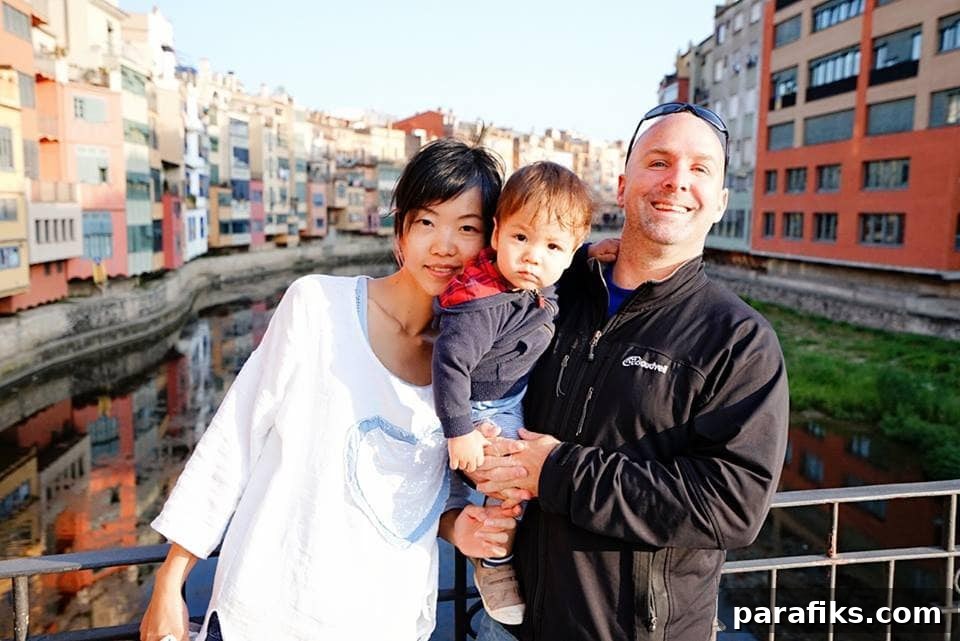
My monthly “Extraordinary Lives” series is a feature I truly enjoy producing. The first installment highlighted JP Livingston, who retired with a net worth of over $2,000,000 at age 28. Today’s interview features Jeremy, Winnie, and their son Julian—the family behind Go Curry Cracker.
Jeremy and Winnie retired in their 30s about six years ago with the explicit goal of traveling the world. Their son, who started traveling as a toddler, has already been to nearly 30 countries. They achieved this lifestyle by aggressively saving more than 70% of their after-tax income for about a decade.
In this interview you will learn:
- How they retired in their 30s.
- What motivated them to pursue early retirement.
- How they maintain a comfortable lifestyle—renting homes with private pools, flying business class, and dining at fine restaurants—countering the stereotype that early retirees must live austerely.
- How they determined the amount of money they needed to retire.
- How they handle health insurance while traveling and in early retirement.
This interview is packed with practical information and real-life details about achieving financial independence and designing an unconventional life.
I solicited questions from readers, and below you’ll find those questions (along with a few of mine) about their journey and the steps they took to reach financial freedom. If you’d like to contribute questions for future interviews, make sure you’re following the author on Facebook so you can join future conversations.
1. Tell me your story. When did you retire and how?
We are Jeremy, Winnie, and Julian—the family behind Go Curry Cracker. We retired about six years ago to prioritize travel and location independence. Unlike many retirees who seek leisure later in life, we wanted to spend our best years exploring. Our son has benefited from that choice and has visited dozens of countries before starting school.
The foundation for this lifestyle was a decade of intense saving—over 70% of after-tax income—rather than buying possessions or continually upgrading experiences. We consciously reversed lifestyle inflation: sold our house, moved to a small apartment, got rid of the car, biked and walked, and focused on cooking at home. Those changes were mentally demanding at first, but they allowed us to invest heavily and create lasting freedom.
Today, our investments cover our expenses. We could choose a more conventional life with a house and car, but we prefer flexibility: summers in Europe, autumn in the U.S., and winters in Asia. It’s not a permanent vacation, but it’s close to the lifestyle we wanted.
2. Was early retirement always the goal? What motivated you?
Before 2002, we followed a conventional path: study, get good grades, secure a job. My early priority was paying off student loans—every extra penny went toward that goal, including cashing out vacation time and using 0% credit card offers to accelerate payoff. After finally taking a long vacation as an adult, I questioned whether the typical path—house, car, career—was the life I wanted. Within six months of that realization, we had sold the house and car and began the plan for early retirement.
3. Do you live comfortably?
Yes. We rent homes with private pools, fly business class on occasion, and enjoy fine dining. Coupled with year-round travel and full control over our time, we live comfortably—perhaps even more comfortably than many high-income households who spend most of their lives working. The key is deferred consumption: we sacrificed a decade of higher consumption to secure long-term freedom and higher quality of life now.
4. What careers did you have before retirement? Did those careers help?
Winnie worked as a Program Manager at a major PC company; I was an engineer at a large software firm. Our combined income during our intensive saving years averaged about $135k, not the astronomical tech salaries sometimes reported. More than the job itself, my engineering training influenced our approach: I applied engineering principles to finances and lifestyle, optimized expenses, invested in low-cost index funds, and minimized taxes. That analytical approach sped our path to financial independence.
5. Advice for people who don’t earn six figures but want to retire early?
The core principle is to live well beneath your means with a target savings rate of at least 50% of after-tax income. For many households, reaching that level requires either earning more, spending less, or accepting it will take much longer—often a combination of all three. For families with very low incomes, increasing earning potential through skill development or relocation is often essential. Public assistance can help temporarily, but long-term change usually requires higher income and new skills.
6. Do you still earn income in retirement?
Yes. With ample time, it’s hard not to pursue some projects. Winnie published a bestselling book in Mandarin in Taiwan, and Go Curry Cracker began generating affiliate income. I manage the site as a small business for a few hours each week. We also employ tax-minimization strategies that effectively increase our after-tax income. For transparency, we publish income statements and tax returns each year, which has helped readers model their own strategies.
7. How did you determine how much you needed to retire?
We targeted an investment portfolio equal to 25 times our desired annual spending in Seattle—the classic 4% rule. In simple terms, a 25x portfolio suggests you can withdraw 4% annually (inflation-adjusted) and likely maintain your capital. When we reached that target, Winnie stopped working and I continued for a few more years while living off dividends and investing most of my paycheck. We also chose to continue living below our means to let the portfolio grow, opting for lower-cost travel destinations when appropriate.
8. What sacrifices or difficult decisions did you make?
We prefer to frame our choices as deliberate prioritization rather than sacrifices. We delayed lifestyle inflation—postponing the dream house and newer cars—and found those “trappings” mattered less over time. Avoiding advertising and not owning a TV helped reduce consumption pressure. For us, patience and delayed gratification were key to achieving long-term goals.
9. How do you handle health insurance in early retirement?
For many years we self-funded medical needs while traveling, paying out-of-pocket for affordable care abroad. We used those savings to build our investments and a dedicated healthcare fund. If residing in the U.S., we would use state or federal health exchanges. More recently we’re covered by Taiwan’s national health system for about $25 per person per month, which provides excellent care including dental. Residence and local healthcare systems make a big difference.
10. Will your child have a stable place to build long-term friendships? Will you keep traveling once your child is school-age?
We’re still figuring out education and social planning. We’re open to homeschooling up to age 10–12 and are currently combining part-time Montessori pre-school with travel. We view home as a community and relationships rather than a single physical place—our extended families are spread across countries and states, and we value the diverse connections. We prioritize regular, quality family time and stay connected via video calls. Our approach will evolve with our children’s needs, but community and consistency are core principles.
11. What challenges come up traveling with a child, and how do you handle them?
Traveling with a child raises the same challenges as parenting anywhere: meeting basic needs, maintaining routines, and preventing meltdowns. Our advantage is flexibility: we avoid overscheduling, skip intense one-week whirlwind trips, and instead live daily life in new places—parks, naps, routines, and local exploration. We create stability through regular toys, nap times, bedtime rituals, and co-sleeping, which provides constant parental presence and security. Julian appears happy, healthy, and adaptable to travel.
12. If you could start over, what would you do differently?
We made mistakes—buying a house, buying a car, experimenting with rental properties—but those lessons shaped our path. If we could change things, we’d adopt some practices earlier: invest in index funds from the start, avoid dabbling in rentals, live within biking distance of work, prioritize renting over buying, learn to cook sooner, and start travel hacking earlier to reduce travel costs. Those adjustments could have accelerated our timeline by several years.
13. What are your best tips for someone who wants to achieve similar success?
Design your life so that high saving rates become the natural outcome. Aim for saving 50% or more of after-tax income, minimize taxes where possible, and focus on simple, low-cost investing. Prioritize long-term freedom over short-term consumption: the lifestyle you defer to achieve financial independence will often reward you many times over.
Do you have goals of retiring early?