Today I’m sharing an engaging interview that explains in practical terms how to become a freelancer.
I recently spoke with Ben Taylor, who’s been freelancing since 2004 and has worked with dozens of companies. His experience shows that freelancing is a career anyone can learn and build.
As you’ll see in the interview, a freelancer can be almost anything: a designer, personal trainer, nutrition coach, online teacher, virtual assistant, writer, and more.
If you’re exploring a new business idea or considering a side hustle to learn how to make extra money, freelancing is a path worth considering.
In this interview you’ll learn:
- What a freelancer is, who they work for, and what they do
- How much a new freelancer can expect to earn
- How to find your first freelancing job
- The practical steps needed to start earning as a freelancer
Read on for the full interview and actionable guidance.
How to become a freelancer.
1. Please give us a background on yourself and how you started as a freelancer.
I’m Ben, and I live by the sea in England with my wife and two young sons.
I began a career in technology in 1998 and by 2004 I was Head of IT for a government department. I quickly grew tired of internal politics and long meetings that achieved little beyond ego display.
I come from an entrepreneurial family—my parents ran businesses rather than holding traditional jobs. Their businesses had highs and lows, and that upbringing made running my own business feel natural.
My freelancing path unfolded in two clear phases.
First, in 2004 I left my IT role, walking away from perks like business-class travel and a generous pension, with only a vague plan to freelance. I started by offering IT support and consulting to businesses and individuals. I still do some of this work for a handful of long-term clients, but by 2009 I had burned out. The business was successful, but I was working very long hours and was never truly off the clock.
Phase two began when I sold most of my client base and moved to Portugal. That change pushed me to broaden my freelance work. I started from scratch with the intention of writing for a living, though I had no clear plan.
I tried many approaches—some productive, some not. I wrote for content mills, launched blogs, found work on freelance platforms, and gradually rebuilt my income. The key difference was that I did it on my own terms and chose work I enjoyed, all while living in a place I loved.
2. Can you explain what exactly a freelancer is, who they work for, what they do, etc.?
It’s worth clarifying the difference between freelancing and remote employment. First, a freelancer can be anything. People often think of writing first, but you can freelance as a designer, trainer, coach, teacher, virtual assistant, and many other roles.
You don’t have to be restricted to a single role. I’m a freelance writer, but I also do IT consulting, run blogs, provide coaching, and build websites when the client and price are right.
Importantly, freelancing means running your own business. That brings full control and flexibility, but also responsibility—you must manage your own insurance, healthcare, taxes, and technical support.
Freelancers typically work with multiple clients. You can find clients through existing professional and personal networks, former employers, and freelance job boards like Upwork and PeoplePerHour, which offer many opportunities.
3. How much should a new/beginner freelancer expect to earn?
That depends on many factors and is hard to answer definitively. Some freelancers start with high hourly rates if they have specialist experience. For example, a writer I coached began charging $100 per hour on Upwork and found plenty of work. Early in my IT consultancy career I charged a similar rate and quickly earned more than in my full-time job.
At the other end, beginners or those without specialized skills may need to accept lower-paying jobs to build a portfolio and reputation. My own move into writing involved that kind of gradual progression.
A useful target for many new freelancers is “job replacement income”—earning what a salaried role provided. That target varies widely. Senior professionals often command higher freelance rates, while those starting out should focus on building credible work samples and client references.
4. What do you like about being a freelancer?
The biggest advantage is not having a boss.
Working for yourself changes daily life. I rarely need to request time off and can attend my children’s events without asking permission. That freedom contrasts with the security a traditional job offers, such as employer-provided healthcare, holiday pay, or sick leave. Freelancing trades those employer benefits for control and flexibility.
I also enjoy being able to pivot between different projects and goals. About four times a year I reassess priorities and set new short-, medium-, and long-term goals: starting a new blog, writing another book, learning a new skill. That variety keeps work interesting and satisfying.
5. How can a person find their first freelancing job?
There are many ways to find freelance work, which I group into two categories: “real world” and “online world.”
Start with your real-life network. Many freelancers land their first jobs from people who already know their work. Think about business and personal contacts who can vouch for your skills—those warm leads often convert more easily.
Local networking events and business groups can help too.
Online, freelance job boards are a major source of clients. They can seem intimidating, so learn how they work and how to spot legitimate opportunities. Great clients, including well-known companies, use these platforms. A small initial job can develop into a long-term relationship—my wife and I still work for clients we first met on job boards years ago.
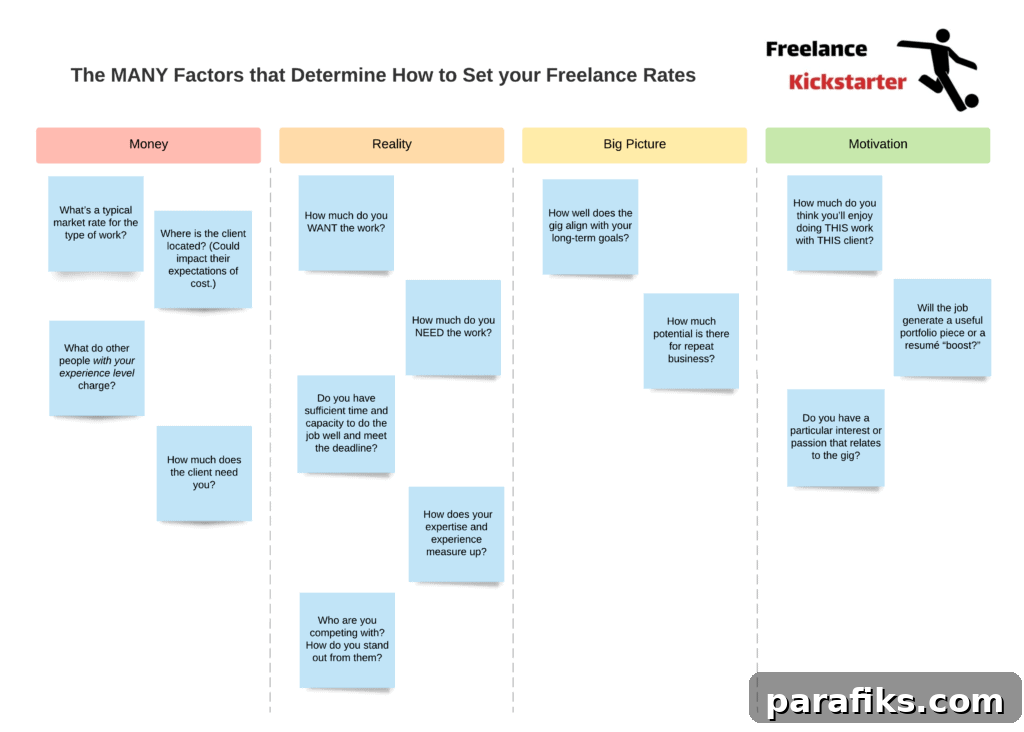
6. How does a freelancer decide what to set their rates at?
Rate-setting is complex and individual. Beyond a simple dollar figure, consider how a job aligns with your long-term goals, whether it produces portfolio-worthy work, and whether it could lead to recurring work.
Your rate should be fair, competitive, and worth your time. Each job requires case-by-case assessment. There are millions of freelancers charging a wide range of rates for similar services; learning where you fit on this spectrum is an art that improves with experience.
7. What steps does a person need to take to make money as a freelancer?
The first step is deciding what you want to do. Many people ask what they should do without describing their skills or what would make them happy.
Here’s a concise roadmap:
- Identify your skills and the market demand for them.
- Research competitors: see what they charge and what makes them appealing. Define your unique selling points.
- Fill knowledge or experience gaps—take training or do volunteer work to build a portfolio.
- Build a personal brand: a strong résumé, an optimized LinkedIn profile, and examples that demonstrate expertise.
- Learn how freelance job boards operate, even if you plan to rely on personal networks.
- Start pitching and applying for work.
- Deliver excellent work, exceed client expectations, and encourage repeat business and referrals.
Repeat and refine these steps to grow as a successful freelancer.
8. How much does it cost to start this type of business and how much on a monthly basis to maintain it?
Freelancing is generally low-cost but not free. Costs depend on your field: some roles require specialized equipment or software. If you’re moving from employment, you may now need to pay for items your employer previously provided.
A reliable computer is essential for most freelancers. You should also budget for insurance and, where applicable, healthcare. Monthly expenses often include software subscriptions, insurance policies, and ongoing training. These costs typically accrue gradually, and you can begin freelancing without a personal website, adding extras as your business grows.
9. What kind of training is needed to become a freelancer?
Training falls into two categories: learning how freelancing works and developing the specific skills your chosen work requires.
For skill-specific training, it depends on your niche. For example, a social media manager must decide whether to specialize (e.g., TikTok expert) or be a generalist covering multiple platforms. Continuous, targeted learning keeps your services relevant.
10. Are there any other tips for someone who wants to become a freelancer?
Yes—many. The most important is to make the jump. Too many people stay stuck in the planning phase while others take action and make progress. There may never be a perfect time, so decide and begin.
Also, be prepared to pay your dues. Early freelance gigs may be unglamorous but can build your reputation. For example, I wrote on some dull topics early on to develop a track record; that work later helped me secure well-paid assignments in travel and restaurant writing.
Every job teaches something—client management, rate negotiation, skill refinement, and efficiency. Freelancing is rarely easy, but it’s usually challenging, interesting, and rewarding. Many people don’t feel that way about their regular jobs.
Are you interested in learning how to become a freelancer?