
Hello! Today I have an excellent article from Amanda about making money teaching overseas. Enjoy!
Hi — I’m Amanda Swartz from Every Further Mile, a travel blog that helps families discover and secure rewarding work and travel opportunities overseas. Alongside my husband and our son, I love to travel and embrace new adventures. One life-changing opportunity led to this post: how we earned over $100,000 in 10 months while visiting seven countries.
With wanderlust in our hearts, you might assume moving overseas to teach was an easy decision. It wasn’t. At a time when life felt like it was sliding backward, we were offered the chance of a lifetime and nearly let it pass.
I grew up in a tiny town of about 500 people and vowed never to return. But life doesn’t always follow plans. When my husband lost a job he loved, our little family of three had to take what we could find. That meant moving back to that small town and into subsidized housing — a situation I’m grateful for in hindsight because we needed the help.
We were lucky to have good friends nearby, but it still wasn’t where we wanted to be. My husband, Nathan, took a temporary low-paying job and I found a part-time position to help with bills. During that time, some friends who had moved overseas to teach kept sending emails about their lives abroad. Their stories sparked my curiosity. They suggested we consider joining them, but Nathan was hesitant and I was nervous to push the idea.
Related articles on ways to make extra money are often helpful when considering career changes or travel-based income streams.
Some may understand our reluctance and some may question our sanity.
Why wouldn’t we take an opportunity that could lift us out of a difficult situation, increase our income, and open the door to travel? Good question.
- The #1 concern was that the job was in Kuwait. With negative headlines about the Middle East, we worried about taking our five-year-old (and ourselves) to live there.
- Making a dramatic life change — moving across the globe to a country and culture we knew little about — felt scary.
- We would miss family.
- Our family might oppose the move strongly.
- We weren’t trained teachers and didn’t know how to teach in a formal classroom.
Why we ultimately chose to teach in the Middle East:
- It was an incredible opportunity.
- The salary exceeded anything we had earned before.
- It presented an intriguing challenge.
- We’re restless and love trying new things, despite family concerns.
- It offered extensive travel opportunities.
- We had growing debt and needed a way to get ahead financially.
Facing our first fear:
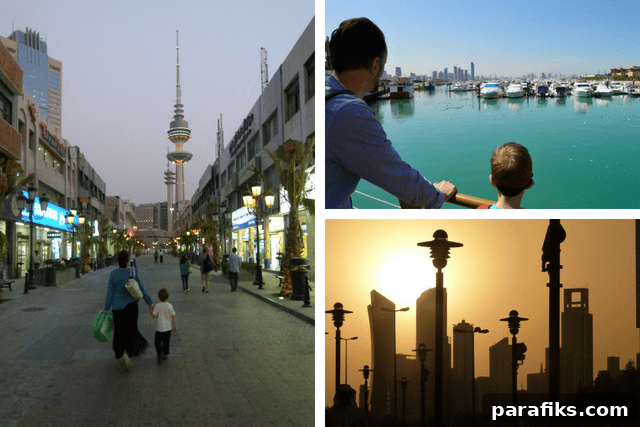
Our friends had to work hard to calm our fears about the Middle East. Before going, I had serious misconceptions: I assumed most Middle Eastern countries were war-torn, oppressive toward women, and offered little of interest. I couldn’t have been more wrong.
Kuwait — like many countries in the region — is wealthy, modern, and culturally rich. It offers amenities, history, friendly people, and delicious food. Though we only lived there 10 months, we enjoyed many experiences we still miss.
Some favorite places and experiences in Kuwait:
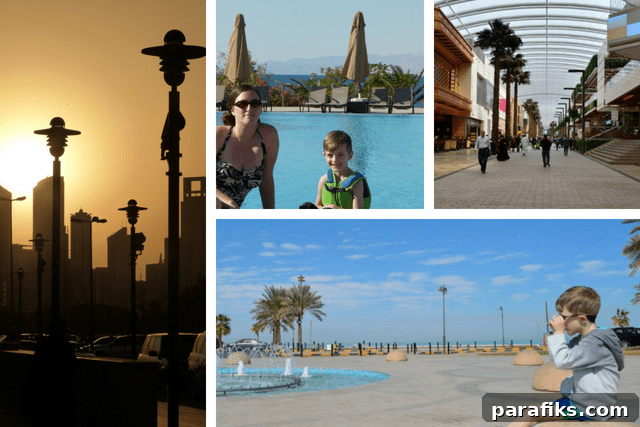
Beaches, ocean views, and sunsets: Kuwait’s sunsets were stunning — the dust in the air often painted dramatic orange skies that reflected across the water, creating beautiful photo opportunities. Public beaches had pleasant boardwalks, and private beaches offered relaxed settings where women could dress more freely, including wearing bikinis. In everyday public life, conservative dress was often expected in certain settings: shoulders covered and skirts, dresses, or pants to the knee in many workplaces. Men, too, faced dress expectations in government offices where shorts were not acceptable.
Malls: Because of high temperatures and strong purchasing power, air-conditioned malls are popular. The Avenues, the largest mall we visited, combines typical retail with sections modeled on regional culture and luxury-brand areas stocked with high-end goods.
Food: Coming from a small town, the variety of dining options in Kuwait felt amazing. Delivery services like Talabat make ordering nearly anything easy. As Canadians, we were delighted to find a Tim Hortons in The Avenues — they even knew Canadian terms like “Double Double.” We did spend freely on dining early on, but learned to balance enjoyment with budgeting.
Luxury: Kuwait and other Middle Eastern destinations host impressive luxury resorts with oceanfront accommodations, palm-lined grounds, spas, unique pools, and attentive poolside service — rivaling destinations like the Maldives in comfort.
Family-friendly activities: Though summers can be very hot, many indoor play spaces and museums are great for kids. The Scientific Center features an IMAX and a large aquarium, and annual or seasonal family passes can be affordable. KidZania, a themed indoor play city, was an immersive and fun — albeit pricier — attraction for children.
Other practical aspects to expect:
- Grocery stores similar to those in Canada or the U.S.
- Public hospitals that are affordable and adequate, and private hospitals that are modern but costly.
- A busy, diverse nightlife scene. Kuwait is officially dry, but there is an active social life. Be mindful of local laws — alcohol and public intoxication can have severe consequences. Driving is fast-paced and horn-happy; be prepared for a different road culture.
About our work: perks, wages and vacation
Although teaching appealed to me, the main motivators were the salary, vacation time, and benefits. When we decided to move, we had about $14,000 in consumer debt and I was determined to take our son on international trips before his fifth birthday. This opportunity gave us a realistic path forward.
Quick facts about our employment:
- English school roles: We were classroom teachers at an English-language school, responsible for core subjects rather than ESL. I taught grade 1 and Nathan taught grade 5.
- No formal teaching degrees: We held BAs in Biblical Theology and were initially unsure we’d be hired, but our friends helped and the school accepted us without formal teaching credentials.
- Work hours: The workweek ran Sunday to Thursday, with school from about 7am to 3pm. Because specialist teachers handled subjects like Arabic, Islamic studies, art, and PE, classroom teachers had more in-day marking time than is typical in some other systems.
- Salary: Combined, our pay converted to roughly $6,300 USD per month (about $8,000–$8,500 CAD), and although we worked 10 months, we were paid across 12 months.
- Extra income: We tutored outside school hours and I briefly served as a youth pastor at our church, bringing in extra monthly income for several months.
- Perks: The school provided a two-bedroom apartment and covered utilities like heat and electricity. We paid for taxis, internet, and groceries.
- Airfare: Employers provided pre-paid airfare to and from Kuwait each year of employment.
- Taxes: As Canadians living in Kuwait for the year, we paid no local income tax; Kuwait has no personal income tax. Tax situations vary by nationality and circumstances, so research your obligations before you go.
- Vacation: We enjoyed an unusually generous vacation schedule due to a mix of local Islamic holidays, British-school calendars, and summer break — totaling about 17 weeks off per year (11 weeks in summer and 6 during the school year).
- Total impact: Over the year we earned the equivalent of roughly $100,000, avoided about $15,000 in housing costs, and took 17 weeks of vacation.
- Debt and savings: With this income and benefits we paid off $14,000 in debt, saved around $25,000, traveled to seven countries, and maintained a comfortable lifestyle.
Why choose Kuwait over other teaching destinations?
Many articles focus on TEFL jobs in Asia, especially South Korea. While those can be great opportunities, the Middle East is often overlooked. When comparing countries, consider wages, perks, and vacation time.
Wages (approximate):
- South Korea: about $3,000 USD/month
- Kuwait: about $6,000 USD/month
Perks: South Korea often provides airfare and housing but may require you to cover utilities. Kuwait and similar Middle Eastern contracts commonly include housing and utilities.
Vacation: South Korea generally offers around two weeks’ paid vacation in addition to summer breaks, while Kuwait-based positions often provide four to seven weeks’ paid vacation plus summer holidays.
Which Middle Eastern countries are good places to teach?
- UAE (Dubai or Abu Dhabi): Glamorous, tourism-focused, and modern, with impressive architecture and many attractions. Private resorts allow alcohol in some settings.
- Jordan: Amman offers strong cultural and historical attractions like Petra and Wadi Rum, and some teachers prefer the lifestyle there.
- Oman: Known for stunning natural landscapes and unique cultural experiences.
- Bahrain: A mix of tradition and modern amenities, with a rich cultural scene.
- Qatar: A modern country focused heavily on education and research, featuring “Education City” and many international institutions.

Should you bring children to Kuwait?
Bringing our son Corban was both challenging and immensely rewarding. As a shy child, he initially struggled to make friends; many classmates spoke Arabic outside of school. He was the only native English speaker and the only Caucasian student in his class. About half the students were Kuwaiti and the rest came from various Arab countries.
After a few months he adjusted and embraced life in Kuwait. He made friends, enjoyed cultural experiences, and grew through the adventure. We rarely felt unsafe. Taxis sometimes lacked seatbelts and driving could be reckless, so we chose taxis with seatbelts when possible. As a generally cautious woman, I preferred not to go out alone at night, but felt safe with family or friends. Overall we felt secure, welcomed, and enriched by relationships with families from different backgrounds — including a warm Egyptian family who became like family to us.
I absolutely recommend bringing your family to teach in Kuwait.
You’ll gain new perspectives, form lasting friendships, and experience diverse cultures.
How to apply
Many Middle Eastern international schools require teaching certifications, but some — including the Cambridge English school where we worked — hire candidates with at least a bachelor’s degree. TEFL certification wasn’t required in our case.
When applying, include a tailored cover letter and resume/CV that highlight:
- Experience working with children.
- Relevant subject or specialty knowledge.
- Experience creating children’s programming or curriculum.
- Familiarity with current teaching terminology and best practices — reach out to teachers in the region (via Facebook groups or networking) to learn what language and skills schools prefer. If you’re applying to an American school, consult American teachers; for a British school, consult British teachers.
- Standard professional skills: organization, teamwork, communication.
Example application documents can be helpful when preparing your own materials.
Where to apply
Start with British, American, and international private schools in the country you prefer. Many schools list open positions on their websites or post vacancies on regional job boards. If you know someone working at a school, ask if they’ll recommend you — a personal reference can be valuable.
Useful types of resources include international teaching job boards, school listings by country, and regional directories that categorize institutions by reputation and type. Search school websites for application details and contact information.
Be careful when applying overseas:
Always do thorough research. Vet schools online, find teachers in social media groups who can vouch for the institution or hiring contact, and read contracts carefully before signing. Never hand over your passport when you arrive — keep photocopies of important documents and know the location of your embassy. Bring enough personal funds to cover initial expenses. These precautions apply to any international employment.
Embrace the adventure:
If you’re seeking travel, cultural immersion, a chance to repay debt, or meaningful work with children, teaching overseas — particularly in the Middle East — is worth considering. Approach the experience with an open mind, respect for local customs, and a positive attitude. You might just fall in love with the life you create abroad.
If you have questions about teaching overseas, I’d be happy to answer them in the comments below.
Are you interested in teaching overseas?