
The journey to owning my own business began about ten years ago. After high school I studied business in college, graduated, and took a job as a financial analyst. Around five years ago I completed an MBA with a concentration in Finance to expand my career opportunities.
 Following the conventional path—finish high school, go to college, get a job in your field, then pursue an MBA—felt like the logical next step. I assumed an MBA was necessary to succeed in corporate finance, so I pursued it without questioning the route.
Today, however, I’m a full-time blogger. People often ask if I regret earning multiple degrees—three in total—given the time and debt involved. While I didn’t learn anything about blogging in college and an MBA doesn’t focus on launching niche businesses, I pursued my degree to improve my career prospects rather than to start my own company.
Related content:
- How I Paid Off $40,000 In Student Loans in 7 Months
- Cutting College Costs: Understanding The Cost And Value Of Your Degree
- Learning How To Survive On A College Budget
- How I Graduated From College In 2.5 Years With 2 Degrees AND Saved $37,500
According to the U.S. Small Business Administration, the United States has 28.8 million small businesses, representing 99.7% of all U.S. businesses. Many people are starting businesses and working for themselves, but that doesn’t mean all of them hold MBAs.
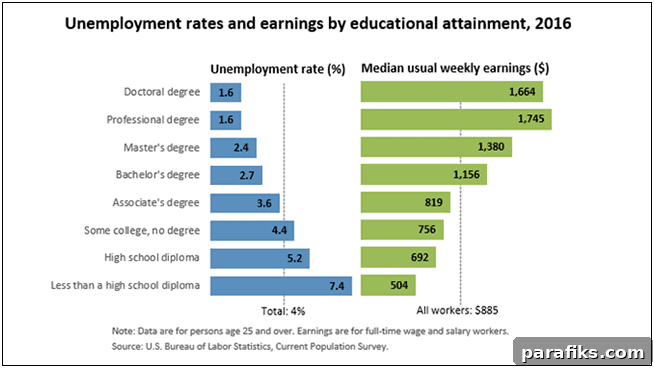
An MBA is not required to start a business. The question is whether having one improves outcomes for entrepreneurs. The U.S. Bureau of Labor Statistics’ data on unemployment rates and earnings by educational attainment (2016) shows higher median weekly earnings and lower unemployment for those with college degrees, including master’s degrees. While this data reflects wage and salary workers rather than business owners specifically, it does suggest some financial advantages to advanced education.
On the other hand, a Harvard Business Review analysis found that many top global business leaders do not have MBAs. Of the 100 best companies profiled, only 29 executives held MBAs, and fewer than half of those degrees came from elite business schools. Similarly, Business Insider lists many successful entrepreneurs who built massive enterprises without college degrees—names like Walt Disney, Richard Branson, Rachael Ray, Michael Dell, and Larry Ellison appear on that list.
There are also prominent leaders who earned MBAs—Elon Musk, Michael Bloomberg, Sheryl Sandberg, and others—so success can follow both paths.
So, should you get an MBA if you want to start your own business?
MBAs can be expensive.
The cost of an MBA varies widely. It can be as low as a few thousand dollars at more affordable schools, or well over $200,000 at top programs. Tuition, fees, and living expenses at institutions like NYU Stern, Harvard Business School, and Stanford’s Graduate School of Business can push the total cost past $200,000—an enormous investment for a credential that may offer limited hands-on experience for a specific business idea.
Beyond money, time is another major factor. Full-time MBA students may reduce or forego earnings while studying. Part-time MBAs allow continued employment but extend the timeframe. I worked full-time while completing my MBA, which left little room for anything else. If your primary goal is launching a business, the time commitment for an MBA can delay that objective.
An MBA surrounds you with driven people.
One clear benefit of an MBA program is the network. You’ll be surrounded by motivated peers and potential collaborators, mentors, and future contacts. Networking can be a valuable asset when building a startup or growing a business, and MBA cohorts often provide concentrated opportunities to form those relationships.
An MBA won’t teach you the specifics of your niche business.
An MBA delivers a broad foundation in general business principles but typically won’t teach the technical or niche skills required for many specific ventures. For example, an MBA is unlikely to cover blogging tactics, specialized trades, or niche product development in depth. Entrepreneurs usually need to supplement MBA coursework with targeted research, practical experience, or industry-specific training.
What an MBA does offer is a strong grounding in the business side of entrepreneurship—marketing, finance, operations, accounting, and management—which are essential to running a company and can reduce common failure risks.
You do learn about business, though.
During my MBA and in my role as a financial analyst, I learned business accounting, business law, management, economics, marketing, and finance—skills that proved useful when I started my own business. Early-stage entrepreneurs often wear many hats, and understanding these fundamentals can be crucial, even if you later outsource certain functions.
Business failure rates underscore the importance of that knowledge: according to studies cited by financial sources, approximately 30% of new businesses fail within two years, 50% within five years, and 66% within ten years. Common reasons include inadequate market research, flawed business plans, poor location or online presence, and ineffective marketing—areas an MBA can help address at a conceptual level.
What about real experience?
Practical experience matters greatly. An MBA provides a theoretical framework and a toolkit, but real-world practice teaches nuance and adaptability. Combining hands-on experience with formal education can be powerful: the MBA can clarify strategy, finance, and operations while experience reveals customer needs and operational realities.
So, should everyone seeking to start a business get an MBA? No—people have different goals, learning preferences, budgets, and timelines. For some entrepreneurs the credential and the network are worth the cost and time; for others, self-directed learning, mentorship, and on-the-job experience work better.
Personally, my MBA served me well by giving me business fundamentals and confidence in managing my own enterprise. It wasn’t necessary to become an entrepreneur, but it was helpful for the path I took.
What do you think? Should someone who wants to start a business pursue an MBA? If you already run a business, do you have an MBA? Why or why not?