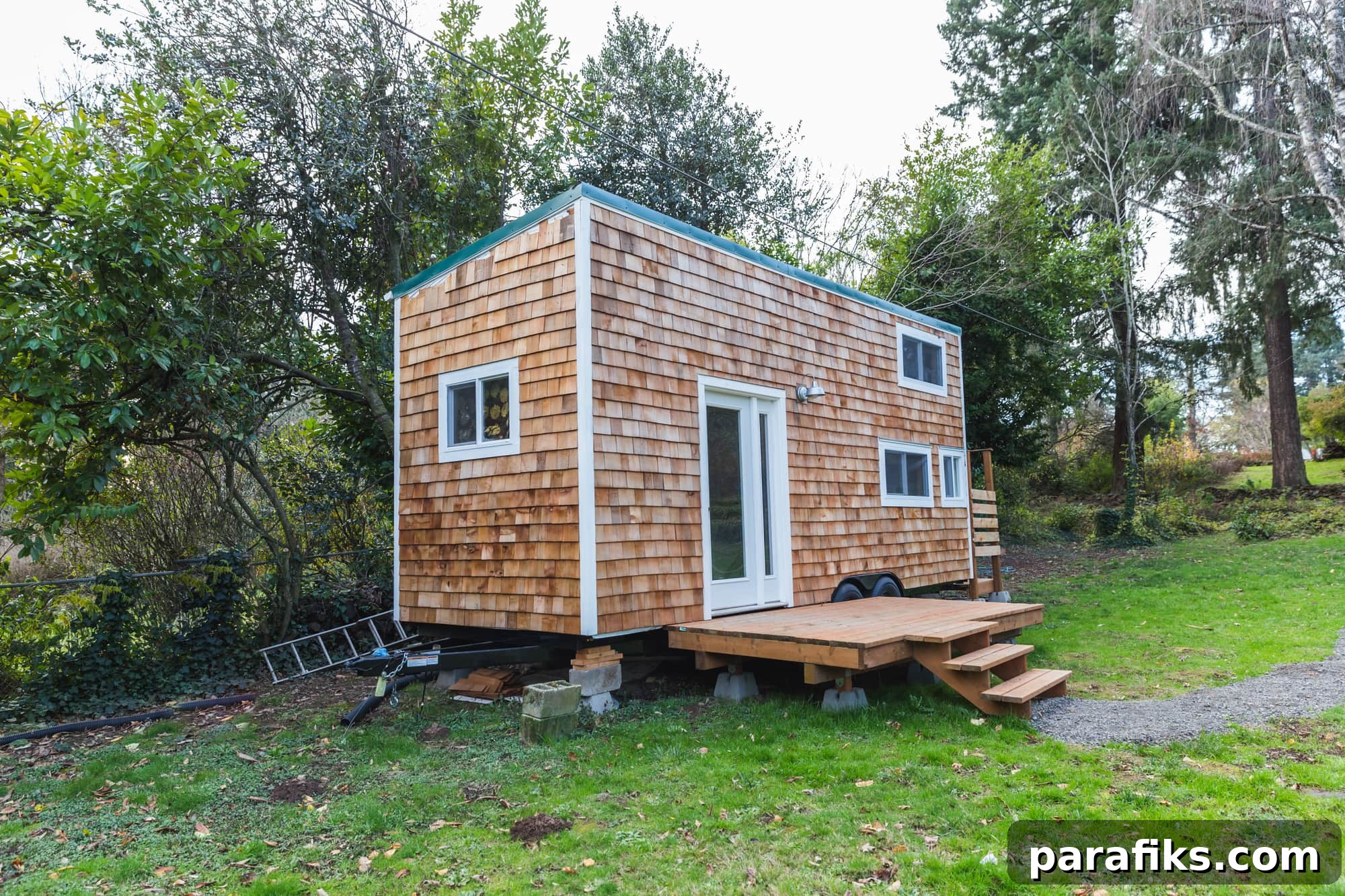
When we first moved out at 18, we rented a very small house. Technically it wasn’t labeled a “tiny home,” but to us it felt tiny.
The house was roughly 400 square feet (even less if you don’t count the basement). Still, it was inexpensive, had a backyard, and was very close to the college I was about to attend.
As a reminder, last year Jordann shared her experience living in a 400 square foot house, and I recently published an interview titled “I Live in a 175 Square Foot Tiny Home – Sailboat Living.” Both are insightful reads if you’re curious about small-space living.
My interest in tiny homes was recently renewed after watching the Netflix documentary Tiny: A Story About Living Small. The film follows a builder creating his own tiny home and features several people who live full-time in tiny houses.
Tiny homes fascinate me: they maximize space, often look charming, and are typically much more affordable than standard houses. Despite these advantages, I don’t think living in a 200 square foot tiny home would suit me. The drawbacks feel more significant than the benefits. We might downsize from our current home, but 200 square feet feels too extreme.
Below I outline the main pros and cons I’ve observed about living in a tiny house.
Pro: Your housing expenses will be lower.
On average, many tiny homes can be built for under $30,000, and prebuilt options are also available at relatively low prices. That cost typically includes both exterior and interior finishes, making tiny homes far less expensive than conventional houses.
However, you must consider where you place the tiny home. Land prices vary widely. While some plots are inexpensive, others can be quite costly depending on location.
Utilities are another area where tiny homes save money. Heating and cooling a 200 square foot space is far cheaper than managing utilities in a 2,000 square foot house. Routine repairs, maintenance, and replacements also tend to cost less in a tiny home.
Con: It can be difficult to live in a tiny home with children or pets.
We don’t have children yet, but hope to someday. From what I’ve seen and read, very few tiny-home residents have children or pets. I imagine family life would be challenging in such tight quarters—people need room to spread out and have privacy.
If living arrangements involve only one or two adults, tiny house living becomes far more feasible. When we lived in our 400 square foot house, it wasn’t unbearable. The layout included multiple small rooms plus a front and backyard and a porch, which provided options for personal space and made small-space living more manageable.
Pro: You’ll likely spend less on material possessions.
I tend to hold onto things—my closet is packed to the ceiling, and storage fills the guest room and basement. Moving into a tiny home would force a more intentional approach to purchases. Limited storage means you’ll buy fewer nonessential items and be more deliberate about what you bring into the home.
Con: Hosting guests won’t be comfortable.
In the documentary, when the builder invited his family to see the completed tiny house, the space felt cramped. Everyone had to squeeze in, and the visit was clearly less comfortable than a gathering in a conventional home.
I don’t typically throw large parties, but I do value the ability to host friends and family occasionally, especially since we plan to move to a different state and would like visitors. Tiny houses limit how comfortably you can entertain even small groups.
Pro: Some tiny houses are portable, enabling travel.
Not all tiny homes are mobile, but some are built on trailers and sized so they can be towed. That mobility lets you move your home to different locations and even take road trips. This flexibility significantly expands your options for where to live.
Con: Limited personal space and privacy.
It’s obvious but worth repeating: tiny homes are small. Many definitions set the tiny home threshold at 200 square feet or less. That’s smaller than many bedrooms, and living full-time in such a compact area can wear on you—especially if you work from home. Spending hours every day in the same small room could feel confining and impact productivity and mental well-being.
Would you ever live in a tiny home? Why or why not? How small could you go? How big is your current home?
If you already live in a tiny home (preferably under 250 square feet), I’d love to hear your experience and consider an interview for this blog. Please send me an email if you’re interested in sharing your story.