Did you know you can rent your car to travelers for a day, a week, or even long-term and earn extra income? Listing your vehicle on Turo — essentially the Airbnb of cars — can turn idle time into cash.
 It takes as little as 10 minutes to create a listing, and hosts can keep as much as 90% of a trip’s price depending on the protection and extras they choose.
Sharing your car on Turo offers several benefits:
- You can offset vehicle expenses. The average Turo host earns around $500 per month, which often covers monthly car payments for many owners.
- If you already own your car outright, the income can go toward savings, debt repayment, or retirement contributions.
- Much of the income can be passive: once the listing is live, bookings and earnings can come with minimal ongoing effort.
- The average car sits unused about 95% of the time. Renting it when it would otherwise be idle helps recoup depreciation and ownership costs.
So what is Turo?
Turo’s mission is to put the world’s unused cars to better use by enabling car owners to share vehicles while they are not driving them. Trips on the platform include Trust and Safety protections such as pre-screened guests and hosts, and up to $1 million in liability coverage through Liberty Mutual in qualifying regions. Travelers often choose Turo over traditional rental companies because of lower prices, a wider variety of vehicles, and greater convenience.
Since its launch, hundreds of thousands of cars have been listed on Turo.
In short: listing your car on Turo allows you to rent out a vehicle and earn money — a convenient option if you want to monetize a vehicle that spends most of its time parked.
If earning an extra $500 a month by listing your car sounds appealing, you probably have questions about how Turo works. Below are answers to common questions about earning on the platform, including how earnings are determined, how payments are sent, what happens with damage, how to get started, and more.
Related topics: passive income ideas, renting RVs or items for extra cash, and remote job ideas are common complements to car-sharing strategies.
What you need to know about sharing your car and earning on Turo
How much can you make on Turo?
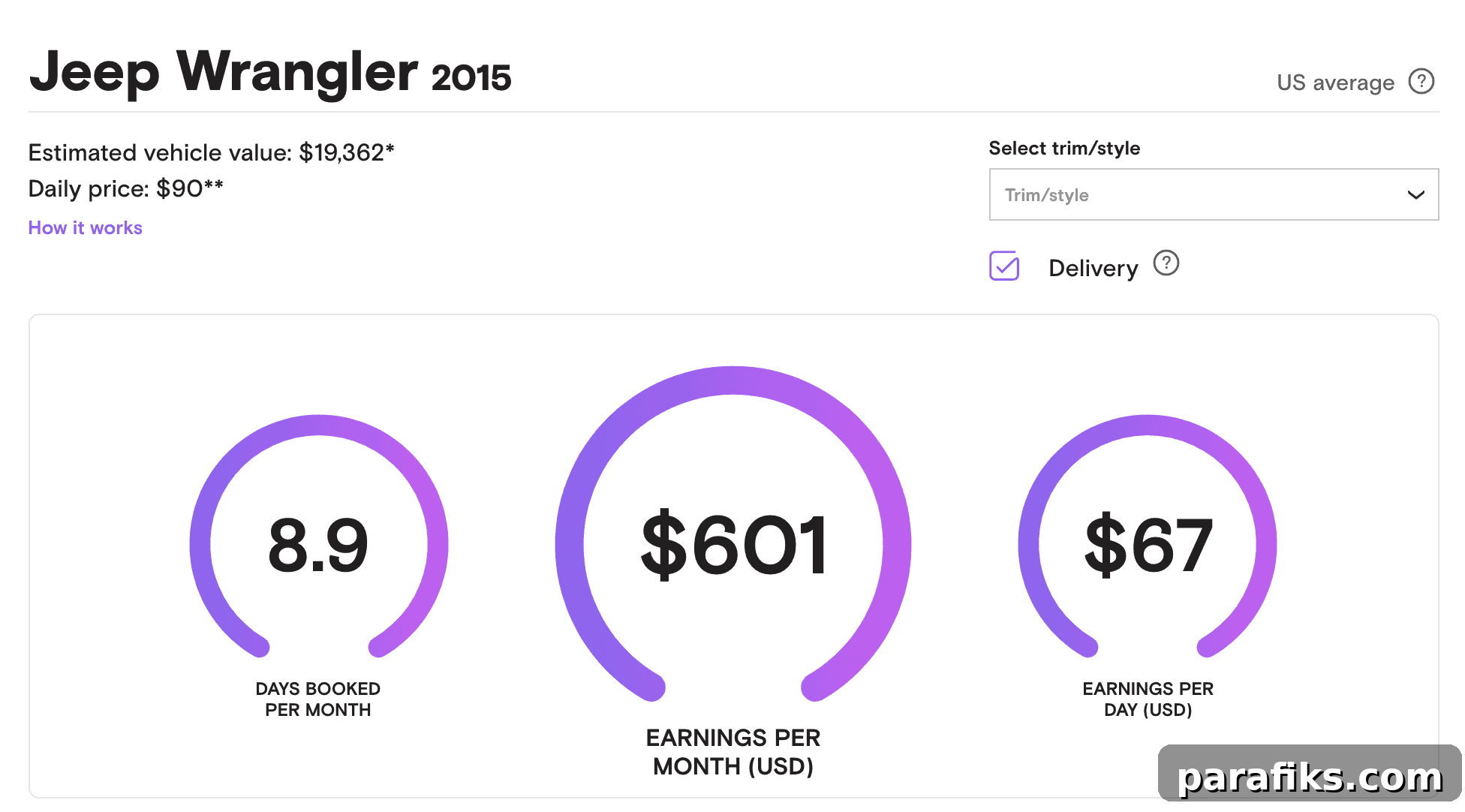
Turo provides an earnings estimator called the Carculator to help hosts gauge potential income. Enter your vehicle’s year, make, model, and your location to see an estimate. For example, a 2015 Jeep Wrangler might show a daily price of about $90 with an average of 8.9 booked days per month, estimating roughly $600 monthly revenue.
You can let Turo use dynamic pricing, which adjusts rates based on vehicle value, seasonality, local demand, and other factors, or you can set a custom daily rate yourself. Your payout is typically between 65% and 85% of the trip price depending on the protection plan you choose; offering certain extras or having qualifying commercial rental insurance can increase your share up to 90%.
There are no monthly listing fees on Turo, so creating a listing is free.
How do you get paid on Turo?
Payouts are processed after each trip: hosts receive payment via direct deposit or PayPal about 30 minutes after the guest returns the car. For trips longer than a week, Turo issues partial weekly payments during the rental period.
If you need reimbursement from a guest for things like refueling or excessive cleaning, Turo’s online reimbursement tool lets you request and receive full reimbursement for eligible charges.
What kinds of cars can be listed on Turo?
Turo accepts a wide variety of passenger vehicles — sedans, SUVs, hybrids, electrics, exotics, classics, and vans are all commonly listed. With hundreds of makes and models on the marketplace, hosts can typically list gas, diesel, hybrid, or electric cars. Motorcycles and RVs are not allowed on the platform.
What if my car is damaged while rented?
Concerns about damage are natural. Turo screens guests before bookings and provides liability coverage up to $1 million in qualifying regions. Hosts can also select physical damage protection for their vehicle. In addition, many trips include 24/7 roadside assistance and customer support in the U.S. and Canada. Protection levels and coverage terms vary, so review the available protection plans before listing.
How do I get started on Turo?
Becoming a host begins with creating an account and listing your vehicle. Hosts describe the car, add clear, high-quality photos, and publish the free listing. When a guest requests a booking, you’ll receive a notification and can accept or decline. If you accept, meet the guest, verify their license, walk the vehicle to document condition, note fuel level and mileage, and hand over the keys. At trip end, inspect the vehicle, complete any checkout steps, and collect your payout.
That’s essentially the whole process — it’s straightforward and designed to be easy for new hosts.
Where do you meet the guest?
You can choose how to handle handoffs. Common options include delivering the car to places convenient for guests, such as hotels or airports, or having guests pick up the vehicle at a mutually convenient location. In certain cities, Turo offers keyless access options (like Turo Go) that allow approved guests to locate and unlock cars via the Turo app, enabling contactless handoffs.
Are you considering listing your car on Turo? Why or why not?