
Today’s guest post is from Janeen Blake of Love. Eat. Travel. Repeat, who retired from corporate life at 42 and relocated with her family to Portugal. Here’s her story.
I finished law school carrying $230,000 in student loans and took a job I felt I had to be grateful for but secretly loathed. Sixteen years later, I reached financial independence, retired from corporate life at 42, and moved my family to Portugal.
You might be wondering how I climbed out of that debt and into early retirement. It wasn’t sudden or easy. It was the result of steady, repeatable steps anyone can take to pursue financial freedom well before the traditional retirement age.
Below I describe the investing foundation that made early retirement possible, the multi-six-figure Etsy side hustle that accelerated the process, and the mindset that kept me from undoing all the progress during hard moments.
The Life I Built Was Making Me Miserable
I graduated from law school in 2009 during the financial crisis. I had a role in Big Law and I was relieved to have a job when so many were losing theirs—but I was miserable. From the outside, Big Law looked like success: salary, prestige, and a clear path. From the inside it meant relentless 12-hour days where billing trumped self-care.
The culture tolerated mistreatment if the person generating revenue justified it. You learned to absorb stress, keep clients happy, and not make waves. It felt like an exaggerated version of The Devil Wears Prada—only with worse clothes and far less glamour.
After my first year, I realized I couldn’t endure four more decades of that life. So I researched relentlessly, reading books, blogs, and anything I could find on escaping the rat race and paying down debt quickly. One book that shaped my thinking was J.L. Collins’ The Simple Path to Wealth, which I still recommend as a clear introduction to investing.
Finding FIRE and Forging a Path
I discovered the F.I.R.E. movement—Financial Independence, Retire Early. The idea is simple: invest consistently in low-cost index funds and build a portfolio equal to roughly 25 times your annual expenses. Using the 4% rule, that portfolio can typically support annual withdrawals adjusted for inflation without depleting principal over time.
Having a concrete F.I.R.E. number shifted everything for me. It meant I could aim to replace my paycheck without depending on an employer. Within six years I moved from Big Law into an in-house counsel role that gave me back mental space and a healthier work environment, but I still wanted complete freedom.
Here’s the step-by-step approach I followed over 16 years to reach my F.I.R.E. number and how you can apply the same principles.
Build an Emergency Fund First
I needed more than the typical three to six months of expenses. For peace of mind I kept 12 months of living costs in a high-yield savings account. The monthly interest covered my children’s education savings contributions, effectively letting my savings help fund their future.
If your cash is earning nothing in a checking account, move it to a better yield so that your emergency fund is actually working for you.
Pay Down Debt While You Invest
I didn’t subscribe to the “debt first, then invest” rule. I wanted compound returns working for me as soon as possible, so I simultaneously attacked high-interest debts and invested regularly. I focused on loans with the worst interest terms first while maintaining consistent market contributions.
Understanding how much of a payment went to interest versus principal changed my attitude. Learning that some loans would cost nearly twice the principal in interest made me angry—and motivated. I allocated bonuses and extra cash toward both debt reduction and investments.
Invest Consistently and Leave It Alone
I invested primarily in broad index funds—diversified baskets of stocks that track major segments of the market. The strategy: buy the market, hold it, add regularly, and resist short-term panic. Historically, staying invested over any 10-year span has proven rewarding for patient investors.
If investing intimidates you, find a simple, evidence-based guide and stick with a low-cost approach that minimizes turnover and fees.
Automate 401(k) Contributions and Capture Employer Match
Automating retirement contributions and claiming every dollar of employer match was one of my highest-return decisions. I set it and mostly forgot it. Even after I stopped contributing, my 401(k) reached “Coast FIRE” status—meaning it can grow on its own to a substantial sum by retirement age due to compounding.
Using a compound interest calculator to model future growth helped make the long-term benefits tangible and less intimidating.
Keep Your Lifestyle in Check as Income Grows
As my income increased, I resisted lifestyle inflation. I continued to travel and enjoy life, but I tracked spending, debt repayment, and investments carefully. Knowing my F.I.R.E. number made it easier to choose long-term freedom over short-term status symbols like a bigger house or a luxury car.
The hard part isn’t the individual steps; it’s doing them consistently long enough for compounding to take effect.
Start a Side Hustle
To speed up the timeline I launched an Etsy print-on-demand shop. The model: create designs, have a print provider produce and ship items on demand, and keep the margin without holding inventory or handling fulfillment. This business is portable—perfect for a family planning to live abroad.
Every dollar of profit went straight into investments. The portability and passive nature of print-on-demand made moving overseas feasible when we decided to relocate to Portugal in 2024.
Etsy Print-on-Demand Tips for Early Growth
You don’t need to be an expert designer. Tools like Canva and AI assistants simplify design, mockups, and research. Here are the practical lessons I learned:
1. Design for search, not for personal taste
New sellers often create things they find cute but that nobody is searching for. Etsy functions like a search engine—your job is to understand and match buyers’ search intent, not your own aesthetic preferences.
2. Use keyword research before designing
Start with tools that identify keywords with real search volume and confirm those keywords are converting into sales. This reduces wasted effort and prioritizes designs with proven demand.
3. Don’t niche down before you have data
Initially, diversify across related niches. Let early metrics—views, favorites, and sales—reveal where demand exists. After several months, double down on what’s working instead of guessing your perfect niche from day one.
4. Celebrate non-sales progress
Not all progress is a sale. Milestones like consistent positive reviews, growing views, or improved keyword rankings are meaningful indicators that your skills and audience are building. Those wins compound into revenue over time.
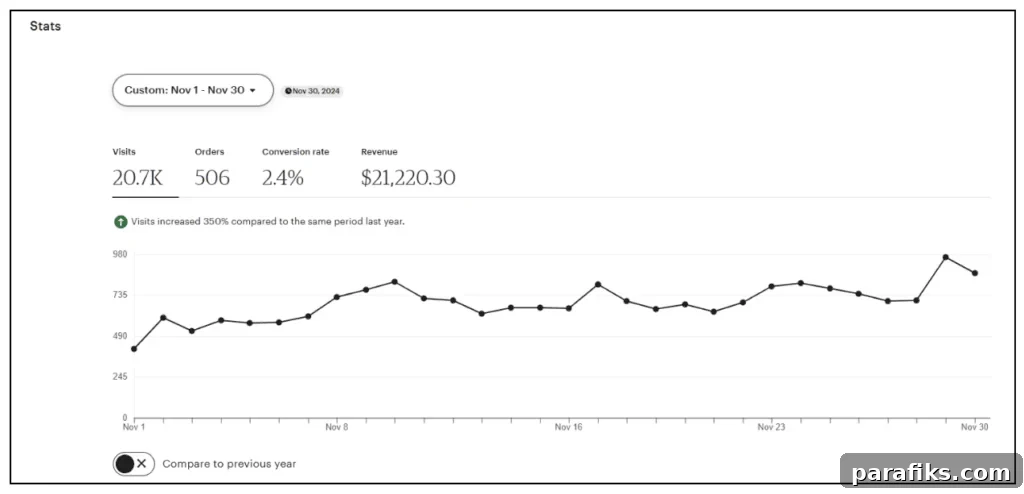
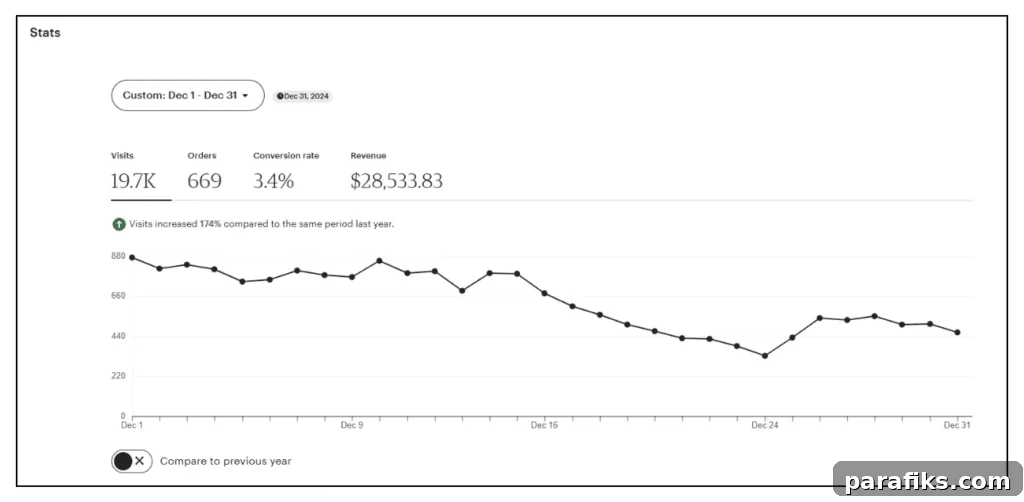
There were slow months early on that felt discouraging, but they taught skills that later made substantial seasonal income possible. For example, strong Q4 results significantly accelerated my path and vindicated the earlier grind.
What I Want You to Take From This
Compound interest and compound effort operate on the same principle: consistent, small actions produce outsized results over time. I started investing in index funds in my mid-twenties with modest amounts. I didn’t panic during market downturns or chase fads. Fifteen years of steady investing became the backbone of my early retirement.
The Etsy shop followed a similar arc. Early slow months taught lessons that turned into predictable seasonal income by year two. The sellers who quit typically do so just before their efforts begin compounding into meaningful revenue.
Paying off $230,000 in student loans felt impossible at first, but steady progress month after month made it happen. I completed that goal in September 2023, before the end of the federal loan pause, and I used the same disciplined approach to build investments and a side business that financed our move abroad.
This path is neither fast nor a gimmick. Markets will fall, side hustles will stall, and there will be temptations to abandon your plan. Your objective is to do neither: stay the course, trust the math, and keep building.
The Last Day
After 16 years of consistent investing and scaling my Etsy shop, I reached F.I.R.E. and left my corporate role on October 3, 2025. The day felt like a beginning rather than an ending. My parents joined me when I closed my work laptop for the last time, and my family celebrated that evening. It was a milestone I had been working toward for many years.
Now I wake up and choose how to spend the day. I sometimes work on the membership community or the Etsy shop; other days my husband and I explore Lisbon’s food scene. That freedom—the ability to choose each day—is the life I bought one index fund contribution and one Etsy sale at a time.
What would you do differently if you knew you could retire from your career years earlier than expected?
Author Bio: Janeen Blake is a former corporate lawyer, a multi-six-figure Etsy seller, and the founder of Love. Eat. Travel. Repeat. After using index fund investing and an Etsy side hustle to retire from corporate life at 42, she and her family moved to Portugal. On her blog she writes about Etsy print-on-demand strategy and life abroad.
Related content:
- How I Retired at Age 30 with $500,000
- 12 Passive Income Ideas That Will Let You Enjoy Life More
- How We Travel Full-Time With 4 Kids and 2 Dogs
- How Our Family of 5 Went from House Poor to Debt Free in 3 Years
- How I Reached Financial Independence at 25 With a $1,000,000 Net Worth