Have you wanted to start investing but kept postponing it because you didn’t know where to begin? Maybe you opened an investing app, saw too many choices, and thought, “How do I pick?”
Investing can feel overwhelming at first: stocks, ETFs, retirement accounts, risk levels, fees, and more. Even people who already invest sometimes worry if they’re doing it the right way. Are you investing enough? Is your portfolio diversified? Are you taking on too much risk? What should you do when the market drops?
This Stash review explains how the Stash investing app works, what it costs, its main features, the pros and cons, and who it’s best for.
Stash Review
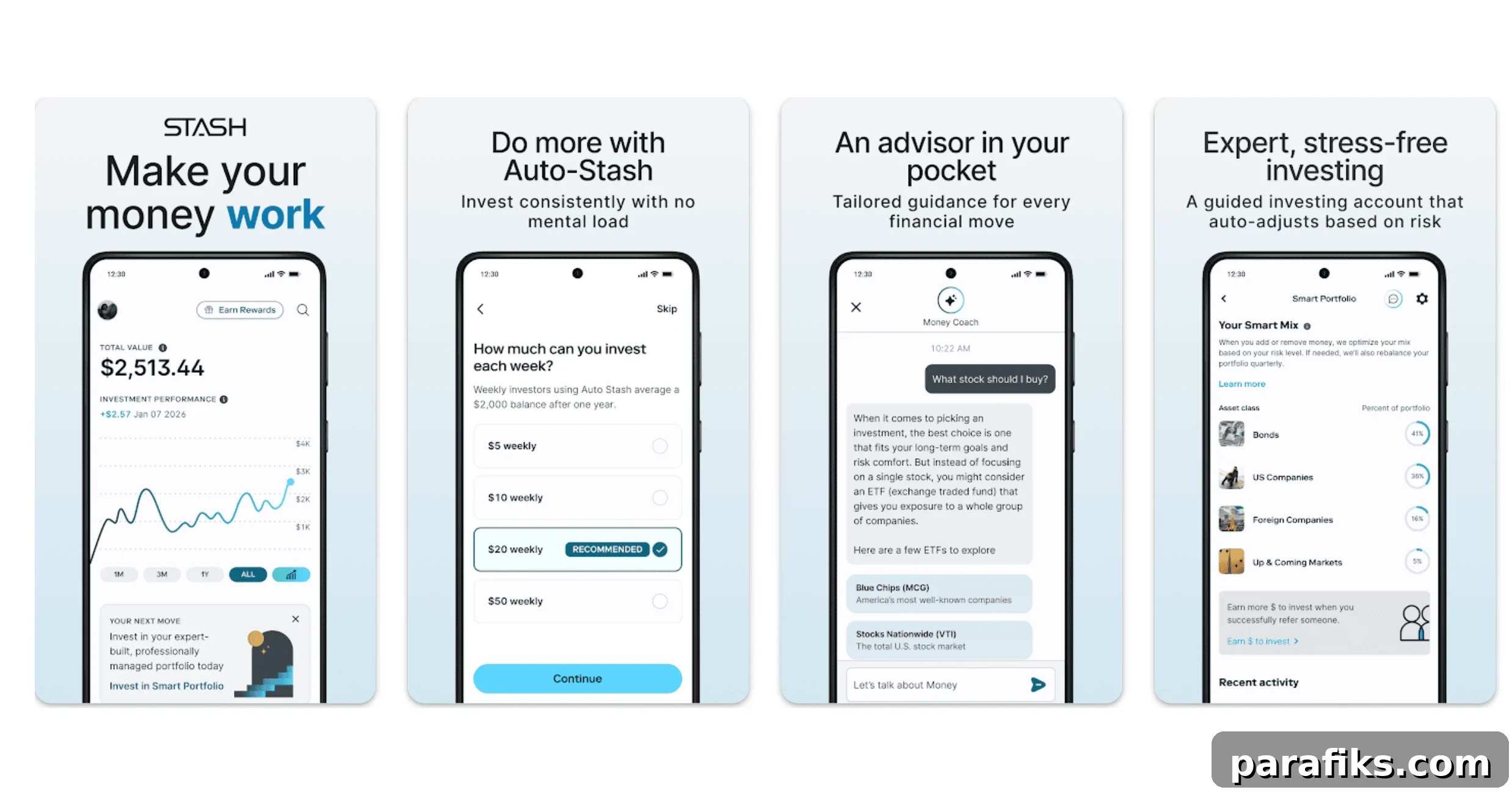
Stash is an investing and money app aimed at people who want guidance as they learn to invest. It combines brokerage features, managed portfolios, retirement accounts, custodial accounts, banking tools and in-app guidance to help users build long-term investing habits.
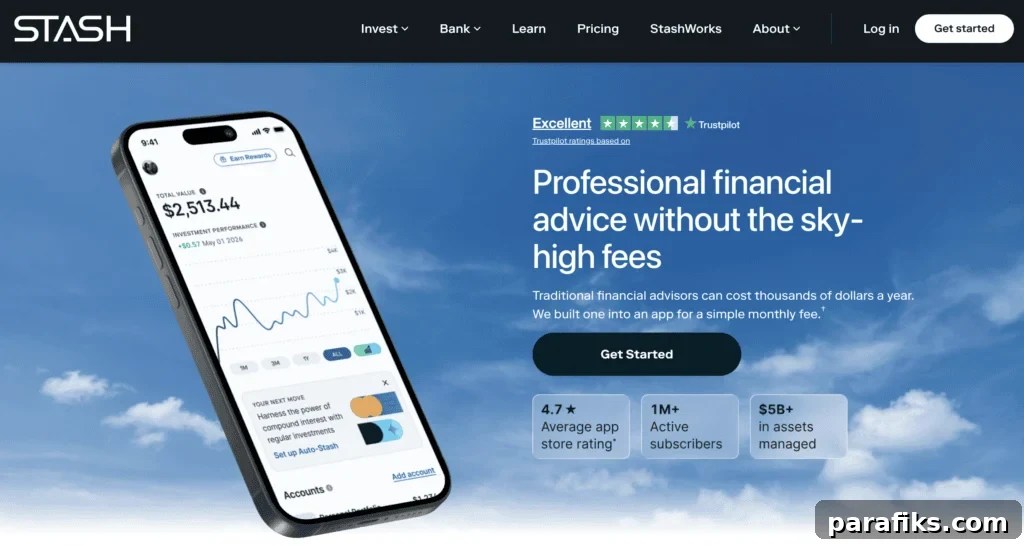
What is Stash?
Stash launched in 2015 as an app for new and intermediate investors who want more help than a simple trading platform. It offers:
- Individual stocks and ETFs
- Fractional shares so you can invest small amounts
- Smart Portfolio — a managed portfolio option
- Automatic recurring investments
- Traditional and Roth IRAs
- Custodial accounts for children
- In-app guidance and an AI Money Coach
- A debit card that earns stock rewards
Stash is a registered investment advisor with a fiduciary duty to act in clients’ best interests. It’s designed to close the gap between self-directed investing and working with a paid financial advisor.
How Stash works
When you sign up, Stash asks about your goals, timeline, finances, and comfort with risk. Based on your answers you can choose how involved you want to be:
- Pick individual stocks and ETFs yourself
- Use a managed Smart Portfolio
- Combine both approaches
Many users prefer a mix: a diversified managed portfolio for the bulk of their savings while selecting a few individual investments for their own interests. Stash aims to provide guidance without removing user control.
What you can invest in
Stash supports three main investment types:
- Individual stocks — buy shares in specific companies.
- Fractional shares — invest partial shares to start with smaller amounts.
- ETFs — funds that hold baskets of assets to help diversify.
Main Stash Features
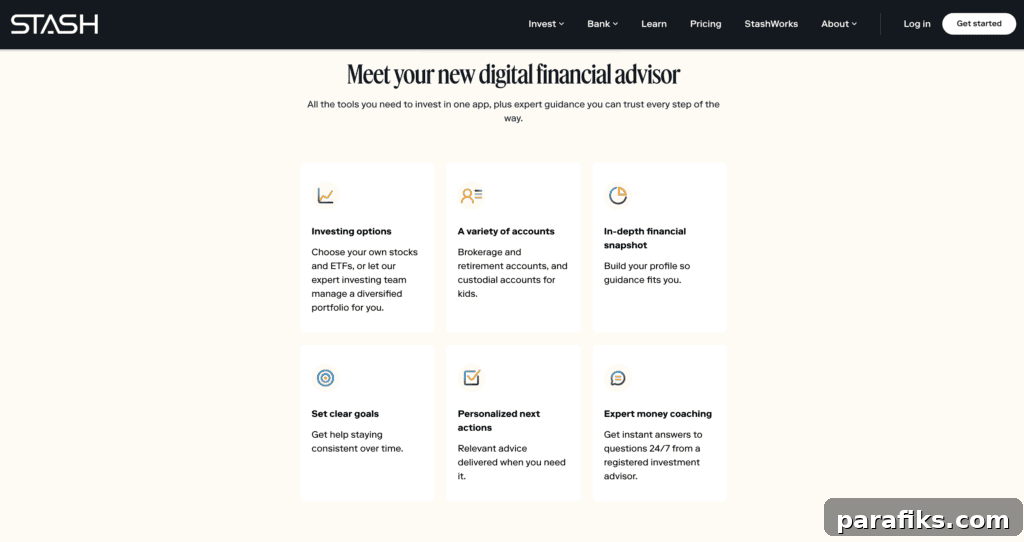
Stash includes many tools; consider which you’ll use so you don’t pay for features you don’t need. Key features include:
1. Personalized financial guidance
Stash provides guidance on whether you’re investing regularly, how diversified your portfolio is, how much risk you’re taking, and progress toward retirement. That guidance is the primary benefit for users who feel uncertain about investing.
2. AI Money Coach
The AI Money Coach answers common questions about investing, budgeting and retirement. It’s useful for quick help, but important decisions involving taxes, estate planning, or complex situations should also involve a qualified professional.
3. Automatic investing
Stash lets you schedule recurring contributions (weekly, biweekly, monthly), helping you build discipline and benefit from dollar-cost averaging. Start with small amounts you can sustain.
4. Retirement accounts
Stash offers both Traditional and Roth IRAs, with managed and self-directed options. Which IRA suits you depends on your income, tax situation, and long-term goals.
5. Custodial accounts
Custodial accounts let adults invest on behalf of children. Remember these funds legally become the child’s at the age of majority, which may have implications for financial aid and control of the assets.
6. Stock-Back® Card
A debit card that earns stock rewards on qualifying purchases. Rewards are delivered as fractional shares held in your investment account.
How much does Stash cost?
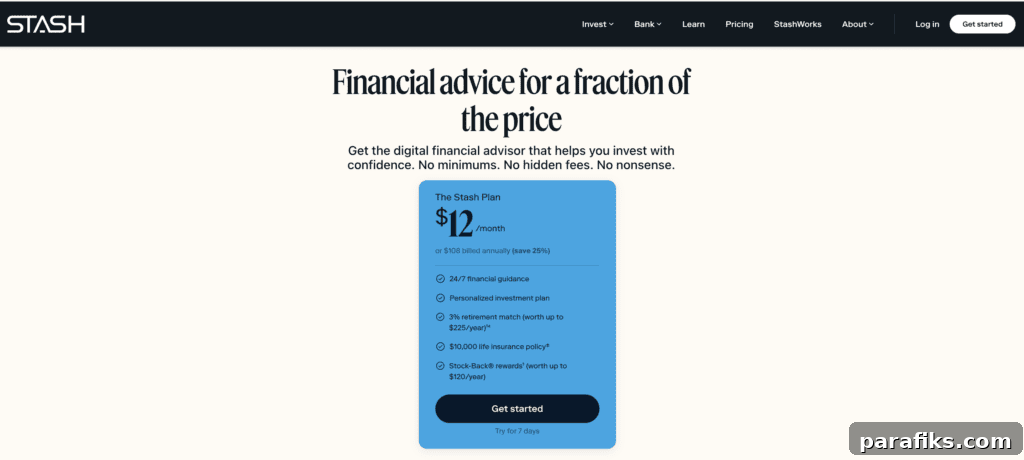
Stash offers a single subscription plan, The Stash Plan, priced at $12 per month or $108 per year ($9/month equivalent paid annually). The subscription covers a personal investment account, retirement account, Smart Portfolio, custodial accounts, guidance, the AI Money Coach, Stock-Back rewards, banking tools and more.
Additional costs may include a 0.25% annual management fee on certain managed account balances and expense ratios for underlying funds. For small account balances, the monthly fee can represent a large percentage of investments, so analyze whether the features justify the cost for your situation.
Pros and Cons
Pros
- Designed for beginners who feel overwhelmed
- Choice between managed portfolios and self-directed investing
- Focus on long-term investing and regular contributions
- Automatic investing makes consistency easier
- Multiple tools in one app (investing, retirement, custodial, banking)
Cons
- $12 monthly subscription may be costly relative to small balances
- Additional management fee of 0.25% can apply to managed accounts
- Some users may not need the breadth of features Stash provides
Who is Stash best for?
Stash is a solid option for beginners who want guidance, people who feel overwhelmed by investing, those who want a managed portfolio while still picking a few investments, long-term investors looking to automate contributions, parents opening custodial accounts, and anyone who values having retirement and personal investing tools in one place.
If you already understand investing and only want a low-cost brokerage without a monthly subscription, other platforms might be more suitable.
Frequently Asked Questions
Is Stash good for beginners?
Yes—Stash is geared toward beginners who want guidance, automated investing, and simple educational tools alongside investment options.
Can you lose money with Stash?
Yes. All investing carries risk. Investments can rise or fall in value and losses are possible.
Does Stash offer retirement accounts?
Yes. Stash provides both Traditional and Roth IRAs with managed and self-directed options.
Can you invest for a child?
Yes. Stash offers custodial investment accounts managed by an adult until the child reaches the legal age in their state.
Can you cancel Stash?
Yes. Canceling the subscription and closing or transferring investment accounts are separate processes. Review account transfer rules, potential fees, and tax implications before canceling.
Stash Review: Is Stash Worth It?
Stash can be worth the cost for someone who values guidance, wants managed portfolios alongside the ability to choose individual investments, and will use multiple features like retirement and custodial accounts. Its focus on long-term habits, automated contributions, and in-app support helps many users who feel stuck or uncertain about investing.
However, the $12 monthly subscription and potential additional management fees make Stash less attractive for investors with very small balances or those who only need a basic brokerage account. Evaluate how much you plan to invest, which features you will use, and whether the total fees fit your financial goals before signing up.
Disclosures:
Stash Banking services are provided by Stride Bank, N.A., Member FDIC. Investment products and services are provided by Stash Investments LLC and are not FDIC insured, not bank guaranteed, and may lose value. Smart Portfolios and Stash-Managed IRAs may be subject to an additional 0.25% management fee on qualifying balances. The AI Money Coach provides general guidance and may be incomplete; consult a qualified professional for complex financial, tax or legal matters.
Recommended reading:
- Empower Review: Is This the Best Free Financial Planning Tool?
- How To Save For Retirement – Answers To 13 Of The Most Common Questions
- 16 Best Passive Income Apps To Make More Money
- How To Create a Realistic Financial Plan (That You’ll Actually Stick To)