
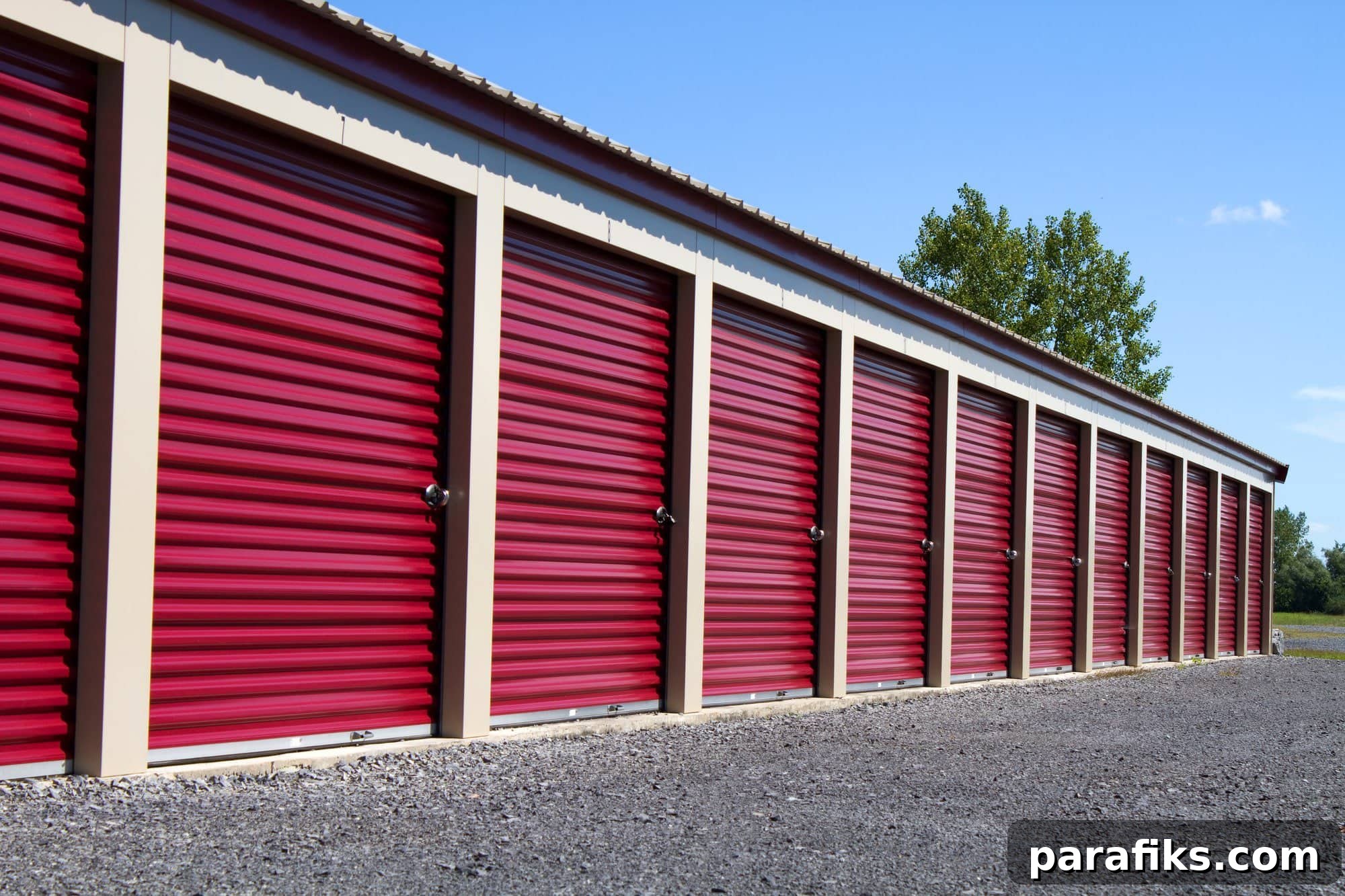
The average home in 1950 was under 1,000 square feet. Today, the U.S. Census Bureau reports the average home size has grown to around 2,600 square feet. Despite larger homes, nearly 10% of households rent a self-storage unit, according to SpareFoot.
That’s a lot of storage units—and a lot of money spent on items people rarely use.
Just over a year ago, in July 2016, we emptied our storage unit. We had been paying $185 a month for a small space that mainly held photo albums and sentimental items. Although we only rented the unit for about six months, we still spent roughly $1,110 in storage fees during that time.
Spending that much on things we knew we wouldn’t need for years felt wasteful. The storage unit also came with other downsides:
- Paying $185 a month to keep unused items tucked away felt like throwing money away.
- The rental contract actually advised against storing photo albums in that unit. Finding that out made me worry I was risking the hundreds of photo albums my father left me.
- The facility was located in a town where we didn’t know anyone and where we weren’t likely to return often, so accessing our things would be inconvenient.
We decided to rent a moving truck and move everything to Wes’s parents’ attic. They benefited too—we gave them the expensive, newer furniture we’d bought right before we fell in love with RV living. Now the only things in storage are photo albums and childhood mementos.
There are legitimate reasons to use a storage unit—such as being between homes—but for many people, renting one is a costly habit that’s often unnecessary. If you’re considering a storage unit, read tips on downsizing and making the most of your space; it’s possible to live with far less. For example, I live full-time in an RV with much less storage than a conventional house.
You don’t need all of that stuff.
Professional organizer Regina Lark estimates that the average U.S. household contains about 300,000 items. That sounds extreme, but when you add up plates, utensils, clothing, books, toys, and other possessions, it’s easy to see how belongings multiply.
Lark also notes that U.S. children represent under 4% of the global child population but own roughly 47% of the world’s toys and children’s books. That disparity illustrates how much excess can accumulate in households.
With average home sizes nearly tripling to 2,600 square feet in recent decades, it’s surprising many people still rely on off-site storage. The reality is most households don’t need all the possessions they keep.
You’ll probably never use the things you’re storing.
Once items are tucked into self-storage, people often don’t return until they cancel the unit—sometimes not for years. In extreme cases, owners forget to pay, the facility auctions the contents after decades, and the stored items are lost or sold. That’s a huge waste of money if you never use what you stored.
If belongings are out of sight and out of reach, you’re unlikely to use them. Before renting storage, consider how often you’ll realistically access those items.
Many people store things they don’t even want.
Surprisingly, many people stash items they know they don’t need or want. Charging yourself a monthly fee to hold unwanted things doesn’t make financial sense.
Basic non-climate-controlled units typically range from about $50 to $200 per month. Climate-controlled spaces cost more. If you’re paying for storage, consider whether the expense is justified by the value of what’s inside.
It’s probably not worth it to store whatever you’re storing.
At $100 a month, storing items adds up: that’s $6,000 over five years. Even one year costs $1,200. Ask yourself whether your belongings are worth that long-term expense.
If you’re storing items to “hold onto” them, evaluate their actual value and the opportunity cost of paying storage fees instead of using or selling those things.
Storing stuff encourages more accumulation.
Having off-site storage can encourage hoarding: because there’s extra space to park possessions, people often keep buying and saving more. Instead of relying on storage, try making do with the space you already have and thoughtfully considering each new purchase.
You probably have time to donate or sell your items.
Many people use storage because they feel too busy to sort, donate, or sell unwanted items. In reality, the time it takes to move items into storage could often be spent donating or selling them, which benefits others and frees up money and mental space.
Someone else might find great value in the things you no longer need, and you could help someone in need while recouping some of the cost.
Do you have a storage unit? Why or why not? How much does your storage unit cost?