Hello, I’m Ariel — Michelle’s sister-in-law and editor. I’ve been contributing to and learning from Michelle’s blog for over two years. If you’ve read any posts I’ve written here, you know I’m careful with both saving and spending. I have a degree in English Literature and work as an editor, a preschool teacher, and a knitting instructor.
Recently my husband and I discovered we must find a new home and move. I won’t go into every detail, but the short version is a retail development is planned directly where we live.
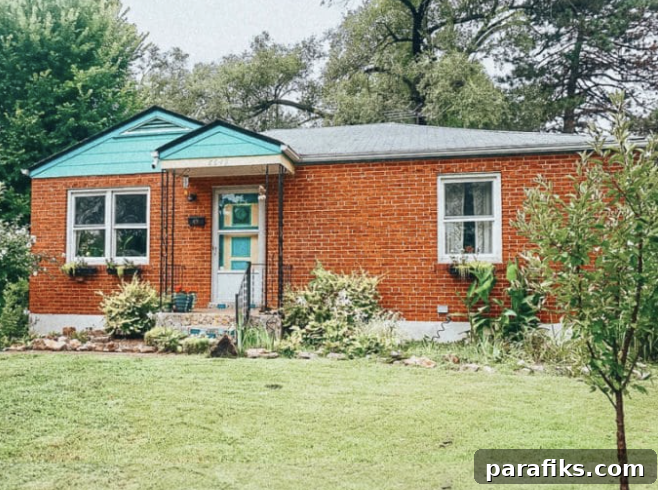
We bought our house when we were 19 and 20 with very limited buying power. Options felt scarce, and the moment we stepped into our small 900 sq ft. brick bungalow we fell in love. It felt like the dream house we never knew we wanted, and for a long time we were sure we would never leave.
Related content:
- 20 Ways I Saved a 20% Deposit To Purchase My First Investment Property At 20
- 11 Tips For Renovating An Abandoned 115 Year Old House On A Budget
- How I Paid Off My $400,000 Mortgage In 7.5 Years, Before I Was 32
- 6 Important Questions To Ask Yourself Before Buying A Home
Fifteen years later our family has grown: three kids, two dogs, two cats, a snake, and some fish. That may sound chaotic for a small house that reflects 1950s average size, but it actually suits us well.
Now that we’re moving, we’re rethinking what we want in our next — and hopefully forever — home. Financially we’re in a much stronger place: our current house is paid off, we’ve built an emergency fund and savings, our credit scores are excellent, and we’re free of credit card debt. Many of those milestones were reached because we chose to live in a smaller home and not maximize our income on housing.
We’ve been house-hunting for months and seriously considered buying something much larger and pushing our budget. The idea of spreading out in extra space was tempting — 900 sq ft. sometimes feels tight — but this summer changed our perspective. My husband, a teacher, was off for the summer and I have flexible, remote-friendly work. We spent the season traveling and enjoying time outdoors with friends, and it felt liberating. That experience made it clear we prefer a lifestyle of flexibility, travel, and lower housing costs rather than being burdened by a large mortgage, even if we could technically afford it.
Living in a smaller house isn’t for everyone, and it comes with trade-offs. But for us those trade-offs are worth it.
Find a lifestyle that works for you.
Buying a home is one of the biggest financial decisions you’ll make and will affect your finances for years. After our summer epiphany, we decided we’d rather choose a home that supports travel and savings than one that maxes out our budget. Choosing a smaller home doesn’t mean we won’t keep growing our income — it simply means we prioritize stability and freedom now.
A smaller home offers immediate savings and reflects our personal values. Other families may prioritize a large farmhouse or a downtown condo — and that’s fine. If your goal is to maximize savings, downsize a little, or try living in something below the current average size, our experience might inspire you to consider staying small.
How to make living in a small house work — and why you should try it
Size matters.
This isn’t about tiny houses; it’s about living in a home that’s smaller than the modern average. Our 900 sq ft. bungalow would have been typical decades ago, while today new homes average far more square footage. Trends show many newly built homes include four or more bedrooms, even though most families have two to three children, which means extra, often underused rooms.

But, what about the children?
We have three kids and three bedrooms, so two of them share a room. It can be tense sometimes, but sharing a bedroom isn’t as limiting as it sounds. A bedroom’s primary role is a place to sleep; kids’ rooms often become storage and sleeping spaces as they grow and spend more time at school, with friends, and in activities. While separate bedrooms for each child are a reasonable preference, shared rooms can work well and teach children about sharing and cooperation.
More space, more stuff.
When we toured larger homes, I immediately thought about the additional furniture and decor we’d need. One house we considered had three living spaces compared to our current two; filling extra rooms is tempting, and over time the cost of furnishing and maintaining more square footage adds up. Even secondhand purchases accumulate, and replacements or upgrades introduce ongoing expenses. We joke that with kids and pets we “can’t have nice things,” which is another reason to avoid unnecessary space.
Organization, not minimalism.
We own a lot of stuff — toys, yarn, shoes, and a collection of mopeds. Living small doesn’t require strict minimalism. Instead, the key is organization: give everything a dedicated place, put things away, and find clever storage solutions. Know your limits: if you don’t have space for an item, don’t buy it. Declutter what you don’t use. Stores like IKEA can spark storage ideas; bookshelves with baskets, wall-mounted hooks, and under-bed bins help keep floors clear and rooms functional.
Savings abound in a smaller home.
Beyond mortgage payments, larger homes cost more to heat, cool, and maintain. Bigger roofs, longer walls, and more square footage mean higher costs for flooring, roofing, countertops, paint, and general repairs. The difference in upkeep can determine whether you actually complete desired renovations or choose lower-quality materials. A smaller home makes it easier to invest in higher-quality materials because the overall costs are lower, which often means fewer replacements and repairs in the long run.
Environmental responsibility.
Smaller homes use fewer resources. While solar panels, energy-efficient appliances, and rain barrels help, they’re more affordable to implement on a smaller footprint. Our past efficiency upgrades cost less because our house is smaller, multiplying the savings and reducing our environmental impact. Choosing less square footage is one practical step toward more sustainable living.
Basements don’t have to be off limits.
Many basements serve as storage for seasonal items, but they’re often underused. Our partially finished basement includes a TV room, bedroom, studio space, laundry, and storage, effectively doubling usable square footage. You can make incremental improvements — reroute water with French drains, add outlets, paint walls and floors, and use area rugs — to make basements more comfortable. When ready, larger projects like recessed lighting, egress windows, and built-ins can fully transform the space.
Are you thinking about trying a smaller house?
If you’re considering downsizing, your main concern is likely how to make everything fit. Start by evaluating how you use shared living spaces: living rooms, family rooms, and TV rooms. Identify what you actually use and what can be combined. Begin removing or consolidating items and see how the new layout works. If combining spaces and decluttering improves daily life, a smaller home might be the right choice for your next purchase.
What’s really next for us.
I can’t promise our next home will be exactly 900 sq ft, but finding something close to that size is a priority. After years in our first home, you learn which features are essential and which are optional. We’d like an extra bathroom, but adding one to a basement is feasible. We want a garage and hope for a yard as large as our current one. Ultimately the savings and lifestyle benefits of a smaller-than-average home outweigh the lost square footage for us.
How are you using your home to its fullest potential? Would you consider downsizing?