

Early retirement has become increasingly popular recently, and you’ve likely heard a lot about it.
From critiques like “Why I Hate the FIRE Movement,” to prominent voices like Mr. Money Mustache and many other blogs dedicated to Financial Independence, Retire Early (FIRE), the topic is everywhere.
I’m a fan of the movement. Still, many people are confused or skeptical about what early retirement actually means and whether it’s achievable.
If you’re new to the concept, FIRE stands for Financial Independence, Retire Early. It means different things to different people, but at its core it’s about saving and investing enough so your passive income or savings cover your expenses. With that financial independence, you can decide whether to keep working, scale back, or stop altogether.
For most, “retirement” is something people do later in life after decades at a full-time job. Many also aren’t saving enough for the traditional retirement age of 65–67. As employer pensions have faded, personal savings and investing become increasingly important. Surveys show alarming shortfalls: a large portion of Americans have under $10,000 saved, and many have nothing saved at all.
Despite the obvious need for better retirement saving, early retirees often face heavy criticism. When I read articles about people who have retired early, I always scan the comments to see public reaction—and I’m frequently surprised by negative responses. Critics argue early retirees won’t be prepared for emergencies or that early retirement would be unbearably boring.
But imagine working hard to save, investing wisely, and gaining the freedom to leave a job that doesn’t fit your life so you can pursue travel, hobbies, part-time work, family time, or simply more meaningful daily routines. That’s the appeal: choice.
Personally, I’ve saved enough to retire if I wanted. I earn a good income, but I also save a big portion and avoid wasteful spending. I enjoy blogging and plan to continue, but knowing I can stop if circumstances change gives me peace of mind. Being prepared for what-ifs—a medical emergency, industry shifts, or a change in personal priorities—is empowering.
Early retirement is fundamentally about freedom and flexibility. It can occur at any age if you plan for it: some well-known cases involve people retiring in their 30s, but retiring at 60 or 62 ahead of schedule is also an impressive accomplishment. The essence is striving for better financial health: reducing debt, living below your means, and investing for the future.
Some stories of early retirement are extreme—downsizing dramatically, selling possessions, or embracing a nomadic lifestyle—but that’s not required. Many early-retirement paths are moderate and realistic. The core steps are the same for most people: eliminate high-interest debt, reduce expenses, save a significant share of income, and invest consistently.
With realistic budgeting and planning, many people can prepare for an early retirement while maintaining a normal life. Setting a timeline depends on understanding your income, realistic expenses, and how aggressively you want to save.
How is early retirement possible?
How to calculate the amount you will need to retire early
Planning to retire early requires careful attention to your expenses. Most early retirees start by creating a detailed budget so they clearly understand their current and future spending needs. They also consider potential emergencies and what-if scenarios—no calculation will be exact, but realistic planning and contingency funds matter.
Many skeptics underestimate how investing and compound interest help money grow over time. Early retirees typically don’t just multiply annual expenses by a fixed number and hope for the best. They understand investments, maintain diversification, and prepare back-up plans.
The general approach is to save and invest enough so that, after retirement, you only withdraw a designated percentage of your portfolio annually. With prudent investing, those assets can continue to grow and cover living costs and emergencies.
Before dismissing early retirement, evaluate your own preparedness: how much you save, where you invest, and how flexible your spending can be.
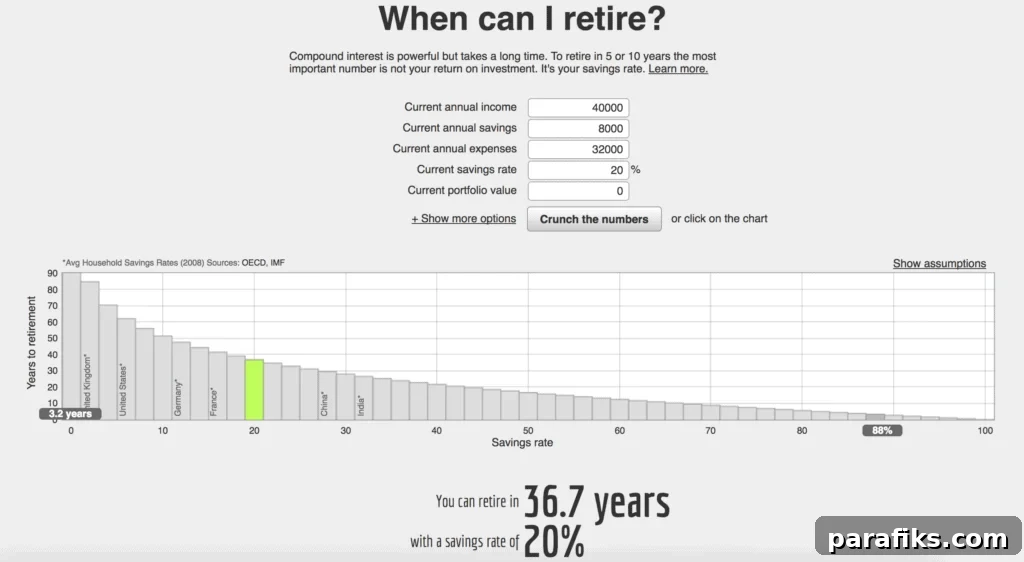
To illustrate the power of saving, consider approximate examples based on different savings rates:
- With a 1% savings rate, it may take nearly a century of working to reach retirement.
- At 5% saved, retiring could take several decades—roughly 66 years in an example scenario.
- Saving 20% of income shortens that time substantially—to a few decades rather than many.
- At a 50% savings rate, the time until retirement can drop to under twenty years.
- With a 75% savings rate, retirement can be reachable within a handful of years.
The takeaway: the higher your savings rate, the sooner you can retire. Early retirees typically cut debt and spend less than they earn so they can save aggressively.
You’ll find plenty to do in early retirement
One common concern is boredom. Many people think they wouldn’t know what to do with themselves if they stopped working early.
That worry overlooks a key point: most people pursuing early retirement aren’t planning to do nothing. They’re often passionate, driven, and eager to spend more time on activities that matter—volunteering, pursuing creative projects, traveling, starting a small business, or continuing part-time work. Early retirement offers the freedom to choose how to fill your days.
For many, retirement means more time for exercise, learning a new language, long hikes, reading, or spending quality time with friends and family. Some early retirees continue to work in some capacity because it brings fulfillment. The average early retiree I know leads an active and meaningful life.
You can still enjoy life while saving for early retirement
One of the hardest things for others to accept is that saving for early retirement doesn’t require total deprivation. You don’t need to live on instant noodles forever. Frugal living can still include travel, hobbies, social time, and memorable experiences—many of the best things in life are inexpensive or free: nature, relationships, laughter, and time well spent.
Being intentional about spending—prioritizing what brings value and cutting what doesn’t—lets you save substantially while maintaining an enjoyable life now.
When do you want to retire, and when will you realistically be able to retire? What are your thoughts on early retirement?