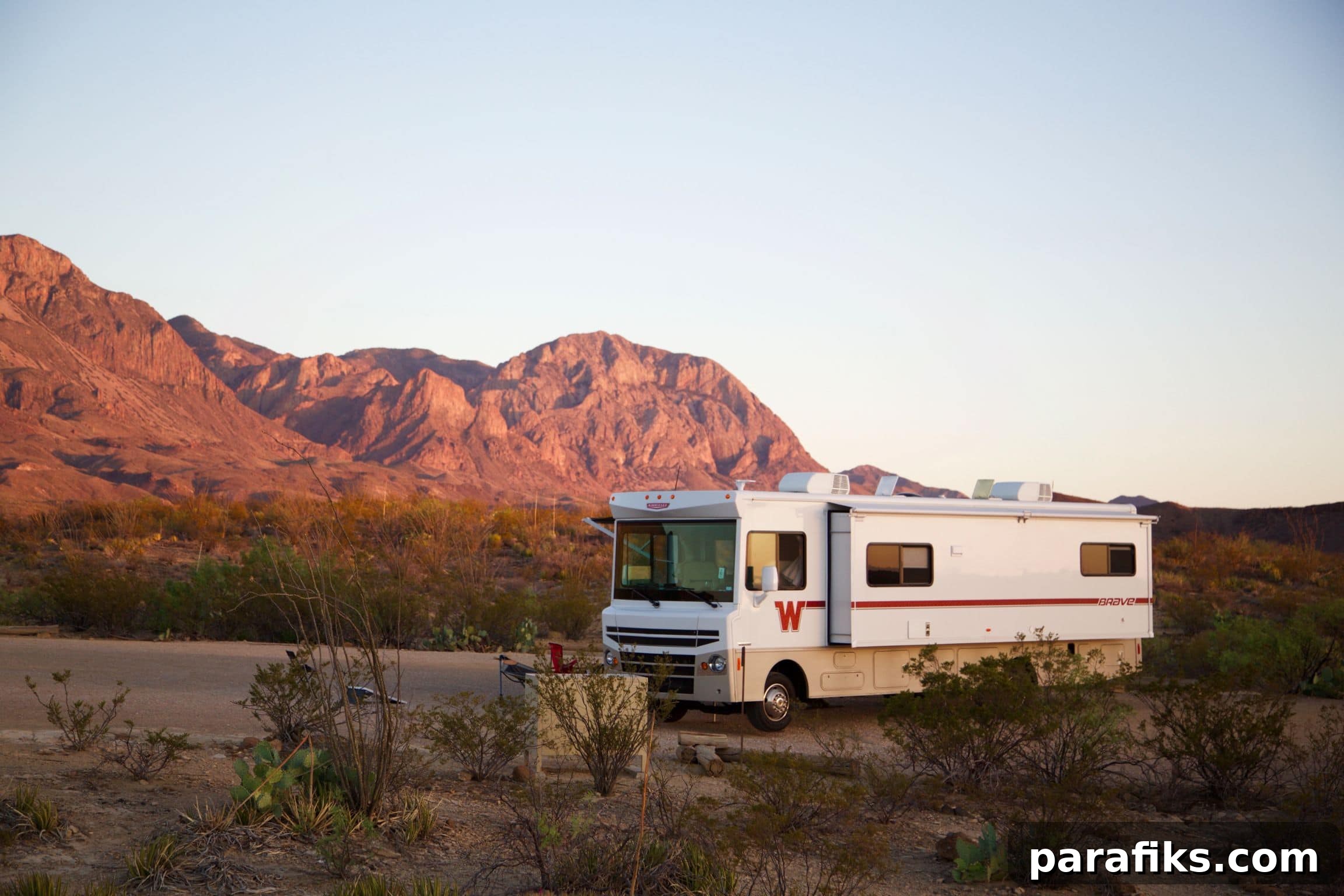
Today’s guest post is by Alyssa Padgett, author of RVing Across America. Four days after their 2014 wedding, Alyssa and her husband Heath set out on an unconventional honeymoon to visit all fifty states. They’ve been traveling ever since and now explore the world with their two young children. Find them at HeathandAlyssa.com.
When my husband and I planned our honeymoon, we wanted to begin married life with an adventure. I proposed visiting all 50 states within a year — a plan that sounds extravagant until you learn we were broke college graduates planning to quit our jobs and hit the road. This was before remote work became common, so we had to figure out how to make it work financially.
Heath jokingly suggested sleeping in the backseat to save money. I quickly pointed out that could accelerate a divorce. After some research, we discovered the most economical way to visit all 50 states would be to buy an RV and spend a year traveling. We knew little about costs, earning money on the road, or RVs in general, but were determined to start our life together by doing something bold.
RVing around the country brought us stunning scenery and unforgettable experiences, and it turned out to be cheaper than we expected—sometimes even less expensive than apartment living. Below I’ll outline the core travel costs to plan for, and share practical tips to save and earn money while traveling.
Basic Full-Time Travel Costs to Consider
Many travel expenses mirror what you already pay at home, which makes estimating your road budget easier. Here are the major categories and realistic figures based on our trip.
Gas
Fuel is often the largest expense for RV travelers, especially with long distances and larger vehicles. RV fuel efficiency varies, but covering all fifty states requires a lot of gas. On our trip we drove roughly 20,000 miles across the contiguous U.S. and spent about $7,000 on fuel—averaging roughly $1,000 per month. Our first month was higher—about $1,700—because we drove up California’s coast where prices were higher. Budget at least $800/month if you plan to visit every state within a year; traveling more slowly will reduce fuel costs substantially.
Lodging Fees
Lodging can be a major line item if you often stay in RV parks. Average RV park fees are around $50 per night, while campgrounds at state and national parks average about $25 per night. Most full-time RVers don’t pay nightly fees every night; many find free or discounted options to lower lodging costs.
Groceries and Eating Out
Traveling in an RV is often cheaper than other travel styles because you have a kitchen with you. We spent about $500–$600 per month on groceries and dining out combined by cooking regularly and grilling at campsites. Grocery store loyalty programs and simple tactics—like politely asking clerks to scan a store card when you’re just passing through—can yield discounts and help keep food costs down.
Insurances
Health, auto, RV, and travel insurance should all be considered. RV insurance can add a notable expense: we paid about $600 per year for our used RV, while new RVs might cost $2,000 or more annually. Bundling RV and auto insurance can save money. Also ensure your policy includes roadside assistance—this proved essential when we had a flat tire in the California desert.
Vehicle Payments (if applicable)
If you finance your RV or tow vehicle, include monthly payments in your budget. Payments vary widely depending on the vehicle and loan terms—commonly $400–$1,000 per month. We bought a 20-year-old motorhome with cash from Craigslist, which eliminated monthly payments and interest while traveling.
Phone and Internet
Reliable connectivity is a priority for navigation, planning, and work. We used two Verizon phones and an AT&T unlimited data hotspot, totaling about $300 per month. Budget roughly $100 per month for mobile internet and expect to pay several hundred dollars upfront for equipment if you choose satellite options like Starlink, which has a higher one-time hardware cost but service around $100 per month.
Fun
Plan for activities and experiences. Our “fun” expenses included a National Parks annual pass ($80), a Mall of America matinee ($12), the Maid of the Mist at Niagara Falls ($34), and an eight-hour whitewater rafting trip in Denali ($296). Depending on your interests, earmark at least $100 per month for experiences.

Easy Ways to Save Money
On average we spent about $2,500 per month during our all-50-states trip. You can lower that total with a few simple strategies:
1. Travel slowly
Speed drives up costs—especially fuel and frequent campground turns. To finish all 50 states in a year, we often spent only a few days per state, which meant more driving and higher fuel expenses. After accomplishing our goal, we slowed down and saw gas drop to around $300/month. Slower travel also yields discounts for extended campground stays.
2. Camp for free
Reducing nightly camping fees is one of the best ways to save. “Moochdocking” (parking in friends’ driveways) and boondocking on public lands are common strategies. Use resources like Campendium to find free spots. Certain chain stores—Walmart, Cracker Barrel, and Lowe’s—permit overnight parking in many locations (check local laws). Using these free options can make lodging costs negligible.
3. Save with memberships
Camping memberships offer meaningful discounts. For example, Passport America provides 50% off participating parks and costs about $44—rapidly paying for itself if you camp frequently. Good Sam’s membership (around $29/year) provides campground discounts and gas savings at Pilot/Flying J stations. These memberships are low-cost ways to reduce expenses across a long trip.
Unexpected Expenses to Budget For
Even with careful planning, surprises happen. Here are common unexpected costs to account for.
Maintenance
Maintenance is the biggest unpredictable cost. Fuel pumps, engines, roofs, refrigerators—anything can fail. Many of our repairs exceeded $200. I recommend setting aside at least $100 per month for maintenance, and saving any additional funds to cushion larger repair bills.
Rental Car
If you don’t tow a car behind your motorhome, you’ll likely rent cars occasionally for city exploration or island trips. We rented cars in Hawaii and in major urban areas to avoid driving our motorhome in heavy traffic—often cheaper and more practical than taxis.
Hotels or Airbnbs
Sometimes your RV will be in the shop or you’ll just want a break from tiny quarters. We had to book a hotel on day 10 when our RV needed repairs; fortunately, our insurance reimbursed that stay. Hotels or Airbnbs may be rare but plan for the occasional night off the road.
Airfare
To reach all fifty states you’ll likely fly to Alaska and Hawaii unless you opt for expensive sea travel. Flying to Hawaii is cheapest from the West Coast; we flew from California to Maui for about $400 per person. Driving to Alaska is an unforgettable overland journey (Seattle to Denali is over 2,000 miles one way) but takes at least two weeks and fuels costs can exceed the price of flights.
Souvenirs
Souvenirs add up if you collect items from every state. We prioritized unique experiences over physical mementos to save space and weight, but if you plan to buy keepsakes, include that in your budget.

Other Financial Considerations
Full-time travel raises additional financial questions beyond monthly expenses.
Are you working remotely?
We left without remote work prospects and had to stretch our funds and get creative. Today, many travelers have remote jobs or businesses that fund travel. Working remotely often means staying put for a week or more at campgrounds to maintain a reliable internet connection and schedule. While this reduces some freedom, it’s one of the most reliable ways to sustain long-term travel financially.
Is your money making money while you travel?
Passive income from investments, rental properties, or dividends can help cover travel costs. Even small automated investment tools can be a start. Passive income provides comfort and flexibility while you travel full-time.
Do you have savings to use?
An emergency fund of three to six months’ expenses is wise before leaving. Assuming $2,500 per month, that’s $7,500–$15,000. We had about $15,000 saved when we started and ultimately used about $4,000 of it for the trip, while building a small business that supplemented our income. Without income, you’d need substantially more saved to fund a year-long all-50-states trip—upwards of $30,000 including RV costs—so I recommend securing at least one income stream before hitting the road.
How Much to Save Before You Start RVing
Target three to six months of expenses as an emergency fund. If you plan to travel without remote income, calculate 12 months of anticipated travel costs and any vehicle purchase. For many, a blended approach—savings, remote work, and passive income—makes a round-the-country RV trip achievable and less stressful financially.
Do you want to visit all 50 states?
While few honeymooners attempt every state, many Americans dream of visiting them all over decades. With remote work and long-term travel options more accessible than before, completing all fifty states on one epic road trip is increasingly realistic. It requires planning, some savings, creative cost-saving, and acceptance of unexpected expenses, but the reward is a year of unforgettable experiences.
Author bio: Alyssa Padgett’s book RVing Across America recounts the couple’s honeymoon road trip: two broke newlyweds, a Craigslist RV that kept falling apart, and zero prior RV experience. They broke down, made friends, encountered wildlife, and explored the country on a mission to visit all 50 states in one year.
Have you considered RVing across America? How many states have you visited?