Shortly after we began RVing, we fell in love with the lifestyle and decided we eventually wanted to switch to full-time RVing.
We delayed the change until 2016 because of a few unresolved issues. Even though we only returned home for a total of three weeks during a seven-month stretch, we couldn’t claim to be full-time RVers yet because we still had a house full of belongings.
That’s no longer the case. We now live in our RV full-time, and it’s wonderful.
We love this life and can easily imagine doing it for many years. It still feels surreal: I wake up some mornings and find myself saying, “Wes, we LIVE in our RV full-time! Weird, right?” — followed by giggles and a big smile. I’m sure he’s tired of hearing it by now.
Full-time RVing updates — how our life has changed since making the leap
 We bought a new RV!
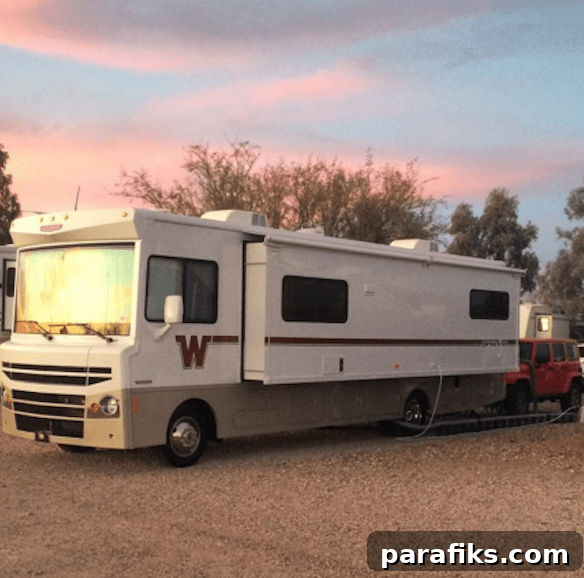 We bought a new RV!
It may sound sudden, but we bought a new RV. We traded in our first rig for something larger and more suitable for full-time life.
Once we committed to living in an RV full-time, we realized we needed more space and the ability to tow a car. Our previous RV was a 24-foot model, which worked for short trips but felt cramped for two people and two dogs living full-time.
We upgraded to a 2016 Winnebago Brave 31C — just under 33 feet — and it’s been a huge improvement. The extra space makes day-to-day life more comfortable: a larger living area, an oven, a residential refrigerator, a dedicated bedroom, and a roomy bathroom. Being able to tow a car means we don’t have to move our home every time we run errands, which is a real convenience.
We’re much happier with the new RV and feel more settled in our new lifestyle.
Moving everything into storage was a challenge
Although we hadn’t spent much time in our house since buying the first RV, putting the rest of our belongings into storage still felt strange — and it was a task we dreaded for weeks.
We donated or gave away more than half of our possessions, but there were still items we wanted to keep. Most of these required climate-controlled storage, which is expensive, so we decided to fit everything into a single unit. The largest climate-controlled option we could find was a 6×15 unit — fairly small — and the rent was $185 a month.
Paying for multiple units would have been costly, so we hired a moving company to pack the unit efficiently. We came close to needing a second unit, but the movers made it work.
It’s liberating not to have a house anymore: we don’t have those extra bills or the burden of managing so much stuff.
Explaining that we don’t have a house draws reactions
As relatively young RVers, we often get curious or surprised responses when people learn we live in an RV full-time. When asked where we’re from and we say we live at an RV park or campground, some people give us odd looks or express sympathy. It’s amusing, because we chose this life and are loving every minute.
Conversely, when we’re at an RV park or campground, interest is high. I hand out a lot of business cards and already need to print more. Many people don’t realize how feasible working on the road can be.
Working on the road continues to go well
Being able to travel and maintain work at the same time has been fantastic. I often feel a bit like I’m semi-retired because I genuinely enjoy my work and the freedom of full-time travel.
My focus remains on two key goals: staying ahead on content and growing affiliate income. I’ve slipped a bit on the content schedule and am currently about two weeks ahead on blog posts, but affiliate income is performing strongly and meeting expectations.
Overall, I’m thoroughly enjoying working while traveling. I love seeing new places, meeting new people, spending more time with Wes and the dogs, and having the flexibility to create our schedule.
If you’re new here, I’ve written more about how I earn a living while traveling.
Do you think we’re crazy for living in an RV? Are you curious about full-time RVing or traveling full-time?