
Hello! Today we’re sharing a guest post from Boris and Susan. They bought their first property in 2017 and launched it on Airbnb. That initial four-bedroom home generated $120,000 in revenue in its first 12 months. Today they host nearly 10,000 guests per year across multiple properties and manage everything remotely. Below is their story.
A note given the current state of the world
We wrote this originally in February to share our experience using real estate and Airbnb over the prior three years to create semi-passive income streams. A lot changed in the weeks following—especially for travel and hospitality—but the fundamentals of our approach remain relevant.
We made adjustments that helped keep our properties occupied, cover costs, and still return a profit, even if smaller than usual. If you’re thinking in the short term, the next several months will likely remain challenging and uncertain. But our plan was never short-term: we make decisions with a 3–10 year horizon. First, here’s how we got started.
_______________________
How it all began for us as Airbnb hosts
Real estate wasn’t on my radar for many years. I was content renting and appreciated the flexibility it provided. To me, homeownership often seemed more trouble than benefit, with maintenance and chores eating into free time.
Susan, however, grew up in China where buying property is seen as central to financial security. When she moved to the U.S., she kept that perspective.
We met in late 2013. At the time I was renting while Susan owned a condo; conversations about real estate and financial independence started to surface more often.
For Susan’s birthday in late 2015, I surprised her with a houseboat rental in Seattle via Airbnb. We loved it, and after returning home the idea of owning a houseboat to rent out lingered. It took a few months, but we ended up finding a 36-foot power boat listed as “perfect for a liveaboard” on Craigslist for $28,000. It had two small bedrooms, two bathrooms, a kitchen, and decks—enough for us to live aboard and potentially rent out when we were away.
Within two months we sold our apartments, bought the boat, secured a marina slip near downtown, and made it our home. Living on the water launched a new phase of our life together.
Related content:
- How This 34 Year Old Owns 7 Rental Homes
- 12 Passive Income Ideas That Will Let You Enjoy Life More
- How This 29 Year Old Is Building A Real Estate Empire
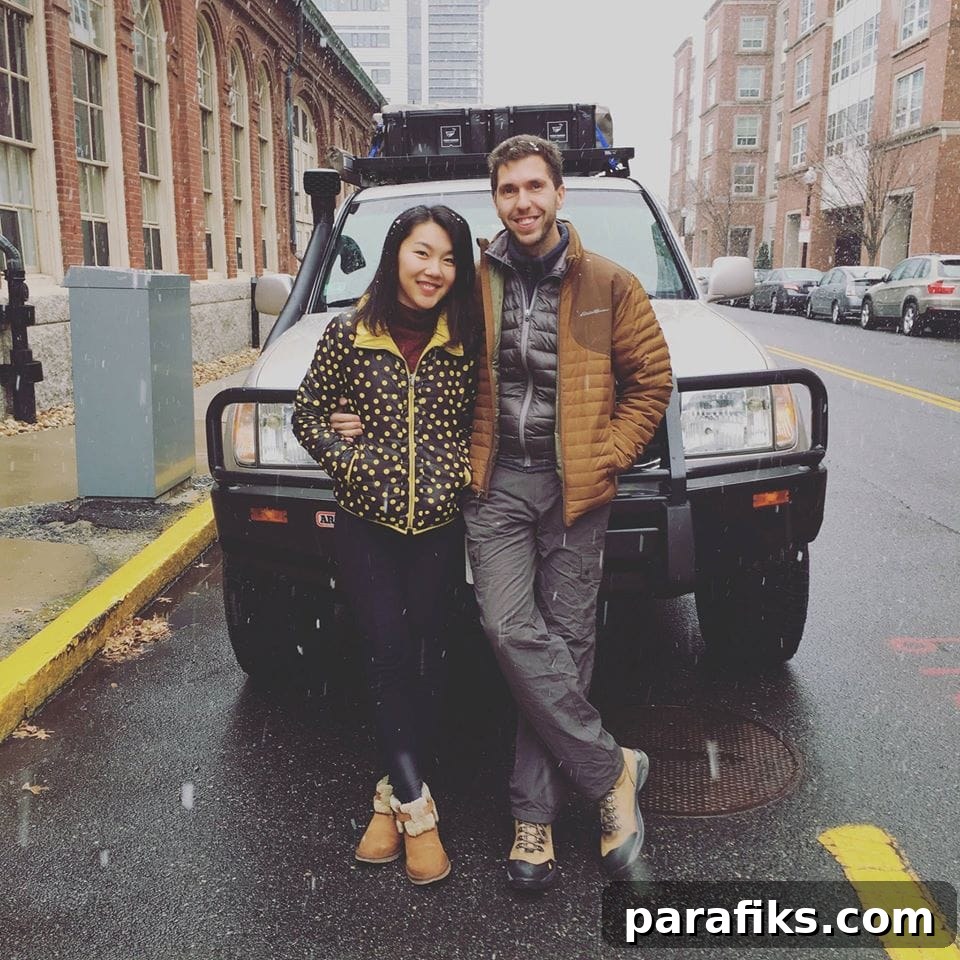
Our move toward semi-passive income
Living on a boat was transformative. The marina’s proximity to downtown gave us city access while cutting living costs substantially compared to renting (there were still marina fees, utilities, and maintenance, but overall it was lower).
We kept working full-time, but began to crave more freedom and flexibility. We wanted optionality beyond corporate jobs, which led us back to real estate combined with short-term hosting through platforms like Airbnb. We had used Airbnb many times and had even considered listing the boat, but marina rules prevented it.
Then an acquaintance passed along a lead on a property. Everything lined up and we decided to buy it and give hosting a serious, structured try.
Our first steps as Airbnb hosts
From day one we studied hosting obsessively. With our backgrounds in tech, marketing, and spreadsheets, we approached hosting strategically: optimize occupancy and rates, automate repetitive work, and deliver consistent five-star experiences without turning hosting into a second full-time job.
We learned how to furnish, decorate, hire and train housekeepers, and set up systems. The property launched and, to our surprise, brought in over $7,000 in revenue in its first full month—equivalent to a monthly paycheck, generated as a side venture. That result convinced us this was a scalable opportunity.
Scaling up
After optimizing the first property, we decided to replicate the model in other cities where real estate prices were more affordable and risk could be spread across markets. Distance didn’t matter because our goal was automation and scale.
Over the next three years we acquired five more properties across the U.S. All are now run as short-term rentals managed remotely. Collectively they host nearly 10,000 guests annually while we live hundreds or thousands of miles away from those markets.
Short-term rentals became a core part of our investment strategy. Below is an overview of how we approached hosting before the pandemic and how we adapted during it.
Our hosting strategy before the pandemic
When evaluating cities, we focused on urban areas with steady demand—places with large universities, hospitals, or major employers—so bookings come year-round, not just on weekends. Other investors may prefer traditional vacation markets; demand exists in many places, so choice depends on your goals.
Before the pandemic we favored renting properties by the bedroom during the week and offering the whole house for weekend group bookings. Renting by the bedroom can mean less wear and tear because guests often behave more respectfully when they share common spaces. It also helps keep occupancy high: our properties averaged 90%+ occupancy with this hybrid strategy.
To scale, we standardized and automated processes so hosting didn’t become a 24/7 job. The core areas to systematize are:
- Guest communication
- Check-ins and check-outs
- Housekeeping
- Price optimization
We use third-party tools to automate most tasks. For example, automated messaging tools can send check-in instructions and answers to common questions. Keyless digital locks create one-time access codes for each guest. Local housekeepers are vetted and trained to show up reliably and maintain high cleanliness standards. Dynamic pricing tools—such as PriceLabs, BeyondPricing, and Wheelhouse—automatically adjust rates daily based on demand, competition, and occupancy, following the pricing strategy we set.
Adjustments during and after the pandemic
The pandemic affected all real estate sectors. For short-term rentals the impact was swift but uneven. Urban properties suffered steep declines in bookings, while remote, drive-to vacation rentals saw increased demand for longer stays as people sought to isolate away from dense cities.
For hosts whose listings rely on business travel or urban tourism, demand evaporated. Our immediate objective became covering holding costs—mortgage, insurance, taxes—and staying afloat until conditions improved.
What we did immediately
- Extended maximum stays from 5 nights to 90 nights to attract longer-term guests while retaining the option to return to short stays later.
- Offered discounts for multi-week and monthly bookings.
- Explored additional channels beyond Airbnb, such as platforms serving traveling professionals and nurses.
- Implemented and promoted enhanced cleaning and sanitizing procedures across all properties.
These actions helped us secure guests seeking two-to-four-week accommodations: medical staff, students displaced from dorms, airline employees, and locals isolating from their usual households. Although revenue per room declined compared to peak short-term rates, multi-week bookings were still more profitable than traditional long-term leases and filled our calendars quickly.
As a result, occupancy across our portfolio stayed above 90% through the worst months, enabling us to remain above break-even overall.
Supporting our team
We provided housekeepers with clear sanitizing protocols, highlighted enhanced cleaning in listings, and adjusted compensation. Rather than cutting pay when turnovers fell, we introduced a floor payment—about 80% of normal earnings—so housekeepers had stability. Maintaining these relationships was essential; these team members are often most vulnerable during crises, and keeping them supported is both the right thing to do and smart for long-term operations.
What’s next?
We expect the hospitality and real estate markets to feel the pandemic’s effects for some time. Even if restrictions lift, many people will hesitate to travel until a vaccine is widely available. In our view, this could take a year or longer to normalize.
At the same time, market dislocations create opportunities. Real estate prices had been high in many markets, making cash-flowing purchases difficult. We expect some sellers to become more motivated and some hosts to convert short-term rentals to long-term leases, which could increase rental inventory and depress long-term rents. Conversely, a reduced supply of short-term units could push up nightly rates for the listings that remain available.
We remain committed to real estate as a path to financial security, but our underwriting has changed. New purchases must be profitable across short-term, mid-term, and long-term scenarios. We’re patient—there’s no rush—so while we’ll monitor opportunities, we’ll likely wait until later in the year before adding properties. We’ll also expand our focus beyond urban neighborhoods to include traditional vacation markets, anticipating stronger domestic leisure travel in coming years.
Overall, we’re bullish on short-term rentals long-term and are spending time on research and strategy so we can act when the timing and deals align.
Are you interested in buying real estate to rent out or becoming an Airbnb host?
About Boris & Susan
Boris and Susan are experienced Airbnb hosts and real estate investors who host nearly 10,000 guests per year nationwide and manage their portfolio remotely while working full-time. They write about their experiences and help others acquire, launch, and automate short-term rental properties at www.BuildYourBnb.com. You can email them at [email protected] with questions or to say hello.